Navami vs Ashtami: Which Day Matters More?
Neither surpasses the other—both hold distinct power.

Kushal K
19 Oct 2026 • 6min
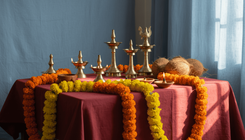
When you ask whether Ashtami or Navami is more auspicious, you are asking the wrong question. Both Ashtami (the eighth lunar day) and Navami (the ninth lunar day) hold significant place in Hindu worship and festival life, but they matter in different ways and in different contexts. The answer depends on which festival you are observing, which deity you are honouring, and what your practice is.
During Navratri, the nine-night festival of the goddess celebrated most widely twice a year—in Chaitra (spring) and Sharad (autumn)—Ashtami and Navami fall near the end of the cycle. Many people ask which one is more important, but the two days have different roles. Ashtami is the day of Durga Ashtami or Maha Ashtami, dedicated to Maa Mahagauri, the serene form of the goddess who embodies purity and grace, and a day when the goddess Durga is particularly honoured. Navami, which follows, is Mahanavami, dedicated to Maa Siddhidatri, the bestower of spiritual perfection. It marks the completion of the nine nights and leads directly to Vijayadashami, the day of victory. Neither is "bigger" than the other; they are consecutive chapters in the same story.
The significance of each day depends on your region, your sampradaya (tradition), and the festival you are observing. In some parts of India, Ashtami is considered the climax of Navratri worship. In others, Navami holds that place. Many families follow a kul (family) tradition of observing either Ashtami or Navami as their main day, performing Kanya Puja and breaking the Navratri fast on that day. Some traditions honour both equally, seeing them as inseparable parts of the same sacred period. There is no single pan-Indian hierarchy.



When Ashtami Takes Centre Stage
Ashtami is the eighth day of the lunar fortnight, and it appears twice a month: once in the bright half (Shukla Paksha) and once in the dark half (Krishna Paksha). During Navratri, Maha Ashtami (the Ashtami of the Navratri cycle) is particularly significant.
On Ashtami, devotion reaches a peak of intensity. In many homes and temples, the puja on Ashtami is elaborate, and in much of North India it is one of the two days on which Kanya Puja is performed—the worship of young girls as living forms of the goddess. Many families also perform a havan on Ashtami to complete their Navratri worship. Some people fast on Ashtami or make particular offerings to mark the day.
In regions like Bengal, Ashtami is closely tied to the festival of Durga Puja. The rituals of Ashtami in the Durga Puja cycle carry immense weight; it is a day of heightened devotion and often larger public gatherings, when devotees offer pushpanjali (flower offerings) to the goddess. The day culminates in the Sandhi Puja—a special worship performed during the 48 minutes spanning the last 24 minutes of Ashtami and the first 24 minutes of Navami. It commemorates the moment the fierce goddess Chamunda appeared to slay the demons Chanda and Munda, and is marked with offerings of 108 lamps and 108 lotuses. Because of this, Ashtami in Bengal carries a strong association with the goddess in her fierce, warrior aspect. The practices vary by region and by the specific sampradaya you follow, but the theme is the same: Ashtami is a day of the goddess's full power and grace.
The Meaning and Practice of Navami
Navami is the ninth lunar day, and like Ashtami, it appears twice each month. During Navratri, Mahanavami (the Navami of the Navratri cycle) is the day that leads directly to Vijayadashami, or Dussehra—the day of victory.
Where Ashtami marks the height of the struggle, Navami marks the threshold of completion. The energy shifts from intensity toward the certainty of victory. On Navami, many people continue fasting if they began on an earlier day of Navratri. Many families perform Kanya Pujan (worship of young girls, who are seen as manifestations of the divine feminine) and a closing havan on this day, before breaking their fast. Others prepare for Dussehra, which falls immediately after.
In many temples, Navami is when the final major pujas of the Navratri cycle are performed. In Bengal, the Navami Homa is an important rite of Maha Navami during Durga Puja. In South India, Navami is celebrated as Ayudha Puja, when tools, vehicles, instruments and weapons are honoured, and often as Saraswati Puja, when books and musical instruments are worshipped. The day feels like a pause before the celebration of victory on Vijayadashami, which is itself widely regarded as one of the most auspicious days of the year for new beginnings.
Ashtami and Navami Beyond Navratri
These days matter far beyond the Navratri period. Ashtami appears frequently in the Hindu calendar as an auspicious day for various observances. Janmashtami, the birth of Krishna, is celebrated on Krishna Paksha Ashtami in the month of Bhadrapada according to the purnimanta calendar (Shravana in the amanta calendar), roughly August–September. This is considered one of the most important festival days of the year.
Navami, too, has meanings outside Navratri. The most important is Ram Navami, the birth of Lord Rama, celebrated on Chaitra Shukla Navami—the ninth and final day of Chaitra Navratri—usually in March or April. Matru Navami, also known as Avidhava Navami, falls during Pitru Paksha, the ancestral fortnight before Sharad Navratri, and is the day for honouring deceased mothers and married women of the family through shraddha rites. Different Navamis mark different observances throughout the year, each with its own practices and significance.
When looking at these two days outside the Navratri context, you cannot say one is more auspicious than the other. Each Ashtami and Navami carries the potential for meaningful practice, depending on what you are doing and which deity or purpose you are honouring.
How to Decide for Your Own Practice
If you are following Navratri and wondering which day to prioritize, the answer is simple: honour both, and follow your family tradition for the main observances. Ashtami and Navami are two parts of a whole. If your family performs Kanya Puja and breaks the fast on Ashtami, that is your main day; if they do so on Navami, follow that custom. If you are fasting, you might fast through both days. If you are visiting a temple, consider making time to go on both days if you can. If resources or circumstances mean you can visit or observe only one day, choose based on your family custom, your own connection and your sampradaya.
Some people find that their practice naturally draws them more strongly to one day than the other. This is valid and good. There is no reward for choosing "correctly"; there is only the reward of sincere, grounded practice. If your heart and the guidance of your tradition point you toward Ashtami, that is where your practice belongs. If Navami calls you, follow that call.
Both days hold power. Both deserve respect and devotion. Your practice matters more than the day you choose.
Common questions
Is Dussehra celebrated on Navami or the day after?
Dussehra (Vijayadashami) is celebrated on Dashami, the tenth lunar day, which follows Navami. Navami leads to Dussehra, but they are separate tithis. Because lunar days do not align exactly with solar days, in some years the Navami tithi is short and Navami and Dashami may be observed on the same calendar day, so check your local panchang or family tradition.
Can I fast on just Ashtami or just Navami during Navratri?
Yes. While many people fast through both days, you can observe a fast on either day alone according to your capacity and tradition. Some people begin fasting on an earlier day of Navratri and continue through both Ashtami and Navami, while others keep specific vows on one day. Many families break the Navratri fast after Kanya Puja on Ashtami or Navami, according to their family custom.
What is the difference between Maha Ashtami and other Ashtamis?
Maha Ashtami is the Ashtami that falls within the Navratri period and is considered especially significant. All Ashtamis have importance—for example, Janmashtami is sacred as Krishna's birthday—but Maha Ashtami during Navratri carries the specific weight of the goddess worship cycle.

Related Articles