
Namakarana: The Hindu Naming Ceremony Explained
The ritual that welcomes a child to community and dharma

Aditya Pandey
07 Nov 2026 • 6min
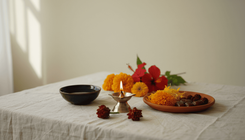
Namakarana is the Hindu naming ceremony, one of the samskaras or life rituals that mark a child's journey through Sanatan Dharma. When a name is formally given in a sacred ritual—often in the presence of family, a priest and sometimes the whole community—that act is more than a practical matter. It is believed to imprint the child with protection, blessings and a spiritual identity that carries weight throughout their life.
In many Hindu traditions, the namakarana sanskar is performed when the child is between 10 days and a few months old. The timing is not fixed across all regions and families; local practice, astrological calculation and the child's readiness all influence the date. Some traditions link it to the end of the period considered inauspicious for the mother and newborn. Others wait for a spring or full moon, or for a date determined by consulting the panchanga, the Hindu lunar calendar.



What the Naming Ceremony Means
A name in Hindu tradition is not arbitrary. It is believed to carry shakti, the energetic force that will influence the child's temperament, destiny and spiritual path. Parents often choose a name connected to a deity, a virtue they wish to nurture, or a sacred word. Giving that name in a ritually marked space transforms it from a personal preference into a blessing spoken in witness of the divine and the community.
The ceremony affirms that the child is not only the family's responsibility but part of a larger spiritual lineage. By invoking divine presence—whether through specific deities chosen by the family or through the sacred fire—the ritual places the child under spiritual protection. Many families also see it as an opportunity to set intention for the child's character and path forward.
How the Ceremony is Performed
Namakarana practices vary widely across India's regions and different Hindu sampradayas, or philosophical lineages. The ceremony often begins with purification—bathing the child, or sometimes just marking the space with water or flowers. The child is then presented to a sacred fire, or sometimes to a deity's image, depending on local custom.
A priest, if one is present, may chant mantras invoking Surya the sun god, Agni the fire god, or other deities, depending on the family's tradition. The new name is then spoken aloud—sometimes whispered first into the child's ear by a family member or elder, then announced to those gathered. Some families write the name on a plate of rice or oil, or trace it in the child's palm, making the moment tactile and memorable.
The ceremony usually includes an offering—flowers, fruit, sesame seeds or clarified butter to a fire or altar—and often concludes with prayers for the child's long life, health and fulfilment of their dharma. Many families mark the occasion with a meal shared among relatives and friends, extending the blessing beyond ritual into communal celebration. The specific steps and the deities honoured depend entirely on the family's sampradaya, their regional roots and their guru or priestly guide.
Choosing the Child's Name
The choice of name is itself a spiritual practice. Many parents consult an astrologer to determine which letters align with the child's birth chart, or they choose a name associated with a family deity. Others select a name honouring a beloved ancestor or family elder, weaving the child into a lineage.
Some families wait until the namakarana ceremony to publicly announce the name, believing it gains power when spoken in that context. Others have already used an informal name within the family and use the ceremony to formalize it. Some traditions suggest avoiding certain letters or sounds in the first name, or considering the meaning and numerology of the full name.
What unites these approaches is the understanding that the name matters—that it is not incidental, but part of how the child will grow into themselves and their place in their family and dharma.
Namakarana and the Broader Life Journey
The namakarana sanskar is one moment in a sequence of transitions marked by ritual in many Hindu families. It follows the birth itself, often announced with prayers or kept within close family. It comes before the first solid food (annaprashan), the first haircut (chudakarana), and the beginning of learning (vidyarambha), each of which has its own ceremonial significance.
These samskaras are understood as gentle markers that help a child's consciousness integrate each new phase of development. The namakarana specifically bridges the time when the child is still very much in the mother's orbit and the time when they are becoming a separate person in the world. A name, spoken in witness of the sacred, is how that separation and entry are honoured.
Not all Hindu families today perform a formal namakarana with a priest and ritual fire. Some mark it more simply at home with family prayers, others with an informal gathering. The practice is flourishing again in some communities and less common in others. What matters is the intention behind it: the acknowledgement that the child is not only theirs but a being arriving into the world with their own path to walk.
Variations Across India and the Diaspora
Namakarana customs differ across regions. In South India, some families perform elaborate ceremonies lasting several hours and involving multiple deities. In parts of North India, the ritual may centre on the sunrise or a specific auspicious muhurta, or time. Among Brahmin communities, the name is often announced by a specific elder or priest; in other communities, a parent or grandparent may speak it first.
For families living outside India, the namakarana may be adapted to local conditions and calendars, sometimes performed in a temple community space and sometimes at home. The form changes, but the underlying intention—to welcome the child into spiritual kinship and to invoke blessings for their life—remains recognizable across these variations.
Common questions
At what age should namakarana be performed?
The naming ceremony is typically performed between 10 days and a few months after birth, depending on regional custom and the family's astrological preferences. The exact timing is determined by consulting local practice and sometimes a panchanga to find an auspicious date.
Can namakarana be done without a priest?
Yes. While many families engage a priest to perform the ritual and chant mantras, the ceremony can be equally valid performed at home by family members with sincere intention, invoking blessings for the child without formal ritual structure.
How is the name chosen for namakarana?
Names are often chosen based on family deities, virtues parents wish to nurture, or consonants aligned with the child's birth chart determined by an astrologer. Some families honour ancestors; others choose names from sacred texts. The choice reflects the family's values and spiritual tradition.

Related Articles


