
Nachiketa and the Questions to Yama in the Katha Upanishad
A boy's courage becomes a doorway to truth

Kushal K
04 Nov 2026 • 7min
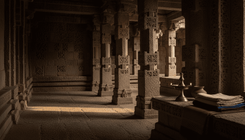
The story of Nachiketa and his encounter with Yama, the god of death, is one of the oldest philosophical dialogues in Indian thought. It comes to us from the Katha Upanishad, and it asks questions that still matter: What happens after death? What is the true self? What is worth pursuing in life? A boy's three boons and his willingness to ask hard questions become the frame for one of Vedic philosophy's most searching conversations.



The Boy Who Became Death's Guest
Nachiketa was the son of Vajashrava, a merchant or householder who performed a ritual of sacrifice. According to the Katha Upanishad, Vajashrava decided to give away all his wealth, but—in an act that may have been either careless or deliberate—he gave away cows that were old, infertile and of little value. Watching this, the young Nachiketa felt troubled. He asked his father directly: "To whom will you give me?"
When his father did not answer, Nachiketa asked again. Frustrated or testing his son, Vajashrava said, "I give you to Yama." Rather than treat this as a moment of anger to be forgotten, Nachiketa took the words seriously. He resolved to go to Yama's realm and wait for the god of death as if he had truly been sent there.
Nachiketa travelled to Yama's palace. When he arrived, Yama was not at home. According to convention, a guest must be treated well, and Nachiketa waited there for three days and nights without food or shelter. When Yama returned, he was struck by the boy's purity and courage. As a gift for the insult of being neglected, Yama offered Nachiketa three boons—three wishes that would be granted.
The Three Boons
Nachiketa's first wish was modest and dutiful: he asked that his father's anger be calmed and that Vajashrava would recognize him and be happy when he returned home. Yama granted this at once.
The second boon revealed Nachiketa's deeper concern. He asked about a ritual fire through which a man could go beyond fear and reach heaven. He wanted to know the name of this fire and how it worked. Again, Yama granted the wish and taught Nachiketa the sacred knowledge. The fire became known as the Nachiketa Fire.
It was the third boon that mattered most. Nachiketa asked the question that had driven him to seek out Yama in the first place: "When a person dies, there is this doubt: some say he exists, others deny it. Teach me what truth lies beyond death." In other words: What is real? What survives the body?
Yama hesitated. He offered Nachiketa wealth, long life, pleasure and power instead. But Nachiketa refused. He would not be distracted. He knew that none of these things—not comfort, not longevity, not earthly success—could answer the deepest question. Yama, seeing the boy's clarity and resolve, consented to teach him.
What Yama Taught
What followed in the Katha Upanishad was a dialogue between a boy and the god of death. Yama taught Nachiketa about Brahman, the ultimate reality that underlies all existence. He taught about the Atman, the true self within each person—the unchanging awareness that is not born and does not die. He contrasted this with the ego and desire, which make a person cling to the body and fear its loss.
Yama explained that the wise understand the difference between what is pleasant and what is good. Pleasure is what feels good in the moment; the good is what leads to freedom and knowledge. Most people pursue pleasure and never find lasting peace. The wise turn away from endless desires and look inward.
The god also taught Nachiketa a meditation practice. He spoke of the Atman as being smaller than the smallest, larger than the largest—present in all beings yet untouched by the world. Through steady practice and discrimination, one could know this truth directly, not merely believe it.
Yama told Nachiketa that the goal of spiritual life is not to live forever—immortality is not about endless years in a body. It is about realizing the eternal nature of the self, which already exists beyond time. Once you know your own true nature, death holds no terror.
Why This Story Matters
The Katha Upanishad does not present its philosophy as abstract doctrine. It wraps the teaching in a story of a real encounter, one that reads as both profound and intimate. Nachiketa's refusal to be distracted by worldly rewards—a detail that appears nowhere in the earliest texts but took on importance as the story was told and retold—speaks to anyone who has sensed that comfort and security alone do not satisfy.
The story also values a certain kind of questioning. Nachiketa does not argue with Yama or try to win a debate. He asks respectfully, listens carefully, and pursues truth even when it is uncomfortable. His courage is not the courage of a warrior but of a seeker willing to face the hardest questions.
In the Indian tradition, this conversation has inspired philosophers, yogis and scholars for thousands of years. Parts of it appear in other texts. Its ideas shape the core teachings of Advaita Vedanta, the non-dual philosophy. Teachers still use the story to point toward the distinction between temporary pleasure and lasting freedom, between the changing world and the unchanging self.
How to Approach This Teaching
The Katha Upanishad is challenging, and reading it once will not make its meaning clear. It calls for reflection, recitation and discussion. Many practitioners study it as part of their spiritual practice, often alongside a teacher who can clarify the more difficult passages.
The central insight—that the true self is not the body or mind, but the witness awareness behind both—can be approached through meditation. Sitting quietly and observing your thoughts without identifying with them is one way to touch this truth experientially, not just intellectually. The practice of asking yourself "Who is aware of my thoughts?" echoes Nachiketa's willingness to ask the hardest question.
The story also works as a reminder that depth and seriousness have their place. In a life often shaped by comfort and distraction, Nachiketa's refusal to be satisfied by anything less than truth stands as a quiet counter-example. His encounter with Yama suggests that real freedom comes not from having more or living longer, but from knowing what you truly are.
Common questions
What are the three boons Nachiketa asks for?
Nachiketa's first boon is that his father's anger will be calmed and he will recognize and accept his son upon his return. His second boon is knowledge of the Nachiketa Fire and the ritual through which a person can reach heaven. His third and most important boon is the teaching about what lies beyond death and the nature of the Atman.
Why did Nachiketa refuse Yama's offers of wealth and power?
Nachiketa understood that wealth, long life and worldly pleasure could not answer his deepest question about the truth of death and existence. He had come specifically for spiritual knowledge and would not be distracted by temporary rewards that do not lead to freedom.
Where is the Nachiketa story found?
The story of Nachiketa and Yama appears in the Katha Upanishad, one of the principal Upanishads of the Vedic tradition. It is presented as a dialogue between the boy Nachiketa and Yama, the god of death, in which Yama teaches the nature of Brahman and the Atman.

Related Articles


