
Murugan's Six Abodes: The Arupadai Veedu Pilgrimage
Walk the southern path to the warrior god

Kushal K
12 Nov 2026 • 7min
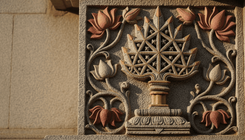
Murugan festivals across South India are deeply connected to a journey through six sacred temples known as the Arupadai Veedu, or "six abodes" of the deity. These six shrines hold a unique place in Hindu devotion: visiting all of them is considered a complete pilgrimage that honours the many forms and attributes of Murugan, the warrior god also known as Kartikeya, Skanda or Subrahmanya. This sacred geography is not found everywhere in India, but shaped the devotional landscape of Tamil Nadu and parts of Karnataka and Andhra Pradesh for centuries.



The Six Sacred Temples
The Arupadai Veedu are six temples where Murugan is worshipped in distinct forms, each representing a different phase of his divine work or a particular aspect of his power. Palani Murugan temple in the Palani hills stands as one of the most prominent; here Murugan is shown in his ascetic form, holding a staff or danda. The temple at Kandakottam (also called Kandakasthan) honours Murugan as Vel Swami, the wielder of the divine spear. Pazhamalai temple, sacred for its natural springs, depicts Murugan in a benign, child-like form. Tiruchendur on the coastline shows Murugan emerging victorious after battle, standing in the sea itself. Swamimalai temple, built on a small hillock, portrays Murugan accepting the grace of being worshipped by his own father Shiva, representing devotion itself. Tirupparamkundram, believed to be the southernmost shrine, shows Murugan as a divine teacher who grants wisdom and spiritual knowledge.
Each temple tells a different part of the Murugan story, and together they create a complete picture of the deity's nature. The temples are not evenly spaced, and not all pilgrims visit them in the same order; the journey is meaningful in any direction, though many follow a route that returns them to their starting point.
The Vel Symbolism
The vel, or divine spear, is the signature weapon and symbol of Murugan across all six abodes. Unlike weapons held by other gods, the vel is rarely depicted as a tool of destruction in Murugan worship; instead, it represents piercing clarity, the power to cut through delusion and ego, and the capacity to penetrate the deepest truths of existence. Many pilgrims carry a vel symbol or wear it as a pendant during their journey.
The spear appears not only in temple iconography but also in the landscapes themselves. At Tiruchendur, the deity's association with the vel takes on a maritime quality. At other temples, the vel is carved into temple walls, held aloft by the deity, or represented in ritual implements. The vel is so central to Murugan worship that Thaipusam, the festival most associated with his worship, sees devotees performing Vel kavadi—carrying elaborate, spiked frameworks called kavadi on their shoulders as an offering to the spear itself.
Visiting the Six Abodes: Tradition and Practice
The Arupadai Veedu pilgrimage is not bound to a single date or season. Devotees visit across the year, often choosing their timing based on personal circumstances, the monsoon patterns, or specific festival cycles. Some make the journey during Thaipusam, the major Murugan festival falling in the Tamil month of Thai (roughly January-February), when temples overflow with devotees. Others prefer quieter seasons, making multiple trips over years or even a lifetime.
The journey carries more weight than any individual visit to a single temple. By completing all six, a pilgrim accumulates a sense of spiritual wholeness and demonstrates sustained commitment to the deity. This is reflected in the way many devotees speak of "completing the Arupadai Veedu" as a milestone in their practice, something to be mentioned with quiet reverence.
Temple customs differ slightly from shrine to shrine. At Palani, the danda ritual involves circumambulating the deity while holding his staff. At Swamimalai, the arrangement of the temple on ascending levels mirrors spiritual ascent. The regional variations, far from fragmenting the pilgrimage, give it texture and authenticity—each temple makes its own offerings and holds its own festival calendar, creating a living tradition rather than a museum.
Regional Variations and the Tamil Heritage
The six abodes are most deeply rooted in Tamil Nadu, where Murugan worship predates the arrival of classical Hinduism and carries elements of ancient Tamil devotion. The Cilappathikaram, a Tamil literary text of the classical period, contains references to Murugan worship, showing that the deity's presence in Tamil culture runs very deep. The Arupadai Veedu pilgrimage, while recognized across South India, remains most vibrant in its Tamil heartland.
In some regions of Andhra Pradesh and Karnataka, versions of these temples exist, and the six-shrine concept has resonance, though local traditions may emphasize different temples or add additional sacred sites to the route. This is not contradiction but the natural way traditions evolve across geography. A devotee in Andhra Pradesh might weave their Murugan worship around temples closer to home while honouring the principle of the six abodes.
Murugan Festivals Along the Pilgrimage Route
Several major festivals at these temples draw pilgrims who are also completing or contributing to their Arupadai Veedu journey. Thaipusam remains the largest, celebrated with processions, rituals and the famous Vel kavadi offering. Thai Poosam at Palani draws hundreds of thousands. Vaikasi Visakam, the birth month of Murugan in the Tamil calendar, brings its own celebrations. Aippasi Deepavali and other seasonal festivals mark the temple calendars as well.
Each festival is an opportunity to worship Murugan in one of his forms, and over time, attending festivals at different temples becomes a natural way of completing the pilgrimage. Many families make this their annual rhythm, visiting one or two temples during their respective festival seasons.
How to Begin Your Own Journey
If you are drawn to this pilgrimage, start where you live or where you have family connections. There is no mandate to do all six at once, and no strict order to follow. Visit one temple fully—perform the rituals, make an offering, spend time in the sanctum, listen to the stories told by priests and senior devotees. Then, when circumstances allow, visit another. Over months or years, the six abodes reveal themselves to you, each one deepening your relationship with Murugan and with the landscape of South India itself.
The pilgrimage is as much about the walk between temples, the conversations with other devotees, and the gradual accumulation of grace as it is about the temples themselves. This is why so many people speak of the Arupadai Veedu not as a task to complete, but as a lifelong unfolding.
Common questions
How long does it take to visit all six temples of Murugan?
There is no fixed timeframe. Some devotees complete the pilgrimage in a few weeks by visiting several temples consecutively, while many others spread visits across years or make it a lifetime journey. The pilgrimage is not a race but a spiritual practice, so timing is personal.
Is Thaipusam the only time to visit the Arupadai Veedu?
No. While Thaipusam is the largest festival and draws the most devotees, temples remain open year-round. Many pilgrims prefer quieter seasons. Each temple also has its own festival calendar, so you can visit during different festivals throughout the year.
Do I have to follow a specific order when visiting the six temples?
The temples can be visited in any order; there is no prescribed sequence. Many devotees plan routes based on geography to minimize travel, while others visit based on personal connection to particular deities or regional festival calendars.

Related Articles


