
Mundan and Karnavedha: The Hindu Childhood Rites
First milestones marked with sacred ritual

Sunil Chaurasia
16 Nov 2026 • 7min
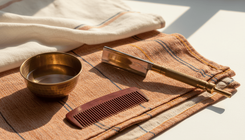
Mundan and karnavedha are two of the childhood samskaras, or sacred rites of passage, in Sanatan Dharma. Mundan is the ritual shaving of a child's head, usually performed between the first and third year of life. Karnavedha is the piercing of the ears, often done around the same time. Together, these ceremonies mark important transitions in a child's life and are believed to carry spiritual and practical significance that goes back to ancient texts and family tradition.



Why Mundan Is Performed
Mundan is believed to remove the heaviness and impurities carried from the child's past life, clearing the way for new growth. In Sanskrit, chudakarana—another name for mundan—refers to the arrangement or ordering of the topknot, which was originally left after shaving. The first shaving is considered especially important because it prepares the child's mind and body for learning and spiritual development.
Beyond belief, mundan also serves practical purposes. In warm climates, shaving reduces heat and keeps the scalp clean during the tender years when a child cannot care for their own hygiene. The fresh growth that follows is often described as stronger and healthier than the fine hair a newborn is born with, though this is as much a matter of tradition as observation.
The timing of mundan varies by family and region. Some families perform it in the first year, others wait until the child reaches two or three years old. A few traditions choose an auspicious date determined by the child's birth chart or the family's panchanga, the Hindu calendar that marks favourable days. The ritual itself is simple: the barber or a family member shaves the child's head while mantras are chanted, often in the presence of the family deity or at a temple.
Karnavedha: Ear Piercing in Hindu Tradition
Karnavedha, or ear piercing, is traditionally performed on infants and young children, sometimes on the same day as mundan or separately. For girls, ear piercing is nearly universal in many Hindu communities, while for boys the practice varies by region and family tradition. The ceremony itself follows similar principles to mundan: it is timed to an auspicious day, accompanied by mantras, and often performed by a specialist—in this case a goldsmith or jeweller who is experienced in piercing children safely.
The ears are believed in Ayurveda and yogic philosophy to be connected to the nervous system and sensory perception. Some traditions hold that piercing helps sharpen concentration and hearing. Beyond the spiritual dimension, ear ornaments—studs for infants and jewellery as the child grows—hold cultural significance across Hindu and Indian society more broadly. In many communities, wearing earrings marks the child as recognized within the family and the community.
Both the timing and the materials used in karnavedha matter according to tradition. Gold is the metal most commonly chosen because of its purity and its use in auspicious rituals. The piercing is typically done with a needle or a specialized tool, not a gun, to reduce trauma and allow for careful placement.
Regional and Sectarian Differences
The way mundan and karnavedha are observed depends significantly on which part of India a family comes from and which sampradaya, or lineage, they follow. In South India, mundan is often a more elaborate ceremony held at a temple, sometimes when the child is older—between three and five years. In North India, it is often a simpler home ritual. Some Brahmin communities perform mundan with specific mantras from their sampradaya; others focus more on the auspicious timing than on any particular text.
For karnavedha, regional practice also varies. In some communities, both boys and girls have their ears pierced; in others, it is primarily for girls. The age at which it is done ranges from infancy to early childhood. Some families perform it alongside mundan to consolidate the rituals into one auspicious day; others space them out.
These differences do not make one practice more authentic than another. Hindu tradition has always held space for variation based on geography, lineage and family practice. What matters is the intention behind the ritual and the care taken to perform it with awareness and reverence.
What Happens on the Day
On the day of mundan, the family gathers, usually at home or at a temple. A priest or experienced barber performs the shaving while the child sits, often held by a parent. Mantras are recited to invoke protection and blessings. The child's hair is sometimes preserved, especially the lock shaved last, which may be kept as a keepsake or offered to a deity. After the shaving, the child is often bathed, dressed in new clothes, and fed auspicious foods. The family may mark the occasion with a meal shared with relatives and sometimes distributed to priests or the poor as an offering of gratitude.
Karnavedha follows similar structure. The goldsmith or jeweller performs the piercing at an auspicious moment, often with the family present. Gold studs or simple ornaments are placed in the pierced ears. The child is then bathed, blessed, and brought into the family celebration. Some families apply tilak, the sacred mark, to the child's forehead as part of the blessing.
Mundan and Karnavedha Today
Many urban families continue these rites as a way to honour tradition and stay connected to their heritage, though often with adaptations. Some families perform simplified versions at home; others visit a temple or priest to retain the spiritual aspect. The underlying principle remains: marking a child's transition into a new phase of life with intention and blessing.
For families who do not perform these rites, there is no judgment or shame. Sanatan Dharma recognizes that circumstances, beliefs, and circumstances change. What matters is the spirit in which a family chooses to mark their child's milestones, whether through these traditional rites or in another way that feels right to them.
Performing Mundan: Step by Step
- Choose an auspicious date Consult your family's tradition or a priest to select a date aligned with the child's birth chart or the lunar calendar, ideally between the first and third year of life.
- Prepare the space Set up a clean area at home or arrange to visit a temple. Gather the barber or a family member experienced in performing the ritual, and inform relatives so they can be present.
- Bathe the child Give the child a ritual bath before the ceremony to ensure cleanliness and calm.
- Begin the shaving As the barber or family member begins to shave the child's head, a priest or elder recites protective mantras. The child sits safely, usually held by a parent.
- Preserve the final lock The last lock of hair—often a tuft at the crown—may be shaved last and kept as a keepsake or offered to the family deity.
- Bathe and dress the child After shaving, bathe the child again and dress them in new clothes.
- Share the blessing Gather family members to bless the child, offer prasad or auspicious food, and share a meal to mark the occasion.
Common questions
What is the best age to do mundan ceremony?
Mundan is traditionally performed between the first and third year of life, though the exact timing varies by family and region. Some families consult the child's birth chart or the lunar calendar to choose an auspicious date. In South India, it is sometimes performed between three and five years old.
Is karnavedha done for boys as well as girls?
Karnavedha practice varies by region and sampradaya. In many communities, both boys and girls have their ears pierced, while in others it is primarily a practice for girls. Some families do not perform it at all. What matters is what aligns with your family's tradition.
Can mundan and karnavedha be done on the same day?
Yes, many families choose to perform both rituals on the same auspicious day to consolidate the ceremonies. Others prefer to space them out. Either approach is valid and depends on family custom and the child's readiness.

Related Articles


