Mokshada Ekadashi: The Day of Liberation
The vrat that offers a path to moksha itself

Kushal K
23 Oct 2026 • 7min
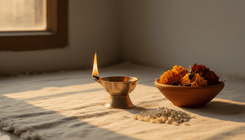
Mokshada Ekadashi is the Ekadashi fast that is believed to lead directly to moksha, or liberation from the cycle of birth and death. It falls in the Hindu month of Margshirsh, during the dark fortnight (Krishna paksha), and is one of the most significant Ekadashis of the year precisely because of this association with spiritual freedom itself. If you are looking for a vrat, or fast, that Hindus consider the gateway to moksha, this is the one.
The name itself carries the promise: mokshada means "that which grants moksha". This is not a vrat observed for worldly benefits or health. It is undertaken with the intention of final liberation. The vrat asks you to fast, to meditate on Vishnu, and to surrender the fruits of your action to the divine. For many devotees, Mokshada Ekadashi holds a unique place among the Ekadashis because it is believed to have the power to free you from the cycle of samsara—the wheel of rebirth.



The Story Behind the Name
The significance of Mokshada Ekadashi is rooted in the Padma Purana, a foundational text of Hindu philosophy. According to the scripture, this Ekadashi is when Vishnu himself is most receptive to prayers for spiritual freedom. The Purana teaches that observing this fast with sincerity and devotion can absolve you of serious spiritual debts and accelerate your journey toward liberation.
The vrat carries the weight of ancient belief. In the Hindu understanding, each Ekadashi has a specific power, but Mokshada Ekadashi stands apart. It is not about prosperity or health, though those may come. It is about the ultimate goal of all spiritual practice: moksha. This makes it a day when millions across India and the diaspora turn inward, setting aside their usual lives to focus entirely on their spiritual path.
The timing also matters. Margshirsh is a time of transition, when winter arrives and the year moves toward renewal. The dark fortnight is associated with introspection. Observing the fast during this period is seen as aligning yourself with the natural rhythms that support spiritual growth.
How Mokshada Ekadashi Differs From Other Vrats
While many Ekadashis are observed with fasting and prayer, Mokshada Ekadashi carries distinct characteristics. Where some vrats are undertaken for specific blessings—a child, prosperity, good health—Mokshada Ekadashi is pursued purely for spiritual liberation. This difference is not merely philosophical; it changes how the day is approached.
The fast for Mokshada Ekadashi is often stricter than for other Ekadashis. Many devotees observe a complete fast from sunrise to sunrise the following day, taking no food or water. Others follow a sattvic diet of fruits, milk products and light foods. The choice depends on your health, capacity and the traditions of your sampradaya or lineage.
Prayer on this day is also more focused. Rather than petitions for specific outcomes, the practice centres on surrendering to Vishnu and asking for the grace of liberation. Many devotees chant the Vishnu Sahasranama, the thousand names of Vishnu, or recite mantras like Om Namo Bhagavate Vasudevaya. Some read passages from the Bhagavad Gita, particularly those dealing with moksha and devotion.
The significance is also why Mokshada Ekadashi cannot be skipped or deferred if you are serious about spiritual practice. It represents an opportunity that comes once each year, a day when the veil between the material and spiritual worlds is believed to be thinner.
The Theology of Liberation Through Fasting
Hinduism teaches that moksha comes through many paths: the path of knowledge (jnana), the path of devotion (bhakti), the path of action (karma), and the path of meditation (dhyana). Fasting on Mokshada Ekadashi encompasses all four. Your fasting is action, your prayer is devotion, your contemplation is meditation, and your understanding of why you fast is knowledge.
When you fast on Ekadashi, you are not punishing the body but redirecting its energy. By abstaining from food, you release the body's resources from digestion and make them available for spiritual practice. The hunger itself becomes a teacher, reminding you of your dependence on the divine. The discomfort is not the point; the awareness it brings is.
The fast also cleanses. In Ayurveda and yogic philosophy, fasting removes ama, the toxins that accumulate in the body and mind. On a physical level, this can mean better digestion and clearer thinking in the days that follow. On a spiritual level, the cleansing extends to the subtle body and the mind, removing the confusion and attachment that obscure moksha.
Observing Mokshada Ekadashi with sincerity is therefore understood as a direct offering to Vishnu. You are saying, through your discipline, "I am ready for liberation. Remove what stands between me and moksha." This is why the vrat is not negotiable or casual. It is a commitment, a conversation with the divine.
Regional and Sampradaya Variations
Like all Ekadashis, Mokshada Ekadashi is observed across India, but the details vary by region and sampradaya. In South India, particularly in Tamil Nadu and Karnataka, the fast is often combined with visits to Vishnu temples, where special pujas are performed. In North India, many households observe the vrat at home with family members participating together.
Some communities observe a partial fast, eating once at noon with sattvic foods. Others fast completely until the next morning. The Vaishnava sampradayas have their own specific rituals, often involving the recitation of mantras and the reading of scriptures devoted to Vishnu. Some traditions also emphasize charity on this day, giving food or money to the needy as part of honoring Vishnu's generosity.
What is universal is the intention. Regardless of region or practice, Mokshada Ekadashi is undertaken with the prayer for moksha, for freedom from the cycle of birth and death. The outer form may differ, but the inner purpose remains the same.
Preparing for and After Mokshada Ekadashi
The day before the fast, prepare yourself physically and mentally. Eat light, sattvic foods. If possible, reduce activities that are stimulating or distracting. Go to sleep early and wake before dawn on the day of the vrat. This allows you to be present for the entire spiritual practice of the day.
On the day itself, begin with a bath if you can. Wear clean clothes. Set up a small altar with an image or idol of Vishnu if you have one, or simply light a lamp. Chant, meditate, read scripture, or sit in silence. The specific practice matters less than your full attention and sincere intention.
After the fast ends, break it thoughtfully. Eat simple, easily digestible foods first—fruit, milk, or khichdi. Avoid rich or heavy foods immediately. Many people eat prasad, food that has been offered to Vishnu, bringing the spiritual practice into the physical act of nourishment.
The days after the vrat are significant too. Carry the clarity and peace you felt into your daily life. The benefits of Mokshada Ekadashi extend beyond the single day; they ripple outward, subtly shifting your relationship to the world and your spiritual path.
Common questions
Can I observe Mokshada Ekadashi if I have a medical condition that makes fasting difficult?
Yes. The vrat can be adapted by taking fruit, milk or light foods instead of fasting completely. The intention and devotion matter more than the strictness of the fast. Consult your doctor if you are unsure what you can safely do.
What is the difference between Mokshada Ekadashi and Utthana Ekadashi?
Mokshada Ekadashi, observed in Margshirsh, is specifically associated with moksha and liberation. Utthana Ekadashi, observed in Kartik, celebrates Vishnu's awakening after a four-month rest and is associated with new beginnings. Both are significant, but Mokshada Ekadashi is considered the ultimate vrat for spiritual freedom.
Is it necessary to visit a temple to observe Mokshada Ekadashi?
No. While temple worship is traditional, you can observe the vrat at home with sincerity and devotion. What matters is your intention and presence, whether in a temple or at a home altar.

Related Articles