
Mariamman Festival: The Goddess of Protection and Plenty
When the village protects herself

Aditya Pandey
16 Nov 2026 • 7min
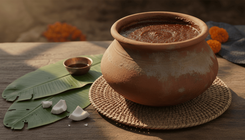
Mariamman is the fierce protector goddess of Tamil Nadu, honoured most intensely during the Mariamman festival, which comes into the life of each village when the goddess chooses—usually during the hot months before the monsoon arrives. She is not a goddess found in great temples with separate sanctums. She lives in the village shrine, often in the open, where people bring her their fears and their hopes for health, rain and prosperity. Her festival is one of the most vital rituals a Tamil village observes, and it belongs entirely to the people.



Who Mariamman Is
Mariamman means "mother of smallpox"—Mari from Mari noi, the fever disease, and Amman, mother. She carries that name not as an insult but as a declaration. She is the goddess who gives the fever and the goddess who takes it away. People have turned to her for protection against disease, especially the epidemics that ravaged villages before modern medicine. Over time, her role has expanded. She protects against drought and brings rain. She safeguards the welfare of the entire village—its harvests, its children, its animals.
This paradox, that the goddess who causes illness also heals it, reflects how village life has always worked. The same heat that kills also grows food. The same rain that nourishes can flood and destroy. Mariamman is honoured because she embodies this duality. She is not remote. She is the force that moves through your neighbourhood, and you make peace with her by giving her the respect and the offerings she deserves.
When the Festival Comes
The Mariamman festival dates are not fixed by any calendar. Each village decides when to hold the festival, usually in consultation with the temple priest and according to local tradition. Most commonly the festival falls during Aadi, the Tamil month roughly between June and July, which marks the beginning of summer and also the approach of the monsoon season. Some villages hold it during other months, especially in areas where local custom or regional variation dictates a different timing.
The intensity of preparation and the length of the festival vary from place to place. In some villages the festival lasts a full month. In others it occupies a week or several days of heightened ritual. The key signal that the festival has begun is when the temple authorities declare it publicly, and the community springs into action.
The Offerings and the Rituals
The heart of the Mariamman festival is the ritual offering. The most famous offering is koozh (also spelled kozhi or kollu), a simple food made from rice flour, jaggery and ghee, cooked in a heavy pot and stirred by hand into a thick, dark paste. The name itself can also refer to rice flour cooked into a porridge. Making and offering koozh is the core ritual: it is presented to the goddess and then shared among the community as blessing.
Beyond koozh, the village prepares other offerings suited to the season and to local practice. Coconut, fruit, flowers and banana leaf platters filled with rice and vegetables may be brought. In some regions, particularly in areas of Tamil Nadu and Andhra Pradesh, animals such as goats and chickens have been sacrificed historically, though many temples and villages have moved away from this practice in recent decades. The offerings reflect both gratitude and petition: the people are asking the goddess for her protection and goodwill for the coming seasons.
Ritual bathing is central to the festival. Devotees bathe at dawn or at specific appointed times, often in water believed to have been blessed or touched by the goddess's presence. Some villages carry clay images of Mariamman or other sacred objects in procession, dipping them in water or oil. The act of bathing—of cleansing oneself in ritual—is both practical and spiritual. It is a way of preparing the body and mind to approach the goddess.
The Procession and Public Worship
Many Mariamman festivals include a procession through the village, led by the temple priest and the village elders. The image or symbol of the goddess moves through the streets so that every household receives her presence. This is not a quiet religious act conducted in a temple. It is a declaration that the goddess is present in the life of the village, and it is a time when the entire community makes its covenant with her.
During the festival, the shrine becomes the centre of intense devotion. People come with offerings, sing songs of praise, and ask the goddess for specific blessings: for a child to be born, for health to return, for livestock to thrive, for rain to fall. In some places, devotees perform acts of fire-walking or piercing the body with skewers in a state of possessed trance to demonstrate their faith and their union with the goddess. These are practices that call for both deep faith and careful management of safety.
Regional Variations and Local Practice
The Mariamman festival is not the same everywhere. In some villages the festival is known by a different name—Yellamma festival in parts of Karnataka, Renuka festival in regions of the Deccan—and each carries distinct local customs. Even within Tamil Nadu, the festival takes different forms. In urban areas, the focus may shift toward community gatherings and cultural programmes. In rural areas, the connection to the agricultural calendar and the season of disease remains at the centre.
Some villages have women-only ceremonies where only women approach the goddess shrine; in others, all are welcome. The length of fasting or the specific foods prepared may change between regions and families. What remains constant is the core purpose: to honour the goddess who keeps the village safe, and to renew that bond each year.
Carrying Mariamman's Blessing Forward
The festival ends when the priest or the village elders determine that the goddess has received adequate honour and the community is now in her protection. Offerings are distributed as prasad, the blessed food returned to the people. The ash from ritual fires or coconut husks used in the rituals may be carried home and kept for protection.
The Mariamman festival is a moment when a village reasserts its bond with the earth and the forces that shape life in it. It is one of the oldest rituals in South India, rooted in the daily reality of villages where health, rain and prosperity depend on forces beyond human control. When you understand the festival this way, you see it not as an exotic custom but as a rational response to the world: recognise the power that moves through your community, show it respect, ask for its favour, and celebrate together when it is given.
Common questions
Which months do villages hold the Mariamman festival?
The festival dates vary by village, but most commonly it falls during Aadi, the Tamil month roughly between June and July, as the summer peaks and the monsoon approaches. Some villages hold the festival during other months according to local custom, and there is no single fixed date across Tamil Nadu.
What is koozh and how is it offered?
Koozh is a thick paste made from rice flour, jaggery and ghee, stirred by hand in a heavy pot until dark. It is prepared fresh, offered to the goddess in the temple shrine, and then shared among the community as blessed food. The act of making it with care is itself part of the worship.
What if I want to participate but I don't live in a village?
In urban areas and towns across Tamil Nadu and South India, Mariamman temples and shrines hold simplified versions of the festival with community gatherings, offerings and distribution of prasad. Many temples announce festival dates in advance, and anyone can attend to make an offering or receive blessing.

Related Articles


