Malasana – The Squat Pose for Pregnancy
Grounding the Body, Opening the Hips
Shanti Arunkumar
06 Jun 2025 • 6min
A Mother's Body, A Mother's Wisdom
Pregnancy is one of the most powerful, awe-inspiring journeys a woman can take. It is a time when you are not just growing a new life, but evolving yourself—physically, emotionally, and spiritually. Your body is changing every day, making room for new life, shifting to support a beating heart that once didn’t exist. And as your center of gravity moves and your bones soften, you begin to realize just how deeply intelligent and adaptable your body really is.
There is beauty in this transformation, but also moments of discomfort, uncertainty, and the need to constantly recalibrate. It’s in this sacred space that yoga gently enters—not to push, but to support. Not to challenge, but to comfort.
Among all the yoga poses, Malasana, or the Squat Pose, holds a special place in prenatal practice. It’s not just a stretch or a hip opener—it’s a deeply grounding posture that connects you with the primal wisdom of your body. In fact, across cultures and centuries, the squatting position has been an instinctive position for childbirth, symbolizing strength, surrender, and trust in the natural flow of life.
Practicing Malasana during pregnancy isn’t just about preparing physically for labor; it’s also about mentally grounding yourself in your body’s capacity. It invites you to slow down, turn inward, and realize that your body already knows what to do—you just need to listen.
Technique: How to Practice Malasana Safely During Pregnancy
Note: Always consult with your healthcare provider before beginning or continuing any yoga practice during pregnancy. Each body and pregnancy is unique.
Step-by-step:
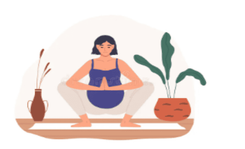
- Start in a Standing Position: Begin with your feet slightly wider than hip-width apart. Point your toes outward at a gentle angle.
- Lower Slowly: Bend your knees and lower your body into a deep squat. Go only as far as is comfortable. Keep your heels grounded (if not, support them with a folded blanket or wedge).
- Join the Hands: Bring your palms together in front of your chest in Anjali Mudra (prayer position).
- Open the Hips: Use your elbows to press gently against the inner knees, encouraging the thighs to open, but never forcing.
- Align the Spine: Keep your spine long, chest lifted, and gaze soft.
- Breathe Deeply: Stay for 5–10 slow, deep breaths, or as long as is comfortable. Feel free to place a bolster or block under your seat for support.
- Come Out Gently: To rise, press into your feet and engage your thighs as you slowly lift back to standing.
Pros and Cons of Malasana in Pregnancy
Pros:
- Gently opens the hips and pelvic region, which may aid during childbirth.
- Helps to release lower back tension, especially as the baby grows.
- Encourages relaxation of the pelvic floor—a key area in both pregnancy and delivery.
- Supports healthy digestion and may help relieve constipation.
- Aids in fetal positioning, especially in the third trimester.
Cons:
- Can feel intense on the knees or ankles if not supported properly.
- If balance feels compromised, squatting may create discomfort or anxiety.
- In later stages, the deep squat may put pressure on varicose veins or pelvic instability.
- Not suitable for long holds if there is swelling, dizziness, or fatigue.
Contraindications: When to Avoid or Modify Malasana
- Placenta previa, pelvic girdle pain, or pubic symphysis dysfunction should be red flags for avoiding deep squats.
- Avoid Malasana if you're experiencing severe swelling, high blood pressure, or fainting spells.
- Use caution in the third trimester—modify with props or try a wall-supported squat if needed.
- Women with knee or ankle injuries, sciatica, or hemorrhoids may find this pose uncomfortable or risky.
- Never hold the pose to the point of breathlessness or strain—listen to your body’s cues.
Benefits of Malasana for Pregnant Women
- Promotes flexibility and mobility in the hips and groin.
- Encourages a calm, meditative state through focused breathwork.
- Strengthens and gently tones the legs, core, and lower back.
- Builds confidence in your body’s ability to birth your baby naturally.
- Creates space for the baby to move into optimal birthing position.
- Can offer emotional relief from anxiety, fear, or tension related to labor.
Trusting the Wisdom of Your Body
Pregnancy teaches us to surrender. It teaches us to release control, to soften, and to find strength in vulnerability. Malasana, in all its simplicity, mirrors these very lessons. It doesn’t demand performance or perfection. Instead, it invites you to sink into your body and trust its innate design.
As you move deeper into your pregnancy, try to think of Malasana not as a pose to "master," but as a moment to connect—with your baby, your breath, and your power. Let this squat become a daily ritual, a space of quiet strength in a world that’s constantly changing.
Because at the end of the day, you are not just preparing to birth a child—you are becoming a mother. And there is no yoga greater than that.