
Makar Sankranti: The Sun's Celestial Transition
When the sun turns north, spring awakens

Kushal K
08 Nov 2026 • 6min
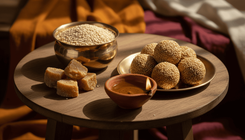
Makar Sankranti is the day the sun enters Makara, the zodiacal sign of Capricorn in Vedic astronomy. At this moment, the sun turns northward in the sky after its southward journey—a shift so significant that it has shaped the calendar and ritual life of the Indian subcontinent for thousands of years. In most of India, this happens in mid-January each year, though the exact date shifts slightly because the lunar and solar calendars move differently. The moment marks the beginning of uttarayana, the northward half of the year, and every major Hindu celebration at this time—whether called Pongal in Tamil Nadu, Lohri in Punjab, or Makar Sankranti elsewhere—is a greeting to this turning point.



The Sun's Journey and Uttarayana
For those who follow the Panchanga, the Hindu calendar, the year divides at the two turning points of the sun. When the sun is at its southernmost point in the sky, this is dakshinayana, the southern journey. When it turns and moves northward again, this is uttarayana, the northern journey. Most of India considers uttarayana the auspicious half of the year—a time of increasing daylight and warmth, and spiritually, a time when the veils between the physical and celestial worlds are thought to be thinner. Makar Sankranti is the day this turning happens, and it is why so many significant life events—marriages, yagnas, new endeavours—are scheduled to begin during uttarayana rather than dakshinayana. The timing is not arbitrary: the sun's apparent path against the fixed stars, the ecliptic, is the foundation of all Vedic timekeeping, and the two solstices mark its extremes.
Names and Celebrations Across India
The same moment is called by different names in different regions, and each celebration carries the flavour of its landscape. In Tamil Nadu, it is Pongal, when families cook the new rice harvest in large pots, letting them boil over as a symbol of abundance and gratitude. In Karnataka and Andhra Pradesh, it is Uttarayan or Uttarayana, named for the sun's northward turn itself. In Punjab and northern India, it is Lohri, celebrated on the night before, with bonfires, sesame seeds, jaggery and sugarcane—crops of the winter harvest—offered to the fire and shared as prasad. In Gujarat, it is Uttarayan too, and kites fill the sky as families gather on rooftops. In Bengal, the festival is Poush Sankranti, when til and gur (sesame seeds and jaggery) are exchanged with the greeting "Til gur khao, ar mithe mithe katha bolo"—eat sesame and jaggery, and speak sweet words. In Maharashtra, Tilgul, a sweet made from sesame and jaggery, is exchanged in the same spirit. What unites all these celebrations is the reckoning of the solar moment and the harvest immediately before it, but what makes each distinct is the shape of local earth and tradition.
The Significance of Sesame and Jaggery
Across most Makar Sankranti celebrations, sesame seeds and jaggery appear not by accident. The sesame plant, til, flowers in winter and ripens as the cold ends, so sesame seeds are literally the harvest of the chilly dakshinayana months. Jaggery is made from sugarcane, the sweetness of the previous year's fields. Together they are warmth and sweetness offered at the threshold of spring—a natural alchemy of gratitude and hope. In many homes, til and gur are made into sweets and laddu and shared with family, friends and neighbours. The gesture carries a simple blessing: "May our relationship be as sweet as this." Sesame is also valued in Ayurveda for its warming and grounding properties, so sharing it at this turning point has both a ritual and a wellness intention. Some families also make chikhalwali, a mixture of sesame, jaggery and puffed rice, which is distributed to children and elders. The uniformity of these ingredients across India's diverse regions suggests that Makar Sankranti taps into something older than any single regional identity—the shared human need to mark the sun's return and sweeten the transition.
Rituals and Personal Observance
Many people bathe in rivers and holy waters on Makar Sankranti, particularly in the Ganges and other sacred streams, though this is neither mandatory nor confined to this day alone. Some perform simple pujas at home, offering sesame and jaggery to the sun, or giving dan (gifts) of these items, blankets or grain to those in need. The Aditya Hridayam, an invocation to Surya, the sun god, is recited by some. A common practice is to oil the body with til oil (sesame oil), which is considered particularly beneficial at this season. Neither the festival nor its significance depends on any single ritual form: the core meaning is personal and comes from the act of turning your attention to the sun's movement, to the threshold of spring, and to the acknowledgement that the year is shifting again. If you live in a place where your family has never marked this day, beginning with a simple gesture—sharing sesame and jaggery with a neighbour, bathing with awareness, or sitting quietly to watch the dawn—honours the same celestial event that has been marked across these lands for millennia.
The Solar Calendar and Agricultural Life
Makar Sankranti falls roughly when the agricultural year also turns in most of India. The winter crops—wheat, chickpeas, mustard—are approaching harvest, and the fields are at their fullest. The new rice has just been gathered in the south. New sugarcane is being pressed. This synchrony between the solar calendar and the harvest cycle is not coincidental: the two developed together. Farmers have always watched the sun to know when to plough, plant and reap, and the Panchanga encodes this knowledge. Makar Sankranti is when day length begins to noticeably increase again and the worst of winter is past. It is when most of India can begin to move outdoors more freely. It is also a day of rest for many: the new harvest is in, the grinding work of threshing and storage lies ahead, and there is a moment to celebrate. This layering of the astronomical, the agricultural and the social is why Makar Sankranti feels less like a imposed religious observance and more like a natural threshold that the calendar and the land have agreed upon.
Common questions
Why is sesame and jaggery eaten on Makar Sankranti?
Sesame seeds ripen during the winter months, and jaggery is made from the previous year's sugarcane harvest, so both are the harvest of the cold season ending. Sharing them symbolizes gratitude for the harvest and a wish for sweetness in relationships as the year turns.
Is Makar Sankranti the same date every year?
No—while Makar Sankranti typically falls in mid-January, the exact date shifts by a day or two each year because the lunar and solar calendars move at different rates. Check the Panchanga or a reliable almanac for the date in your year.
What is the difference between Makar Sankranti and Pongal?
They are the same celestial moment—the sun entering Makara—but Pongal is the regional Tamil name for it and includes unique traditions like cooking new rice in large pots. Lohri, Uttarayan and Poush Sankranti are other regional names for the same solar event.

Related Articles


