Krishna Dwarka City Story: Why He Built the Sea Kingdom
The sacred capital Krishna raised from the ocean

Sunil Chaurasia
06 Nov 2026 • 5min
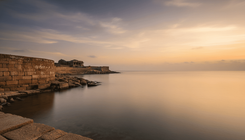
The Krishna Dwarka city story begins with flight and ends with sanctuary. When Krishna left Mathura after the death of Kansa, he needed more than safety—he needed a place to rebuild his world. Pursued by enemies and the remnants of old kingdoms, he travelled west to the coast of what is now Gujarat. There, tradition says, he raised Dwarka from the sea itself, creating a capital that would become the seat of his kingdom and one of the four cardinal pilgrimage sites of Sanatana Dharma.



Why Krishna Left Mathura
Mathura had been the stage of Krishna's childhood—the city where he was born in secret, raised in hiding with the cowherd Nanda and his wife Yashoda, and where he later killed the tyrant Kansa. But Kansa's death did not bring peace. His father-in-law Jarasandha, the king of Magadha, vowed vengeance and attacked Mathura repeatedly, determined to avenge his daughter's husband. Krishna faced eighteen assaults on the city. Though he defeated Jarasandha each time, the constant warfare exhausted his people and ravaged the land. The city had suffered enough.
The texts describe how Krishna, consulting with his advisors and elders, decided that Mathura's vulnerability was not temporary but structural. A landlocked city would always draw invaders seeking the wealth and prestige of controlling it. He needed to establish a kingdom that could thrive in safety, where his people could prosper and he could expand his influence without the bleeding drain of perpetual siege. This was not defeat—it was a strategic choice rooted in compassion for those who depended on him.
The Sea Kingdom Rises
The choice of location was deliberate. The western coast, near what is now Jamnagar in Gujarat, offered natural defences. A kingdom built partly in the sea and partly on land could not be conquered by conventional armies. The ocean itself became a moat, protection written into the landscape.
The texts vary in describing how Dwarka was actually constructed. The Sanskrit texts speak of Krishna subduing the sea and reclaiming land from it—a metaphorical language that reflects both engineering feat and mythic grandeur. Some accounts describe how he and his architects designed a city with walls, gates, bazaars, temples and palaces. Other traditions speak of his expanding the kingdom through alliance and conquest as well as settlement. What emerges across these accounts is an image of a thriving port city, a centre of commerce and culture, a place where Krishna could rule not as a warrior pressed into constant defence but as a statesman building something enduring.
Dwarka became more than a refuge. It was the capital of Krishna's kingdom of Anarta, a centre where his family, his companions and thousands of followers could live in peace. It was here that many of his wives joined him, including Rukmini, Satyabhama and others. It was from Dwarka that he governed and from which his influence radiated across the regions of western India.
Dwarka as Sacred Space
Over the centuries, Dwarka transformed from a historical kingdom into a pilgrimage destination of the highest order. One of the four sacred Dhams that anchor Hindu spiritual geography—the cardinal points believed to be protected by Shiva—Dwarka represents the southwest, the realm of final liberation. The Dwarkadhish temple, dedicated to Krishna as the lord of Dwarka, stands on the coast, and pilgrims have visited it for generations to honour his memory and seek his blessings.
The city exists in two registers simultaneously: the historical kingdom where Krishna ruled, and the eternal spiritual centre where his presence is believed to dwell. This doubling—the real and the sacred—is characteristic of how India holds its past. Dwarka is not only a story but a lived place, a destination people still travel to, waters pilgrims still enter.
The Deeper Meaning
The Krishna Dwarka city story carries resonance beyond the historical or the devotional. It speaks to something universal: the journey from place of origin to place of belonging. Mathura was where Krishna was born and where his childhood unfolded, but Dwarka was where he became a king and built a civilisation. The move itself—westward, toward the sea, toward transformation—mirrors a spiritual truth many traditions recognise: that sometimes leaving what we know is necessary to reach who we must become.
In the Mahabharata and other texts that refer to Dwarka, the kingdom appears as both a triumph and a poignant illustration of impermanence. The texts describe how, after Krishna's death, Dwarka was eventually swallowed by the sea—not through military defeat but through the inexorable movement of time and tide. Even a kingdom built on strategy and vision could not withstand the entropy that touches all earthly things. This cyclical view of creation and dissolution is woven into Dwarka's story as surely as it is woven into the ocean that protected it.
Today, people journey to Dwarka to stand at that boundary between land and sea, to walk the streets that tradition says Krishna walked, and to feel connected to a moment when divinity took embodied form and made a choice that shaped history and faith both.
Common questions
Is Dwarka mentioned in the Mahabharata?
Yes, Dwarka appears in the Mahabharata as Krishna's kingdom. The text describes it as a major city and the centre of Krishna's rule, and also recounts how it was submerged after Krishna's death.
Can you still visit Dwarka today?
Yes. Dwarka in Gujarat is one of the four cardinal Dhams and remains an important pilgrimage site. The Dwarkadhish temple stands on the coast where pilgrims visit to honour Krishna.
Why did Krishna choose the sea for Dwarka?
The ocean provided natural protection against military invasion. A kingdom built partly in the sea could not be conquered by conventional armies, offering safety from the repeated attacks Mathura faced under Jarasandha.

Related Articles