
Karva Chauth Traditions: the Fast, the Sieve and the Story
A fast for love, lit by the moon.

Kushal K
14 Nov 2026 • 7min
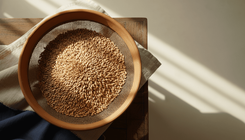
Karva Chauth is a vrat—a ritual fast—observed by married women across North India, most commonly in the states of Rajasthan, Uttar Pradesh, Madhya Pradesh, Haryana and Punjab. The word karva means earthen pot, and chauth means the fourth day; the vrat falls on the fourth day after the full moon of the month of Kartik, and the traditions associated with it revolve around the earthen sieve and pot through which women see the moon. The fast lasts from sunrise until moonrise, and it is undertaken for the wellbeing, long life and prosperity of the husband.



The Story of Veervati
The most widely told story associated with Karva Chauth is the tale of Veervati, a princess with seven brothers. On the night of Karva Chauth, Veervati was fasting for the first time. Her brothers, teasing her, held a sieve up to the sky so that when she saw the false moon through it, she believed the real moon had risen. She broke her fast, thinking the ritual was complete. Very soon after, news came that her husband had died. Grief-stricken, Veervati wept for seven days and nights without pause. Moved by her devotion, the gods brought her husband back to life. From that day, she continued to observe the fast faithfully, and she survived her husband and lived to see her children and grandchildren.
Different regions tell variations of this story. Some versions say the brothers created a false moon using a mirror or a lamp, while others add details particular to their own tradition. The core of the story remains the same: a woman's steadfast devotion to the fast, despite deception, is rewarded. The tale is not about blind obedience but about the power of sincere intention, and it has been told and retold by mothers to daughters for generations as part of the vrat katha—the story told during the fast to sanctify the day.
The Ritual of the Sieve
On the evening of Karva Chauth, women gather to observe the ritual. An earthen sieve, or chalni, traditionally filled with wheat or other grains, is central to the practice. When the moon appears, women look through the sieve at the moon, and in some traditions at the husband's face through the sieve as well. The sieve is believed to magnify and purify the moon's light. After this ritual viewing, the woman's fast is broken: first, the husband feeds her with his own hands, or she receives sweets and water from him. This exchange—the sieve, the moon, the breaking of the fast with the husband's participation—creates a moment of intense focus on the marriage bond.
In some regions, women fast together in groups and observe the ritual collectively. In others, the practice is more solitary. Some families have the woman's mother-in-law or elder women of the house guide the ritual, while in others the woman performs it independently. The flexibility within the core practice has allowed Karva Chauth to persist across different households and regions without losing its essential meaning.
Preparation and Observance
The preparation for Karva Chauth begins days in advance. Women shop for the special foods eaten to break the fast: sweets, fruits, and sometimes puri and sabzi. Mehendi—henna—is applied to the hands as part of the celebration, though this is more common in some regions than others. Many women wear red or maroon clothing on the day itself, and some apply sindoor (vermillion) in the parting of their hair as a sign of their married status.
The fast is strict: no food, no water, from sunrise until the moon is sighted and the ritual is complete. However, there are variations. In some households, women eat before sunrise or immediately at sunset. Some choose to fast for a full day and night, breaking the fast only the next morning. Widows and women whose husbands have died are traditionally not expected to observe the fast, though this practice is evolving as traditions adapt to modern life. Similarly, women in the early months of pregnancy or those whose health might be affected by fasting often modify or skip the observance.
The Earthen Pot
The karva—the earthen pot—gives the festival its name, though the pot itself plays a less prominent role in modern practice than it did historically. Traditionally, the karva was used to cook the grains and prepare the meal to break the fast. Some families still use the earthen pot for this purpose, believing that food cooked in it and shared acquires a particular sanctity. The pot, being unglazed and permeable, was also believed to have purifying properties. In some traditions, the pot is decorated or marked to identify each woman's vessel, creating a visual continuity with the past.
Variations Across Regions
Karva Chauth is observed across North India but with regional and community-specific customs. In parts of Rajasthan, the fast is preceded by the purchase of clay pots from a specific bazaar or market, and these pots are often given away or broken after the festival as part of the ritual closure. In Punjab, the festival carries particular significance and is observed with great ceremony. In urban areas, women often gather in groups to observe the fast and perform the ritual together, creating a social and spiritual bond.
The names and roles of the earthen sieve and pot vary as well. In some places it is called a chalni, in others a supa. The specific grains used to fill it, the exact timing of the ritual, and whether other family members participate in any part of the observance also differ by region and family tradition.
Karva Chauth Today
Karva Chauth remains widely observed across North India, and it has also been adopted and adapted by Indian communities living outside India. The festival has become a marker of married identity for many women, a day of intention-setting toward their marriage, and an expression of cultural continuity. For some, it is an opportunity to connect with their mothers and mothers-in-law and to learn the stories and practices passed down through generations. For others, it is a personal spiritual practice.
The festival has also prompted ongoing reflection within Indian society. Conversations about choice, agency, and the meaning of fasting for another person's wellbeing have evolved, and some women approach the fast with an understanding that it is a ritual for their own wellbeing and for the strength of their marriage as a partnership, rather than as a one-directional duty. These interpretations do not contradict the tradition; they extend it, keeping it alive and meaningful.
Common questions
When do I observe Karva Chauth—what date in 2025?
Karva Chauth is observed on the fourth day after the full moon of Kartik month, which changes yearly with the lunar calendar. Check your local Panchanga or temple calendar for the exact date in your area.
Can I break my fast with water, or only food?
Traditionally, the fast is broken with food given by the husband. In practice, many women drink water or eat a small amount before the formal ritual with their husband, depending on their health and family custom. There is no single rule that applies everywhere.
What if I'm pregnant or my health prevents fasting?
Women in early pregnancy or with health conditions are traditionally exempt from the strict fast. Many women modify the observance instead, eating a light meal at dawn or sunset. Discuss with your family or elder women in your household what feels right for your circumstances.

Related Articles


