Kartik Purnima: A Full Moon Steeped in Hindu Devotion and Light
When light and devotion meet on sacred waters

Sunil Chaurasia
21 Oct 2026 • 8min
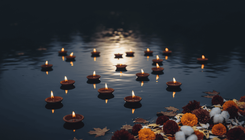
Kartik Purnima is the full moon that falls during the Hindu month of Kartik, roughly October or November by the Gregorian calendar. It holds a place of quiet reverence across Hindu traditions, marked by rituals of light, pilgrimage and remembrance. The significance of Kartik Purnima lies not in a single story but in layers of meaning that have shaped practice for centuries: it is a day when the boundary between the earthly and the divine feels permeable, when devotees light lamps on water and walk ancient pilgrimage routes, when they honour departed ancestors and celebrate acts of devotion by figures revered across the tradition.



Why Kartik Purnima Matters in the Hindu Calendar
Kartik Purnima marks the full moon at the heart of the Kartik month, a time when autumn transitions toward winter in much of India. The month itself carries significance in the agricultural and spiritual calendar: it is associated with Lakshmi, the goddess of abundance and prosperity, and the festival of Diwali often falls in this month as well. Kartik Purnima falls on a different date each year because the Hindu calendar is lunar; the date is determined by the movement of the moon rather than fixed to the Gregorian calendar.
Beyond the fixed liturgical significance of a full moon in this particular month, Kartik Purnima also commemorates events in the lives of several figures venerated across Hindu traditions. For many Vaishnavites (those devoted to Vishnu and his avatars), this day marks the birth of Guru Nanak, the founder of Sikhism, though the observance itself spans multiple spiritual traditions. In other contexts, it is associated with the cosmic display called the descent of the Ganga to earth. Different samprayas (schools of practice) and regions emphasize different meanings, but what unites them is the sense that Kartik Purnima is a day when spiritual practice carries particular weight.
Lighting Lamps and Bathing in Sacred Waters
The most visible practice on Kartik Purnima is the lighting of lamps, or diyas, on water. Devotees gather at rivers, tanks and lakes and float small oil lamps across the surface. This simple act carries layers of meaning: the lamp symbolizes the light of knowledge dispelling ignorance, the water represents the sacred and purifying, and the act itself is one of offering—placing something precious (the flame) into something vast and eternal.
The practice is especially associated with pilgrimage to sacred rivers and water bodies. Devotees bathe in rivers like the Ganga, Yamuna and Godavari, or in temple tanks maintained across India, and perform rituals of ablution and prayer. In some regions, the ritual is called kartik snan, the Kartik bath. The idea is not merely physical cleansing but spiritual renewal: the waters themselves are understood as carriers of blessing and transformation.
In towns and villages without access to major pilgrimage sites, the ritual simplifies but does not disappear. People light diyas at home and, where possible, float them on ponds or streams, or simply place them on household water containers. The spirit of the practice remains: an act of devotion through light, witnessed on water, on a night when the full moon itself illuminates the sky.
Commemorations and Spiritual Observances
For many Hindus, Kartik Purnima is also a day of remembrance. Some observe it as a day to honour ancestors, performing rituals (tararpan or pind dan) that are believed to offer sustenance and peace to departed souls. This practice links Kartik Purnima to older harvest festivals and seasonal transitions, when the boundary between living and dead is thought to be especially thin.
Others mark the day by renewing their commitment to spiritual practice. Some choose this auspicious day to begin a discipline—a vrat (fast), a meditation practice, recitation of a mantra, or a vow. The full moon itself is considered energetically potent in many yoga and tantric traditions; practitioners may choose Kartik Purnima as a date to deepen their sadhana (spiritual practice).
In some communities, the day is marked by large gatherings at temples. Priests perform special pujas, and devotees offer flowers, incense and prasad (blessed food) at shrines. The observance is often joyful as well as devotional: songs are sung, stories are told, and the gathering itself becomes part of the spiritual significance.
Regional Variations in Practice
The way Kartik Purnima is observed varies across India and among different communities. In North India, the lighting of diyas on water is widespread and central to the observance. In some regions of South India, Kartik Purnima is linked to temple festivals and ritual bathing in temple tanks, with less emphasis on the lamp-lighting practice. In the Maharashtrian tradition, Kartik Purnima (called Kartik Poornima) is particularly associated with the ritual of rolling in turmeric and bathing, a practice believed to have healing properties.
Some communities celebrate it with fairs and markets that combine spiritual devotion with commerce and social gathering. The festival feels different in a metropolitan city, where devotees might gather at a temple or a park to light lamps together, than it does in a village where the practice has unfolded the same way for generations.
What binds these variations is the common thread of light, water and intention. Whether the ritual is elaborate or simple, whether it is rooted in a specific mythological remembrance or in a general sense of seasonal spiritual significance, Kartik Purnima remains a day when many Hindus choose to turn toward practice, to light a lamp, and to renew their connection to something beyond the everyday.
Preparing for Kartik Purnima: What You Can Do
If you are moved to observe Kartik Purnima, the entry point is simple. Determine when the full moon falls in the month of Kartik in your year (your panchang, or Hindu calendar, will show this, or search for the date online). On that day, if possible, visit a river, lake or sacred water body in your region. If travel is not possible, even a large vessel of water will serve.
Before sunset, or at the time the full moon rises (again, your panchang will guide you), light a diya—an oil lamp or candle—with intention. This might be a prayer of gratitude, a remembrance of someone you have lost, or simply a moment of stillness. If you are near water, float or place the lamp so it catches the light of the full moon. If you are lighting at home, place the lamp safely near water—a bowl, a sink, a bucket—and allow it to burn for as long as it can do safely.
Bathe if you can, even a simple wash of the face and hands with mindful attention, and offer a small gift to the waters if the occasion allows: flowers, rice, a few grains. The specifics matter less than your presence and intention. Kartik Purnima is not a festival that requires perfect ritual form; it asks for your attention and an open heart.
Observe Kartik Purnima at Home or Near Water
- Find the date Check a panchang or Hindu calendar to determine when Kartik Purnima falls in your year. Note the time of moonrise or sunset, when the observance is traditionally done.
- Gather a lamp and water Prepare a diya (oil lamp or candle) and gather water in a vessel—a bowl, bucket, or any container. If possible, visit a nearby river, lake, or sacred water body instead.
- Light the lamp with intention As the full moon rises or at sunset, light the diya. Hold a moment of prayer, gratitude, or remembrance. This might be for the departed, for spiritual clarity, or simply to mark the sacred turn of the season.
- Offer the lamp to water If near a river or large body of water, float or place the lamp so it rests on the water surface, catching the moonlight. If at home, place it safely near your water vessel.
- Bathe mindfully Wash your hands and face, or bathe if possible, with awareness. Visualize cleansing and renewal. This completes the ritual.
- Close with an offering If you wish, offer flowers or a pinch of rice to the water as a final gesture of respect. The ritual is now complete.
Common questions
What is the exact date of Kartik Purnima in 2026?
Kartik Purnima falls on a different Gregorian date each year because the Hindu calendar is lunar. Consult a panchang (Hindu calendar) or search online for the specific date in 2026 for your region, as it may vary slightly by location.
Can I observe Kartik Purnima if I don't live near a river or sacred water body?
Yes. You can light a diya at home near any vessel of water—a bowl, tank, or bucket—with full spiritual validity. The intention behind your practice matters more than the scale or location of the ritual.
Is fasting part of the Kartik Purnima observance?
Fasting is not universally required for Kartik Purnima, though some devotees choose to fast or observe dietary restrictions as part of their spiritual discipline on this day. Check with your sampradaya or family tradition for guidance.

Related Articles