
Kanyadaan: The Meaning and Significance of the Ritual
A Father's Gift, A Life's Transition

Kushal K
19 Nov 2026 • 7min
Kanyadaan, often translated as "the giving away of the bride," is one of the most significant rituals in a Hindu wedding. It is the moment when the parents, typically the father, formally hand over their daughter to the groom and his family. But kanyadaan is far more than a symbolic gesture. It is a ritual that marks a profound transition—the bride's movement from one household to another, and her passage into a new phase of life. To understand kanyadaan is to understand how Hindu tradition views marriage, family bonds and a woman's place within them.



The Meaning of Kanyadaan
Kanyadaan comes from two Sanskrit words: kanya, meaning girl or maiden, and daan, meaning gift or donation. Literally, it translates to "the gift of a maiden." In Hindu philosophy, daan holds deep spiritual significance. When something is offered as daan, it is given with no expectation of return, with grace and with the understanding that it is sacred. Kanyadaan, then, is not simply a transfer of custody but an act of profound spiritual significance.
The ritual acknowledges that the parents have been stewards of their daughter's upbringing and education. Through kanyadaan, they formally entrust her wellbeing, happiness and future to the groom and his family. This is considered one of the highest forms of daan a person can offer, because a daughter is viewed as a precious gift, and her wellbeing is the gift being given.
The spiritual dimension of kanyadaan extends beyond the practical. In many Hindu traditions, the act of daan is believed to create karmic benefit for the giver. The parents who perform kanyadaan with sincerity and devotion are thought to accumulate merit and blessings. This is why the ritual is approached with solemnity and often with a sense of spiritual purpose.
The Ritual Elements
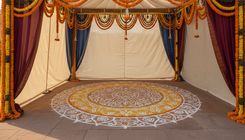
Kanyadaan typically takes place during the mandap ceremony, the central part of the wedding ritual. The bride and groom sit together under the mandap, the decorated canopy that symbolises the sacred space of marriage. The bride's parents, or sometimes other senior family members if the parents are not present, guide the bride's hand into the groom's hand. This gesture is the heart of kanyadaan.
Often, the bride's parents pour water over the couple's joined hands or anoint them with turmeric and oil before the handover. Some families offer flowers or garland as part of the ritual. The specific actions vary by region, caste and family tradition. In some communities, the parents recite vows or blessings as they perform kanyadaan, formally stating their wish for their daughter's happiness and prosperity in her new life.
The ritual is usually accompanied by mantras chanted by the priest. These mantras invoke blessings from the gods and call for the bride's protection, prosperity and a long and fulfilled marriage. The mantras typically emphasise the bride's transition to her new role as a wife and her integration into her new family.
What makes kanyadaan distinct is that it is a moment of intentional surrender. Unlike some rituals that are performed with mechanical precision, kanyadaan calls for genuine emotional and spiritual presence from the parents. They are not simply going through motions; they are consciously choosing to release their daughter into adult life and into her marriage.
Regional and Family Variations
Kanyadaan takes different forms across India. In North Indian Hindu weddings, particularly in many Brahmin communities, kanyadaan is a prominent ritual where the bride is formally handed over. In South Indian temple weddings, the ritual may be structured differently or called by another name, though the core idea—the parents' blessing and formal acceptance of the groom—remains present.
In some communities, kanyadaan involves the parents placing the bride's hand in the groom's and speaking words of blessing directly. In others, it is a more silent gesture, a hand-to-hand transfer without spoken vows. Some families conduct kanyadaan with great ceremony; others perform it quietly and simply. The ritual is also sometimes adapted when parents are deceased, elderly or unable to be present. In such cases, another senior family member, such as a grandfather or uncle, may perform kanyadaan on their behalf.
The meaning remains constant even as the outer form changes: the formal transfer of the bride from her birth family to her marital family, and the blessing of her new life.
Kanyadaan and Modern Understanding
In contemporary times, kanyadaan is sometimes viewed through a lens of discomfort. The phrase "giving away" can sound to modern ears like the transfer of property, or suggest that a woman is passive in her own marriage. This is a significant misreading of the ritual's intent and meaning.
Kanyadaan is not about ownership or control. It is about blessing and transition. The bride is an active participant in the ritual; she chooses to be there, she accepts the groom's hand. The parents are not disposing of a burden but offering their blessings and formally accepting their daughter's adult choice to marry. In many communities, the bride's consent is explicitly sought before marriage, and kanyadaan formalises the parents' acceptance of this choice.
Many modern couples understand kanyadaan as a moment of gratitude—the bride's thanks to her parents for raising her, and the parents' blessing for her new life. Some families interpret it as a mutual exchange: the parents give their daughter, and implicitly accept the groom into their family, while the groom accepts his responsibility toward his bride.
The ritual's endurance across centuries suggests that it speaks to something deeper than the transfer of ownership. It speaks to the significance of family bonds, the need for blessing in life's major transitions, and the recognition that moving from one household to another is a profound change that deserves to be marked and sanctified.
Why Kanyadaan Matters
Kanyadaan matters because it ritualises what might otherwise remain unspoken or unacknowledged. A daughter's marriage is a major life event not only for her but for her parents. Kanyadaan gives this transition a form, a moment, a name. It allows the parents to consciously and formally step back from one role and into another. It allows the groom's family to formally accept a new member. And it allows the bride to be seen and blessed as she moves into a new chapter.
The ritual also keeps alive the Hindu understanding that major life transitions are not merely practical arrangements but spiritual and social passages that deserve ceremony. By performing kanyadaan, families acknowledge that marriage is more than a legal contract. It is a sacred bond, entered into with the blessings of both families and, in the religious sense, under the witness of the gods.
Common questions
Is kanyadaan practiced in all Hindu wedding traditions?
Kanyadaan is central to many North Indian Hindu weddings, particularly in Brahmin communities. In South Indian temples and some other traditions, the ritual may take a different form or be called by another name, though the concept of the bride's blessing and formal acceptance remains. Regional and family variations are common.
What should the bride's parents say during kanyadaan?
There is no fixed script. Many parents recite or speak words of blessing, such as wishes for their daughter's happiness, health and prosperity in marriage. Some families speak in silence, allowing the priest's mantras to accompany the gesture. The words, if any, come from the heart of the parents and the traditions of their family.
What happens if the bride's father is not present?
If the bride's father is deceased, elderly or unable to attend, another senior family member such as a grandfather, uncle or elder brother typically performs kanyadaan on his behalf. The ritual is adapted, but the meaning—the family's blessing and formal acceptance—remains the same.

Related Articles


