
Kanwar Yatra: Carrying Ganga Water to Shiva
Sacred water, barefoot pilgrims, a month of devotion

Abhilash Ramakrishna
16 Nov 2026 • 6min
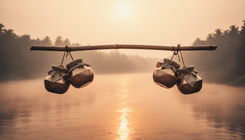
Kanwar Yatra is a pilgrimage undertaken during the monsoon month of Shravan, in which devotees travel on foot to the Ganga river, collect its water in a vessel called a kanwar, and carry it back to their homes or to temples to pour over Shiv lingams. The practice is rooted in the belief that Shiva drinks the waters of the Ganga and that offering this sacred water brings his blessings. For a month each year, the roads across northern and central India fill with pilgrims dressed in bright saffron cloth, moving between river and temple in one of Hinduism's most visible acts of faith.



The Kanwar and How It Carries Sacred Water
The kanwar itself is a long pole, typically made of bamboo, carried across the shoulders. Two vessels hang from each end, balanced so the weight distributes evenly. The pilgrim fills these with water from the Ganga or from sacred wells and tanks dedicated to Shiva. These vessels are sealed during the journey to keep the water pure. Some kanwariyas, as the pilgrims are called, travel distances of 50 kilometres or more, sometimes walking for entire nights to complete their journey by dawn. The kanwar has remained largely unchanged in design for centuries, though its construction materials and decoration vary by region and family tradition.
Why the Month of Shravan Matters
Shravan is the fifth month of the Hindu lunar calendar, falling between mid-July and mid-August. During this month, Shiva is said to be especially receptive to worship and devotion. The monsoon rain and the swelling of the Ganga create conditions that make the water particularly auspicious. Many devotees observe other fasts and practices during Shravan as well, but the kanwar yatra stands out for its public, physical dimension. Some families undertake it out of a specific vow—a promise made to Shiva when seeking his help—while others make it an annual observance. The month coincides with a season when many cannot work their fields, creating time for the pilgrimage.
The Journey: Route, Companions and Community
Kanwariyas rarely travel alone. They move in groups, sometimes hundreds together, following routes their families have walked for generations. These routes often converge on major temples to Shiva or on temples standing beside ghats where the Ganga is easily accessible. Along the way, local communities often set up temporary stops offering water, fruit, or a place to rest. The journey is understood as a form of austerity—tapu—in which the pilgrim gives the body to heat, dust and effort. Some kanwariyas take vows of silence or abstain from particular foods. The physical hardship is not a side effect of the pilgrimage but part of its purpose: it is the devotion and self-surrender made visible.
When Kanwariyas Arrive at the Temple
On reaching home or the chosen temple, the kanwar is carefully set down and the water is poured in a controlled stream over a Shiva linga. This act of pouring, called abhishek, is understood as bathing the deity. Some devotees repeat mantras or sing devotional songs as they pour. The water that falls away is collected as tirtha—blessed water—and distributed to family members and others who attend. In some temples, the collected water is used to bathe the linga throughout the day as other devotees arrive with their kanwars. By the end of Shravan, some lingas have been bathed with water brought from hundreds of kilometres away, carrying the devotion of thousands of individual journeys into a single place of worship.
Variations Across Regions and Sampradayas
The kanwar yatra is most widespread in northern India, particularly in Uttar Pradesh, Bihar, Haryana, and Rajasthan, though it is also undertaken in parts of Maharashtra, Madhya Pradesh and Gujarat. The form of the pilgrimage varies: some kanwariyas fill their vessels from the Ganga itself, others from designated temples or sacred sites. In some regions, women undertake the yatra alongside men; in others, it is predominantly male. Some communities have specific rules about fasting or silence; others emphasize the joy and song of the group. The deity honoured is typically Shiva, but in some places Ganga herself is the primary object of worship. These differences reflect local sampradaya—tradition—and family practice rather than a single prescribed way.
Preparing Mind and Body for the Yatra
Before undertaking a kanwar yatra, most devotees prepare themselves through fasting, prayer and sometimes consultation with elders or priests. The preparation might last days or weeks. The body must be readied: walking barefoot or in simple dress for extended distances requires conditioning. The mind is prepared through mantra repetition or meditation so that the hardship of the journey becomes an offering rather than a burden. Many kanwariyas also take ritual baths before departure, treating the journey itself as an extension of worship that begins long before the kanwar is lifted onto their shoulders. This inner preparation is understood as essential; the outward act without sincere intention is not truly yatra.
The Devotion Beyond the Journey
For those who undertake the kanwar yatra, the practice often changes how they experience their relationship with Shiva. The month-long exposure to the outer world—to other devotees, to strangers offering hospitality, to discomfort borne willingly—becomes part of an inner transformation. Many kanwariyas describe the experience as one of ego dissolving into something larger: the shared faith of the pilgrims, the power of the Ganga, the presence they feel when pouring the water over the linga. Some undertake the yatra only once; others make it annually for decades. It is understood not as a transaction—effort exchanged for favour—but as a gift of self to the divine.
Common questions
When does the Kanwar Yatra happen each year?
Kanwar Yatra takes place during the month of Shravan in the Hindu lunar calendar, which falls between mid-July and mid-August. The exact dates change each year because the lunar calendar does not align with the Gregorian calendar.
Can women take part in the Kanwar Yatra?
In many regions of northern India, the yatra is traditionally undertaken by men, though this practice is evolving. In some communities and areas, women participate alongside men. The rules and traditions vary by region, local sampradaya, and family practice.
How far do Kanwariyas typically walk?
Kanwariyas often travel 50 kilometres or more in a single journey, sometimes walking through the night to reach their destination by dawn. The exact distance depends on where the pilgrim starts and the location of their chosen temple or the Ganga river ghat.

Related Articles


