
Kali Puja: The Goddess of Time and Her Worship
Power incarnate, beyond fear and ego

Sunil Chaurasia
12 Nov 2026 • 6min
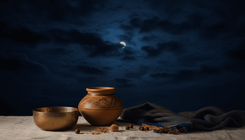
Kali Puja is not widely observed across India, but where it is performed—most prominently in Bengal and Assam—it is one of the most intimate forms of worship of the divine feminine. Unlike the grand festivals that mark the Hindu calendar, Kali Puja is a direct encounter with the goddess of time, transformation and liberation. To understand Kali Puja is to understand a different way of meeting the divine: not through fear or external rules, but through surrender to the forces that break down what must break down.



Who is Kali
Kali is a form of Shakti, the cosmic feminine power. Her name means "black" or "time"—both meanings hold truth. She is depicted dark-skinned, often shown standing on the body of Shiva, her consort. She wears a skirt of severed arms, a garland of severed heads, and her tongue lolls out, dripping blood. To the untrained eye, she appears terrifying. But in the yogic and tantric traditions from which her worship emerges, these images are not literal; they are symbols of her power to cut through illusion, slay ignorance, and consume time itself. The arms she wears represent her destruction of ego and attachment. The blood represents the vitality and life force she commands.
Kali is not cruel—she is beyond morality as the human mind understands it. She acts according to dharma, cosmic order. She appears fierce because the dissolution she brings is necessary. Just as a surgeon's knife appears cruel to the uninformed, Kali's actions appear violent to those who do not understand her purpose. She is the mother who loves fiercely, and that love sometimes takes the form of stripping away illusion and attachment.
Kali in Scripture and Tradition
The goddess Kali appears in the Devi Mahatmya, part of the Markandeya Purana, where she emerges from the anger of Durga to defeat demons that other deities cannot touch. She is also central to tantric philosophy and practice, where she represents the highest form of Shakti—the energy that underlies all existence. In the Kali Tantra and other tantric texts, she is worshipped not as an external force but as the supreme reality itself.
In Bengal, where Kali Puja is most culturally embedded, she is understood as the mother of all beings. The great saint Ramakrishna Paramahamsa, who lived in the 19th century at the Kali Temple in Kolkata, spoke of her with tender devotion. He did not see her terror but her love. This lineage of understanding—that Kali's fierceness is an expression of boundless compassion—continues in Bengal to this day. Kali is not a destroyer for destruction's sake; she is the mother who protects her children by removing what harms them.
When Kali Puja is Observed
Kali Puja is traditionally performed on the new moon night (amavasya) in the month of Kartik, which falls between October and November. In Bengal, this observance is called Kali Puja or sometimes Shyama Puja. The timing is significant: the new moon is the darkest night, when all light is withdrawn. This mirrors Kali's own darkness—not the darkness of ignorance, but the fertile void from which all creation emerges.
Some communities perform Kali Puja on other occasions, particularly during times of crisis or transformation. In parts of Assam, Kali Puja is also observed during Diwali. However, the Kartik new moon remains the primary and most widely recognized time.
The Ritual of Kali Puja
Kali Puja is performed in temples and in homes, often late at night, reflecting the goddess's association with the night and the subconscious realms. The worship begins with the purification of the space and the invocation of the goddess. An image or murti of Kali is the focal point, placed on an altar. Offerings are made: flowers, incense, and food. In traditional practice, meat and fish may be offered, though many modern practitioners substitute flowers and sweets. Alcohol, particularly wine, has also been part of historical practice, though this too is often replaced.
The key element of Kali Puja is the chanting of mantras and prayers that honor the goddess's power and invoke her blessings. The most common mantra is "Om Kali" or longer chants like the Kali Gayatri or the Kali Kavach. The worship is intensely personal—there is no elaborate ceremonial protocol that all practitioners must follow. What matters is the sincerity of the devotee's surrender and their willingness to face the goddess within themselves.
After the puja, prasad (blessed food) is distributed. In Bengal, this is often khichuri (a rice and lentil dish) and a sweet preparation. Worshippers consume the prasad and share it with family and community, completing the circle of giving and receiving.
The Inner Meaning of Kali Worship
To worship Kali is to acknowledge a truth that most spiritual traditions approach only gradually: that destruction and creation are inseparable. The old must die for the new to be born. Ego must dissolve for the self to be realized. Kali represents this necessity. She is the guru who teaches through direct confrontation with impermanence.
In tantric practice, Kali worship is also a path to liberation. The devotee does not merely pray for blessings; they seek to merge with the consciousness Kali represents. By meditating on her, by understanding her symbols, by surrendering to her will, the practitioner moves toward the realization that the self and the divine are not separate. This is the highest goal of Hindu spiritual practice: moksha, or liberation.
Kali Puja asks something that milder forms of worship do not. It asks the devotee to be brave enough to face the dark, to accept loss, and to find in that acceptance the freedom that no amount of worldly security can provide. It is not a puja for the faint of heart, but for those genuinely ready to transform.
Common questions
When is Kali Puja celebrated?
Kali Puja is traditionally observed on the new moon night (amavasya) in the month of Kartik, typically falling between October and November. In some parts of Assam, it is also observed during Diwali. The exact date varies each year according to the lunar calendar.
What offerings are made during Kali Puja?
Traditional offerings include flowers, incense, and food. Historically, meat and fish were offered, but many modern practitioners use flowers and sweets instead. Alcohol, particularly wine, has also been part of traditional practice, though many devotees now substitute other offerings based on their own practice.
Is Kali Puja observed all over India?
Kali Puja is not widely observed across India. It is most prominent in Bengal and Assam, where the worship of Kali is deeply embedded in the regional tradition and culture. In other parts of India, the goddess may be worshipped in different forms and contexts, but Kali Puja as a distinct observance is primarily a Bengali and Assamese practice.

Related Articles


