
Janmashtami: Krishna's Birth and How It Is Observed
Celebrating the birth of the beloved god

Abhilash Ramakrishna
08 Nov 2026 • 7min
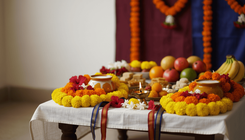
Janmashtami is the festival that marks the birth of Lord Krishna, one of the most beloved figures in Hindu tradition. The festival is observed with great devotion across India and among Hindu communities worldwide, falling on the eighth day of the dark fortnight in the month of Bhadrapada, usually between August and September. The janmashtami significance lies not just in celebrating a birth, but in honouring the arrival of an avatar—a divine incarnation believed to restore dharma, or rightness, in the world.



The Story of Krishna's Birth
Krishna was born at midnight in Mathura, in the state that is now Uttar Pradesh, to Devaki and Vasudeva. According to the Bhagavata Purana and other sacred texts, he was born as the eighth son of Devaki, which is why the festival is called Janmashtami—jat meaning birth, and ashtami meaning the eighth lunar day. At the time of his birth, his parents were imprisoned by Devaki's brother Kamsa, a tyrant king who feared a prophecy that the eighth son of Devaki would cause his downfall. Legend says that on the night of Krishna's birth, the guards fell asleep, the prison doors opened, and Vasudeva was able to carry the infant Krishna to safety across the river Yamuna to Gokul, where he was raised by Nanda and Yashoda.
This story carries deep meaning. Krishna's birth represents the triumph of good over evil, and his escape from danger symbolises the protection the divine offers to the devoted. The story is told and retold during Janmashtami, and many households act out scenes from Krishna's life, particularly his infancy and childhood in Gokul.
Fasting and Spiritual Preparation
Many devotees observe a fast, or vrat, on Janmashtami, believing it deepens their connection to Krishna and purifies the mind and body. The fast usually begins in the morning and is broken only after midnight, when Krishna's birth is commemorated. Some people observe a strict fast, taking no food or water, while others follow a partial fast, consuming milk, yogurt, fruits and light foods. The type of fast varies by region and personal belief; there is no single right way, and what matters is the intention behind it.
The fasting is not simply about abstaining from food. It is a way of focusing the mind inward, of preparing oneself for the midnight vigil, and of participating in a shared practice alongside millions of others. Many people spend the day in prayer, reading stories of Krishna, singing devotional songs, or meditating. In this way, the fast becomes a form of discipline and devotion rather than mere hunger.
Celebrating at Home and in Temples
On the eve of Janmashtami, homes and temples are decorated with flowers and colourful ornaments. Many families set up a small altar with an image or idol of baby Krishna, dressed in fine clothes and jewels. At midnight, when Krishna's birth is believed to have occurred, the prayer bells ring out, and devotees gather to sing hymns and chant mantras. The fast is then broken with offerings of milk, yogurt, butter and sweets—foods associated with Krishna's childhood in Gokul, where he was known for his mischievous love of butter and milk.
In temples across India, elaborate ceremonies are performed. Priests conduct rituals, perform aarti (the ceremonial waving of lit lamps), and distribute prasad—blessed food—to all who attend. The atmosphere is one of joy and celebration. Many temples also organise recitations of the Bhagavad Gita, the sacred dialogue between Krishna and the warrior Arjuna, or readings from the Bhagavata Purana.
The Dahi Handi Tradition
One of the most distinctive janmashtami customs is the dahi handi ceremony, particularly popular in Maharashtra and parts of southern India. Dahi means yogurt, and handi means pot. In this tradition, a clay pot filled with yogurt, butter, dry fruits and sweets is suspended high above the ground. Young people form human pyramids to reach the pot and break it, scattering its contents. The whole neighbourhood gathers to watch, and the breaking of the pot is accompanied by cheering and celebration.
The dahi handi meaning comes from Krishna's childhood in Gokul. As a young boy, Krishna would steal butter and yogurt from his mother Yashoda and the other women of the village, and would often break pots to get at the butter inside. The dahi handi ceremony recreates this beloved story, turning it into a community celebration that brings people together across age and background. The tradition also teaches that even the most mischievous acts can be redeemed when they flow from love.
Regional Variations in Observance
The way Janmashtami is celebrated varies significantly across India and among different communities. In North India, particularly in Uttar Pradesh and Madhya Pradesh, the night vigil and midnight prayer are central to the observance. In Maharashtra, as mentioned, the dahi handi is the highlight. In South India, particularly in Tamil Nadu and Karnataka, the festival may be celebrated with temple rituals and the recitation of hymns to Krishna, sometimes called Gokulashtami in these regions. In Bengal, Krishna's birthday is known as Janmashtami or sometimes Krishnapaksha, and it is observed with readings from the Bhagavata Purana and devotional singing.
In some regions, families prepare special dishes associated with Krishna—butter, milk-based sweets, and offerings of fruit and honey. The exact foods vary by region and family tradition. What unites all these celebrations is the core theme: the birth of Krishna, the joy of his divine presence, and the triumph of the good over the tyrant. Whatever form the celebration takes, Janmashtami is fundamentally a festival of devotion, joy and community.
What to Carry Away
Whether you fast, visit a temple, watch a dahi handi competition, or simply read the story of Krishna's birth, Janmashtami invites you to reflect on what the festival means to you. The festival is not only about remembering a historical or mythological event; it is about experiencing the presence of the divine in the present moment, and about connecting with millions of others who share this celebration. If you wish to observe Janmashtami, start by learning more about Krishna's life and teachings, particularly through the Bhagavad Gita. If you fast, choose a level of fasting that feels right for your body and circumstances. If there is a temple near you, consider attending the midnight celebration. And if you are curious about the traditions practised by those around you, ask and listen—Janmashtami is a festival of stories, and there is always more to learn.
Common questions
What date is Janmashtami in 2024?
Janmashtami falls on different dates each year because it follows the lunar calendar, not the Gregorian calendar. It is always observed on the eighth day of the dark fortnight in Bhadrapada, which typically falls in August or September. Check your local calendar or temple for the exact date in your region.
Do I have to fast on Janmashtami?
No. Fasting is a common practice but not required. Many people observe it as a form of spiritual discipline, but others celebrate Janmashtami through prayer, visiting temples, singing devotional songs, or learning about Krishna's life without fasting. Choose what feels right for your circumstances and beliefs.
Why is dahi handi broken during Janmashtami?
The dahi handi ceremony recreates a beloved story from Krishna's childhood: as a boy in Gokul, he would mischievously steal butter and yogurt from the village women and break pots to reach them. The tradition turns this playful story into a community celebration where people of all ages come together to break the pot suspended above them.

Related Articles


