
How to Use a Japa Mala for Mantra Repetition
Count Your Breaths, Hold Your Focus

Abhilash Ramakrishna
08 Nov 2026 • 6min
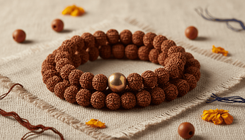
A japa mala is a string of 108 beads used to count repetitions of a mantra. When you want to know how to use a japa mala, the basics are straightforward: you hold it in one hand, recite your mantra once for each bead, moving one bead between your fingers as you complete each repetition. This simple tool helps you stay focused, count accurately without distraction, and establish a steady rhythm in your practice. Whether you are new to mantra or deepening an established discipline, a mala becomes a tactile anchor that steadies the mind and the breath.



Why 108 Beads
The number 108 holds significance throughout Hindu and Buddhist traditions. It appears in astronomy, numerology and sacred texts, but in the context of japa, its importance is practical and spiritual combined. Reciting a mantra 108 times creates a complete cycle—enough repetitions to deepen focus without becoming burdensome, yet substantial enough to feel meaningful. Some practitioners prefer working with 27 beads (one quarter of 108) or 54 beads (half), and the mala is often strung with a slightly larger bead, called the guru bead or meru, which marks both the beginning and the completion of a full round. When you reach the guru bead, you have finished one mala, and you may repeat the cycle if you wish, or simply close your practice.
Choosing Your Mala
A mala is typically strung from rudraksha seeds, tulsi wood, sandalwood, crystal, pearl or gemstone. Rudraksha is the most traditional choice, used in japa practice for centuries. The five-faced rudraksha (panch mukhi) is widely available and considered auspicious for general mantra practice. Some people choose materials based on their intention: sandalwood for calm and concentration, rose quartz for devotion and the heart, or crystal for clarity. The material does not determine effectiveness; what matters is that the mala feels right in your hands and that you commit to using it. Buy from a source you trust or from a temple shop if you are unsure. A new mala benefits from being worn or carried for a few days to attune it to your energy before you begin formal practice.
How to Hold the Mala
Hold the mala loosely in your right hand, letting it drape over your fingers. The guru bead sits between your thumb and forefinger. Using your thumb and forefinger together, gently roll the first bead (the one next to the guru bead) toward you, and as you do, recite your mantra once. Move to the next bead and repeat. Continue around the string, using the same two fingers to move each bead. Keep your hand relaxed; tension in your grip travels into your shoulders and distracts from the practice. Some practitioners rest the mala on their lap or keep it hidden under a shawl during japa to avoid distraction or to maintain privacy, particularly if they are practicing in a public space. The movement of the mala should be slow and meditative, matching the pace of your breath and the mantra itself. Do not rush through the beads; let each repetition breathe.
Choosing and Reciting Your Mantra
Your mantra can be a name or form of a deity, a sacred phrase, a seed mantra like "Om", or any Sanskrit phrase you have been given by a teacher. If you are new to mantra and have no teacher, you might begin with "Om" or a simple mantra like "Om Namah Shivaya". Japa practice works best when you know the mantra clearly and can recite it without stumbling or needing to think about the words. Whisper the mantra, speak it aloud, or recite it silently—all three methods are valid. Silent japa (mental recitation) is regarded as the most subtle and focused. When you recite aloud or in a whisper, keep your voice steady and your pace unhurried. Many people naturally find a rhythm that matches their heartbeat or their breath. As your fingers move the beads, let the mantra and the movement synchronize. This coordination between hand, voice and mind anchors your focus and prevents your attention from wandering.
Making Japa Part of Your Daily Practice
You need not sit for hours to practice japa. Many people complete one mala (108 repetitions) in about ten to fifteen minutes, though the time varies with how slowly or quickly you recite. You might practice early in the morning, during a lunch break, or in the evening. Some people do japa while walking, sitting outdoors, or waiting for an appointment. The practice fits into daily life without requiring special conditions. If you forget a bead or lose count, simply begin again without frustration; the practice is about the discipline and the intention, not about being perfect. Over weeks and months, japa becomes a natural rhythm, something your hands and mind settle into easily. Many practitioners find that a regular commitment—even a single mala daily—brings noticeable calm and clarity to their minds and their relationships.
How to perform japa with a mala
- Choose your mantra Select a mantra you know clearly or have been given by a teacher. If you are beginning, 'Om' or 'Om Namah Shivaya' are traditional choices. Make sure you can recite it without hesitation.
- Hold the mala in your right hand Let the mala drape over your fingers with the guru bead between your thumb and forefinger. Keep your grip relaxed and your hand either resting on your lap or held gently at chest level.
- Begin at the bead next to the guru Using your thumb and forefinger, roll the first bead toward you. This is your starting point; you will move around the entire string without crossing over the guru bead.
- Recite the mantra once per bead Say or think your mantra as you move each bead. Let your recitation and your breath settle into a steady, unhurried rhythm.
- Move through the full mala Continue rolling one bead at a time with each repetition until you return to the guru bead. When you reach the guru bead, you have completed one full round of 108 repetitions.
- Close or repeat Pause and notice your state of mind. You may stop here, or you may turn the mala around and begin another round, moving away from the guru bead again.
Common questions
Can I use a mala with a different number of beads?
Yes. A 27-bead mala is one quarter of 108 and works well for shorter practice sessions. Some malas have 54 beads (half of 108). Any of these numbers completes a meaningful cycle, though 108 is the traditional full round.
What should I do if I lose count during japa?
Simply begin again without frustration or judgment. The practice is about intention and discipline, not perfection. Each time you return to the practice, you strengthen your focus.
Is it better to do japa silently or aloud?
Both are valid. Silent recitation (mental japa) is considered the most subtle and inward. Speaking aloud or in a whisper helps some people maintain concentration, especially when beginning. Choose what feels natural to you.

Related Articles


