How to Set Up a Hindu Home Temple?
A Comprehensive Guide to Placements, and Setup

S Raj Abhinay
28 Mar 2025 • 8min
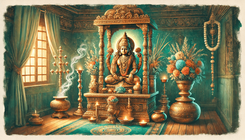
Setting up a pooja room for home is a sacred and personal endeavor, deeply rooted in Hindu traditions. A pooja mandir at home is more than just a space for worship—it is an abode of divine energy that fosters spiritual growth, harmony, and positivity in your home. According to pooja room Vastu, the right placement and design ensure the free flow of positive energy and divine blessings.
In this detailed guide, we will walk you through how to set up a pooja mandir at home while adhering to Vastu principles and traditional Hindu beliefs. We will also cover pooja room designs in hall, placement of deities, essential ritual items, and common mistakes to avoid.
The Significance of a Home Temple in Hinduism
A pooja room is considered the spiritual heart of a home. According to Hindu scriptures like the Agni Purana and Vastu Shastra, a dedicated space for worship purifies the environment, wards off negative energies, and strengthens one’s connection with the divine.
Benefits of having a pooja room interior in your home:
- Creates a serene atmosphere for meditation and worship.
- Attracts positive vibrations and divine blessings.
- Helps maintain spiritual discipline and family unity.
Choosing the Right Location for Your Home Temple
The placement of a pooja room significantly impacts its sanctity and effectiveness. According to pooja room Vastu, here are the best locations:
Best Directions for a Pooja Room
Northeast (Ishanya) Corner – The most auspicious direction for a pooja room, ruled by Lord Shiva and associated with purity and wisdom.
East Direction – The next best option, representing the rising sun and spiritual awakening.
North Direction – Associated with Kubera, the god of wealth, bringing prosperity.
Directions to Avoid for a Pooja Room
South and Southwest – Considered inauspicious and associated with negative energies.
Bathrooms, Bedrooms, or Under Stairs – These areas disrupt the sacred energy of the temple.
Which floor is good for pooja room?
The pooja room should ideally be on the ground floor. Avoid placing it in a basement or upper floors, as it should be grounded in stability.
Designing the Perfect Pooja Room
A pooja room design should reflect simplicity, devotion, and purity. Here are essential elements to consider:
1. Temple Structure
- Material: Use wood, marble, or stone for durability and sacred significance.
- Size: Should be proportionate to your home—not too large or too small.
- Shape:Square or rectangular shapes are considered most auspicious.
2. Pooja Room Door Designs
- Traditional pooja room door designs include wooden doors with intricate carvings or glass panels with etched designs.
- A double-door setup is ideal to maintain sanctity.
3. Altar Setup
- The highest tier should house the main deity.
- Lower tiers can hold other gods, lamps, and sacred objects.
- Avoid storing unnecessary items inside the pooja room interior to maintain purity.

4. Lighting & Colors
- Soft, warm lighting enhances the spiritual ambiance.
- Best colors for the pooja room include white, cream, light yellow, and pastel shades.
- Avoid dark shades like black or deep brown, as they absorb energy.
Placement of Deities in the Home Temple
Proper placement of deities is essential in pooja room Vastu:
Main Deity Placement
- Place the main deity (Lord Vishnu, Lord Shiva, or Goddess Lakshmi) in the center of the altar, facing east or west.
- The deity should be at eye level when seated for worship.
Placement of Other Deities
- Lord Ganesha should be placed on the left side of the main deity.
- Goddess Saraswati & Lord Hanuman should be placed on the right side.
- Avoid placing deities facing each other, as this may create conflicting energies.
Idols and Pictures
- Use idols made of panchdhatu (five metals), marble, or clay.
- Avoid broken or damaged idols.
- If using pictures, ensure they are framed and placed respectfully.
5 Essential Items That Should Be Kept in the Pooja Room
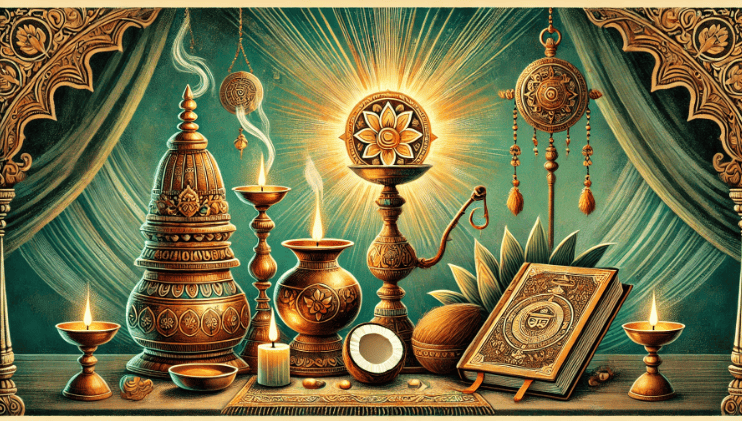
To maintain sanctity, every pooja room for home must have these five essential items after a frame or a sculpture of a deity:
- Diya (Oil Lamp) – Represents the light of knowledge and should be lit daily.
- Bell – Used to purify the space and invite divine presence.
- Kalash (Sacred Pot) – A symbol of abundance, usually filled with water and topped with a coconut.
- Incense Sticks & Camphor – Creates a serene atmosphere and removes negative energies.
- Sacred Texts – Bhagavad Gita, Ramayana, or other scriptures should be kept in the temple.
Daily Rituals and Maintenance of the Pooja Room
Daily Rituals for the Pooja Room
- Morning & Evening Aarti – Light the lamp and offer prayers.
- Offer Fresh Flowers & Fruits – As a sign of devotion.
- Clean the Temple Daily – Use a soft cloth to clean idols and remove dust.
Common Mistakes to Avoid
- Placing the temple in the wrong direction.
- Keeping clutter or broken items inside the pooja room interior.
- Neglecting daily prayers and rituals.
Latest Pooja Room Designs Images and Inspiration
If you're looking for latest pooja room designs images, here are some ideas:
- Indian Style Pooja Room Designs – Traditional wood-carved designs with brass bells and intricate motifs.
- Modern Pooja Room Design – Minimalistic marble structures with soft lighting.
- Pooja Room Designs in Hall – Compact yet elegant temples integrated into living spaces.
For pooja room photos and inspiration, explore traditional pooja room doors and pooja room door designs that enhance your home’s aesthetic.
Spiritual Benefits of a Well-Designed Pooja Room
A properly designed pooja room brings:
- Spiritual growth and deeper connection with the divine.
- Positive vibrations and a peaceful home environment.
- Better focus and concentration for meditation and prayer.
- Protection from negative energies.
Conclusion
Creating a Hindu home temple is a profound journey that, when guided by Vastu principles, ensures a space filled with peace and positivity. Thoughtful design choices, such as traditional pooja room doors and harmonious interiors, further enhance this sacred environment.
For a deeper connection to your spiritual practices, consider the Dharmayana app. This digital companion offers accurate panchang details, daily horoscope readings, and insights into shubh muhurat timings. Additionally, it provides vedic astrology charts, name matching for marriage, and updates on today's festival in India. Elevate your spiritual journey by downloading the Dharmayana app today!!

Related Articles