
How to Read a Panchang: Understanding the Columns and What They Mean
Decode Your Hindu Calendar, One Column at a Time

Abhilash Ramakrishna
15 Nov 2026 • 9min
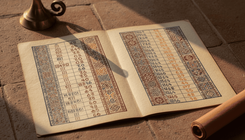
A panchang is a Hindu lunar calendar that shows you the timing of festivals, auspicious moments for starting new work, and days suitable for travel, marriage or puja. But if you look at one for the first time, the columns of Sanskrit terms and unfamiliar numbers can feel overwhelming. This guide will show you how to read a panchang by walking you through each column, what it tells you, and why it matters.
The word panchang means "five limbs", and those five limbs are the columns you will learn here. Together, they describe the position of the Moon and Sun in the sky on any given day, and the traditional wisdom built on those positions tells you what kind of energy that day carries. You do not need a degree in astrology to use a panchang. You only need to know what each column says.



Understanding Tithi: The Lunar Day
Tithi is the first column you will see. It tells you the lunar day, which is the age of the Moon counted from the new moon. There are 15 tithis in each half of the lunar month: the waxing fortnight (Shukla Paksha) when the Moon grows, and the waning fortnight (Krishna Paksha) when it shrinks.
The waxing fortnight runs from Pratipada (the first day) through Purnima (the full moon). The waning fortnight runs from Pratipada (the first day after the full moon) through Amavasya (the new moon). The names are the same because the pattern repeats, and you will know which half you are in by looking at the next column or by noting whether the Moon is growing or shrinking that week.
Tithi matters because different tithis are believed to have different qualities. Ekadashi (the eleventh lunar day) is the most common fasting day in the Hindu calendar. Purnima and Amavasya are times when temples often schedule big pujas. Some tithis are thought to be inauspicious for starting new work, while others are considered strong for undertaking journeys or making important decisions.
Nakshatra: The Lunar Mansion
Nakshatra is the constellation the Moon is in on that day. There are 27 nakshatras spread across the zodiac, each one spanning a section of sky. This column tells you which one.
Each nakshatra has its own character and associations. Ashwini is connected with swift action and horses. Kritika with fire and purification. Rohini with fertility and growth. These associations have built up over centuries of observation and practice. Families often note which nakshatra their children are born under, and some people choose important dates by picking days when a particular nakshatra falls.
If you look at a panchang, you may notice that the nakshatra column sometimes shows two nakshatras for a single day. This means the Moon moved from one nakshatra to another during that 24-hour period. A common practice is to use whichever nakshatra the Moon is in at sunrise in your location.
Yoga: The Angular Relationship
Yoga in this context does not mean physical postures. It refers to a moment created by the angular distance between the Sun and the Moon. As this angle changes throughout the month, it moves through 27 yogas, each lasting roughly one day.
Each yoga has a name and qualities. Auspicious yogas are considered good times to begin important tasks. Some yogas are thought to bring obstacles or difficulties. Ashtottari yoga, for example, is traditionally considered inauspicious. You will see yogas like Shubh (auspicious), Sukh (pleasing), and Labh (profitable), and also ones like Nidhi (treasure, but sometimes implying hardship) and Rikta (void, often seen as less favourable).
The yoga column helps people choosing the day for a wedding, starting a business, or buying property. If you are learning to use a panchang, this is one of the columns that will matter most for practical decisions.
Karana: The Half Lunar Day
Karana is a smaller unit than tithi. Each tithi is divided in two, and each half is a karana. Just as there are 15 tithis in each lunar fortnight, there are 60 karanas across the full lunar cycle, though only 11 distinct karana names repeat in different combinations.
The karanas are named Bava, Balava, Kaulava, Taitila, Gara, Vanija, Vishti, Shakuni, Chatushpad, Naga, and Kimstughna. You will see them cycle repeatedly. Some are thought to be better for starting things or making journeys, while others are traditionally avoided for new beginnings.
Karana is less commonly used in everyday panchang reading than the other four, and many people skip it when they are new to reading a panchang. If you are just starting, you can focus on the first three columns and leave karana for later.
Var: The Day of the Week
Var is the day of the week: Saumya (Monday), Mangal (Tuesday), Budha (Wednesday), Brihaspati (Thursday), Shukra (Friday), Shani (Saturday), and Ravi (Sunday). You already know this from the Western calendar, but the panchang includes it because it is part of the traditional framework.
Each day of the week has associations. Saumya (Monday) is linked to the Moon and emotions. Mangal (Tuesday) is Mars and energy. Budha (Wednesday) is Mercury and communication. Brihaspati (Thursday) is Jupiter and wisdom. Shukra (Friday) is Venus and harmony. Shani (Saturday) is Saturn and discipline. Ravi (Sunday) is the Sun and power.
When choosing an auspicious day for an important task, people often note which var falls on that day along with the other columns. Some practices recommend certain vars for certain activities.
How to Use These Columns Together
The five columns work as a system. To choose an auspicious day for something important, you would look for a day where tithi, nakshatra, yoga, karana and var all align favourably. You do not need all five to be perfect, but looking at them together gives you a richer picture than reading any one alone.
Most panchangs are published with a heading that explains which tithis, nakshatras and yogas are considered auspicious for different activities: marriages, travel, beginning studies, moving to a new home, and so on. These guides are based on traditional wisdom passed down through centuries. When you are new to reading a panchang, these headings are your quickest route to finding an auspicious day.
Start by learning tithi and nakshatra. Once those feel familiar, add yoga. The other columns will become clear as you use them. Reading a panchang becomes natural quickly, and soon you will be able to glance at a month and spot the days that feel right for what you want to do.
How to Read a Panchang Column
- Find the date you want to check Locate the date in your panchang. You can scan by month and day of the week, or look for the date in an index if the panchang provides one. Once you find it, look across the row to see all five columns for that day.
- Read the tithi column first The tithi tells you the lunar day and whether the Moon is waxing or waning. Note whether the name ends in a number (like Pratipada, Dwitiya) so you can count its position in the lunar fortnight. This is your starting point for understanding the day's energy.
- Check the nakshatra Look at which constellation the Moon is in. If two nakshatras are listed, use the one that is active at sunrise in your location. Note the name so you can look up its associations if you want to know more about that nakshatra's qualities.
- Look at the yoga column The yoga tells you the Sun-Moon relationship. Many panchangs highlight whether each yoga is auspicious or inauspicious. This column is particularly important when choosing dates for weddings, travel, starting a business, or beginning important work.
- Note the karana and var if needed Karana is less commonly used in day-to-day panchang reading but can add detail. Var (day of the week) is straightforward. Some people include these in their decision-making, while others focus on the first three columns.
- Use the panchang's guide or headings Most panchangs print headings or a separate section advising which days are auspicious for marriages, travel, study, or other activities. Cross-reference the date you are considering with these guidelines to see if it aligns with what you want to do.
- Double-check the time if precision matters If you are scheduling something exact like a muhurat (auspicious moment) for a puja or ceremony, note the time the tithi or nakshatra changes. This is often printed in the panchang. The change happens at a specific hour, so the column's content may shift during the day.
Common questions
Why does the tithi column sometimes show two different tithis on the same day?
A tithi lasts as long as it takes the Moon to move a set distance from the Sun. This can range from 19 to 26 hours, so a tithi can begin and end within a single calendar day. Most panchang readers use the tithi that is in effect at sunrise in their location. If you are choosing an important date, check which tithi is dominant rather than assuming a single one applies all day.
What is the difference between nakshatra and rashi in a panchang?
Nakshatra is the constellation the Moon is in, while rashi (or zodiac sign) is the constellation the Sun is in. Many panchangs show both: nakshatra changes roughly every day as the Moon moves, but rashi changes roughly every month as the Sun moves. For most people learning to read a panchang, understanding nakshatra is more useful because it changes more frequently and affects the feel of the day.
If I can only use one column when choosing an auspicious day, which should I pick?
Start with tithi and yoga. Tithi tells you the lunar phase and its energy, while yoga captures the relationship between Sun and Moon. Together they give you a good sense of whether a day is favourable. Nakshatra adds detail once you are more familiar with the system, but these two will serve you well for practical decisions like scheduling a puja or starting something new.

Related Articles


