
How to Prepare for Puja: Cleanliness, Bath, Space and Mindset
Ready yourself before the sacred offering

Aditya Pandey
21 Nov 2026 • 6min
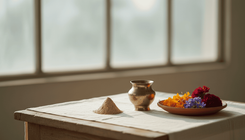
When you prepare for puja, you prepare not just a space but yourself. Puja preparation steps are rooted in the understanding that worship is a conversation between you and the divine, and this conversation cannot happen carelessly. The practice begins long before you light the lamp or place flowers at the altar.



Physical cleanliness and ritual bath
The first step in puja preparation is ritual cleanliness. This is not about vanity or hygiene alone, though both matter. In the Sanatan tradition, cleanliness is seen as a way to shed the accumulated impressions and distractions of daily life. You wash your body completely, and many people prefer to bathe in the morning before puja begins.
The ritual bath need not be elaborate. Cool water suffices, though warm water is acceptable. The key is that you wash with intention, understanding that you are preparing yourself to enter a sacred space. Some people wash their hands and feet if a full bath is not possible. What matters is that you approach puja with a clean body and a sense of ritual respect.
After bathing, many people put on clean clothes, often simple and white or in natural colours. Elaborate jewellery is usually avoided. The principle is not that beauty is wrong, but that simplicity allows your attention to rest on the puja itself rather than on your appearance. You remove your shoes before entering the puja space.
Creating and purifying your space
The space where you perform puja should be clean and dedicated. This can be a small corner, a shelf, or a room. It does not matter how large the space is, only that you maintain it with respect. Before puja, sweep or wipe the area with water. Many households use water mixed with a few drops of cow dung solution, a traditional practice believed to purify the space energetically, though this is optional and water alone is sufficient.
Arrange your puja items—flowers, incense, oil, water for offerings—in order before you begin. Place them within easy reach so you are not fumbling during the ritual. Some people draw a small square or place a mat to define the sacred area. There is no need for elaboration; the intention to create a clean, dedicated space is what counts.
Ensure your puja space is reasonably quiet. If family members are present, let them know you are about to perform puja so they can avoid loud activity nearby. If you live in a busy household, even a small curtain or screen can help separate your space. The goal is to allow your mind to settle.
The state of your mind and heart
Your inner preparation is as important as your outer preparation. Before beginning, sit quietly for a few moments. This is not meditation in the formal sense, simply a pause. Settle your thoughts. Notice if you are distracted by worry, anger, or unfinished business from the day, and gently acknowledge these things without judgment. You do not need to be in a perfect state—no one ever is—but you do need to be willing to turn your attention inward.
If you carry strong emotions, some practitioners find it helpful to do a few rounds of conscious breathing, or even a short walk, before beginning. This is not superstition but practical wisdom. Puja opens your heart; it is easier to let that opening happen if you have already calmed some of the mental noise.
Set an intention before you begin. This might be gratitude, a prayer for a loved one, or a simple offering of yourself as you are. The intention focuses your puja and gives it meaning beyond the mechanical performance of ritual steps. You might say this intention silently, or simply hold it in your mind.
Common concerns and practical exceptions
Not every day is ideal for puja, and life rarely offers ideal conditions. If you are ill, you can perform a simplified puja or skip puja that day without guilt. If you menstruate, the rules vary by tradition and sampradaya; in many homes across India, women do not perform puja during this time, and in others they do. Honour the practice of your own household and sampradaya.
If you have no time for a full puja, a few moments of sincere offering is worth more than an elaborate ritual performed with hurry and distraction. If you cannot bathe, wash your hands and face. If you have no dedicated space, any clean corner serves. The outer forms matter because they train the mind and heart, but they are never more important than the sincerity of your offering.
Some practitioners fast before puja, taking only water or simple food. Others do not fast. Some perform puja at specific times of day, following their family tradition or the guidance of their guru. These details vary widely. What is universal is the principle: approach puja with cleanliness, intention, and respect.
Before you light the first lamp
Once you have bathed, arranged your space, and settled your mind, you are ready. You have done the essential work of puja preparation. From this point, the ritual itself is the container for your devotion. The flowers you offer, the words you speak, and the lamp you light all carry the intention you have set.
Remember that puja is for you as much as for the divine. In preparing consciously, you are not serving an external demand. You are creating conditions in which your own heart can open, in which you can remember what matters most. This is the purpose of every step.
Common questions
Can I do puja if I don't have time to bathe?
Yes. If you cannot bathe, wash your hands and face thoroughly before beginning. A few moments of sincere offering is worth more than an elaborate ritual performed with hurry and distraction. What matters is your intention and respect for the practice.
Is it wrong to do puja if I'm angry or distracted?
No, but it helps to acknowledge these feelings first. Sit quietly for a few moments and notice your emotions without judgment. You do not need to be in a perfect state—no one ever is—but taking a short pause allows your mind to settle before you begin.
What should I wear for puja?
Wear clean, simple clothes in white or natural colours. Elaborate jewellery is usually avoided because simplicity allows your attention to rest on the puja itself rather than on your appearance. The principle is respect through understated dress, not rules about specific garments.

Related Articles


