
How to Practise Shavasana: A Guide to the Corpse Pose
Rest as a conscious, purposeful act

Kushal K
16 Nov 2026 • 8min
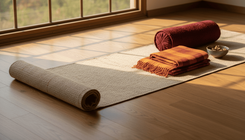
Shavasana, the corpse pose, is a yoga posture in which you lie on your back with your whole body relaxed. It looks simple—and yet it is one of the most important poses in yoga, often placed at the end of a class to let the benefits of your practice settle into your body and mind. If you are learning yoga, shavasana is where you learn that doing nothing is sometimes the most powerful thing you can do.



What Shavasana Is and Why It Matters
In Sanskrit, "shava" means corpse and "asana" means pose. You are not mimicking death, but rather releasing all effort and tension, letting your body rest completely while your mind remains present. This is harder than it sounds. Most of us are so used to doing that we have forgotten how to simply be.
Shavasana is called the most important asana in a yoga practice because it is where integration happens. During the active poses and breathing work that come before it, you have moved prana, or life force, through your body and cleared energetic blockages. In shavasana, those changes take root. Your nervous system shifts from the sympathetic state of "fight or flight" into the parasympathetic state of "rest and digest", where healing and restoration occur. Without this final relaxation, the benefits of your practice slip away.
Setting Yourself Up
Find a quiet, clean space where you will not be disturbed for at least five to ten minutes. A yoga mat on the floor is traditional, but a clean carpet or even a bed will work if you are resting at home. The space should be neither too cold nor too hot—cold makes your muscles tense, heat makes your mind wander toward discomfort.
Lie on your back with your legs stretched out in front of you, your feet about hip-width apart or slightly wider. Let your feet fall open naturally so your toes point outward. Your arms should rest alongside your body, palms facing upward, with your fingers curled naturally. Make sure your head is in a neutral position, neither tilted forward nor back. If your lower back feels strained, place a bolster or firm pillow under your knees. If your neck feels uncomfortable, use a small pillow under your head. These props do not weaken your practice—they allow your body to surrender fully.
Wear comfortable, loose clothing. A blanket or shawl nearby helps; your body temperature drops as you relax, and being warm helps you stay present rather than becoming preoccupied with cold.
Releasing Tension Systematically
Once you are lying down, take a moment to scan your body from head to toe. Notice where you are holding tension. This awareness itself begins the release.
One way to deepen relaxation is to tense and then release each part of your body in turn. Clench your toes and feet, hold for a moment, then release. Move up through your legs, your belly, your chest, your hands and arms, your shoulders, your neck and face. Feel the difference between the tension you just created and the relaxation that follows. This progressive technique tells your nervous system the difference between holding on and letting go, making it easier to recognise tension you did not know you carried.
Another approach is simply to breathe. As you inhale, imagine bringing awareness and space into each part of your body. As you exhale, release any holding or gripping. You do not need to control your breath or make it deeper—just notice it, the way you might notice wind moving through trees.
Keeping Your Mind Present
The challenge of shavasana is not physical; it is mental. Your mind will wander. You may find yourself planning tomorrow, replaying a conversation, or noticing an itch you did not feel before. This is completely normal. The practice is not to stop your thoughts, but to notice them without following them.
If your mind wanders, gently bring your attention back to one of three anchors: your breath, the physical sensations of your body resting on the floor, or the inner awareness of being alive and present. You do not need to grip any of these anchors tightly—just return your attention to them as if you were returning home after a journey.
Some practitioners use a mantra during shavasana, silently repeating a word or phrase that feels meaningful to them. Others focus on the natural rhythm of their breath. There is no single right way. The point is to stay present without effort or strain.
Common Obstacles and How to Work with Them
If your mind is very restless, start your shavasana practice with just two or three minutes rather than ten. Your capacity for stillness will grow naturally over time.
If you find yourself falling asleep, it often means your body truly needs rest, and that is not a failure. However, if you want to stay conscious, sit up for a moment, take a few deeper breaths, then lie back down. Setting an intention at the beginning—"I will be fully present and relaxed"—also helps.
If physical discomfort interrupts your practice, do not treat it as something to endure. Adjust your position, add another prop, or change your environment. Your practice should feel genuinely comfortable, not like you are testing your willpower.
If you feel emotional during shavasana—sadness, grief, or sudden joy—allow it. The body stores emotion, and as you relax deeply, stored feelings sometimes surface. This release is part of the healing that shavasana offers.
The Difference Between Shavasana and Sleep
Shavasana is sometimes confused with yoga nidra, which is a guided meditation sometimes called "yogic sleep". In yoga nidra, you follow an instructor's voice through layers of relaxation and subtle awareness. In shavasana, you simply rest in your own awareness without external guidance.
Shavasana is also not the same as sleeping, though sleep does happen sometimes. In shavasana, you remain aware even as your body fully releases. You are in a liminal space between waking and sleeping, where deep restoration happens very efficiently.
When to Practise Shavasana
Shavasana belongs at the end of every yoga class, even if only for a few minutes. It is also a standalone practice you can do anytime you need to restore yourself—in the evening to release the day, in the morning before beginning, or in the afternoon when your energy dips. Some people use shavasana during stressful times as a way to anchor themselves in their body and calm their nervous system.
Even five minutes of genuine shavasana is more restorative than thirty minutes of distracted rest. The depth of relaxation matters more than the length of time.
How to Practise Shavasana
- Choose your space and gather props Find a quiet, clean, temperature-neutral place where you will not be disturbed. Gather a yoga mat or clean carpet, a small pillow or no pillow depending on comfort, and a blanket nearby for warmth as your body cools during relaxation.
- Lie on your back in the correct position Stretch your legs in front of you about hip-width apart or wider, letting your feet fall open. Place your arms alongside your body with palms facing upward and fingers naturally curled. Ensure your head and neck are neutral. Add a bolster under your knees if your lower back feels strained.
- Scan and release tension from your body Notice where you are holding tension. Optionally, tense each body part from toes to head for a moment, then release, to teach your nervous system the difference between holding and letting go.
- Anchor your mind to one focus Choose an anchor for your attention: your breath, the sensation of your body on the floor, or inner awareness. Gently return your focus to this anchor whenever your mind wanders, without strain or judgment.
- Rest without effort for five to ten minutes Allow your body to be completely still and your mind completely present. If you fall asleep, that is natural; if you wish to stay conscious, sit up briefly, take deeper breaths, and resettle.
Common questions
How long should I hold shavasana?
Traditional yoga classes place shavasana at the end and hold it for five to ten minutes, but even two to three minutes of genuine relaxation is more restorative than longer periods of restless rest. Start with whatever duration feels comfortable and naturally extend it as your capacity grows.
What is the difference between shavasana and yoga nidra?
Shavasana is unguided rest in which you remain aware as your body releases. Yoga nidra, sometimes called yogic sleep, is a guided meditation where an instructor leads you through layers of relaxation and subtle awareness. Both are restorative, but yoga nidra requires external guidance while shavasana does not.
Is it okay to fall asleep during shavasana?
Yes; if your body needs rest, sleep during shavasana is healing. However, if you want to remain conscious, sit up briefly and take deeper breaths before resettling, or set a clear intention to stay aware at the start of your practice.

Related Articles


