
How to Perform Aarti: A Step-by-Step Guide
Light, circle, offer: the rhythm of reverence

Aditya Pandey
15 Nov 2026 • 8min
When you perform aarti, you are making an offering of light to a deity or sacred presence. It is one of the most common rituals in Hindu worship, and learning how to do it properly will deepen your practice whether you worship at home or in a temple.
Aarti is an ancient ritual found across the Hindu tradition, and in some form across other Indian faiths too. The word comes from the Sanskrit Arati, meaning to remove or dispel. When you wave the lit diya or aarti lamp in front of the deity, you are making an offering of the five elements—earth, water, fire, air and space—and the gesture itself carries profound meaning. The circular motion is not random; it represents the cycle of life and the infinite nature of the divine. In many homes and temples, aarti is performed daily at dawn and dusk, and it is also the final act of most pujas.



The Aarti Thali and Its Elements
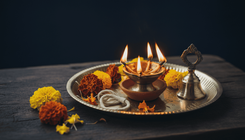
The aarti thali is a plate, usually made of metal such as brass or silver, that holds the items you will need for the ritual. The most essential element is the diya, a small oil lamp traditionally filled with ghee and cotton wicks. Many modern practitioners use a multi-wick lamp designed specifically for aarti, which burns steadily and throws light evenly in all directions.
Alongside the diya, the thali typically holds flowers, which represent the beauty and fragrance of devotion. Many people add incense or agarbatti to the thali as well, though incense is often lit separately before aarti begins. Some traditions include kumkum (vermillion powder) and vibhuti (sacred ash) in the thali so that you can apply these to your forehead after the aarti is complete. A small bell is often placed nearby, though not always on the thali itself. The bell is rung during aarti to draw the attention of the deity and to mark the rhythm of your offering.
The Circular Motion and Its Meaning
How you move the lamp is as important as the lamp itself. The aarti is always performed in a clockwise direction when viewed from above. You begin at the base of the idol or image and move the diya upward, then circle it around the deity's face and head in smooth, continuous motions. The number of circles varies by tradition and by which deity you are worshipping, but three, five or seven circles are most common. Some practitioners make seven circles to represent the seven lokas, or worlds; others make five to represent the five elements.
The movement should be fluid and reverent, never rushed. Your eyes should follow the flame as it moves, and your attention should remain fixed on the deity. The circular motion itself mirrors the cosmos: it suggests that the deity is at the centre of all things, and that your devotion moves around and returns to that centre again and again. In many South Indian temples, the aarti lamp is large and is moved in slow, deliberate arcs that the entire congregation can follow with their eyes.
Preparing Yourself and the Space
Before you begin aarti, take a moment to settle yourself. Wash your hands and face if possible, as cleanliness is valued in ritual practice. If you are performing aarti in your home shrine, ensure that the space is clean and that the deity's image or idol is clearly visible and unobstructed.
Light the diya a few minutes before you plan to perform aarti, so that the flame is steady and bright. If you are using multiple wicks, check that each one is burning evenly. Some traditions prefer to light the diya at the moment aarti begins; this depends on your family practice or the tradition of your temple.
When you are ready, stand or sit in a comfortable position facing the deity. Many people stand with their feet together and their body upright, though sitting is also acceptable. If you are in a temple, follow the cues of the priest or others around you. Focus your mind on the deity or sacred presence you are worshipping. This mental preparation is as much a part of aarti as the physical movements.
Performing the Offering
Hold the aarti thali steady with both hands, or use your right hand if the thali is small and balanced. Begin the circular motion at the base of the deity's form—at the feet if there is an idol, or at the lower part of the image if you are looking at a picture. Move the flame smoothly upward and around the face and head.
As you circle the diya, you may silently recite a mantra, sing a bhajan, or simply hold the image of the deity in your mind. The specific words or silence depend on your practice and tradition. Some people ring the bell in rhythm with the circular motion; others ring it continuously throughout. Let the sound of the bell and the sight of the flame create a space of focus and devotion.
When you have completed the circles, bring the diya down and make a final offering by circling it once more around the entire form of the deity if possible. Then, as the concluding gesture, bring your palms together in front of your chest in a namaste, or touch your forehead with your fingertips after holding them to the flame of the diya. This last touch symbolizes receiving the blessings of the deity.
After the Aarti
Once the formal aarti is complete, it is customary to pass your hands over the flame of the diya and then touch your hands to your forehead or eyes. This gesture is believed to transfer the blessings of the deity to you. You may apply kumkum and vibhuti to your forehead if these are part of your practice.
If flowers were on the aarti thali, they are often distributed as prasad, a blessed offering. The diya is left burning in front of the deity, or it may be carried around the temple or home so that others can also receive its blessings. In many homes, the aarti diya is kept alight throughout the evening.
Aarti is not a performance; it is an act of love and attention. Whether you do it once a day or several times, the ritual's power lies in the sincerity of your focus and the intention you bring to the circular motion of light.
Perform Aarti
- Prepare the thali and light the diya Gather your aarti thali and place a lit diya or multi-wick lamp in the centre, surrounded by flowers. Ensure the flame is steady and bright before you begin. Wash your hands and settle your mind.
- Face the deity and ground yourself Stand or sit comfortably in front of the idol or image, with your feet together and your body upright. Take a moment to focus your mind on the deity or sacred presence you are about to worship.
- Begin the circular motion at the base Hold the thali steady with both hands or your right hand. Start at the feet or lower part of the deity's form and move the flame smoothly upward in a clockwise direction when viewed from above.
- Circle the flame around the face and head Complete three, five or seven circles around the deity's face and head in a fluid, reverent motion. You may ring a bell in rhythm with the movement, recite a mantra silently, or simply hold the image of the deity in your mind.
- Make the final offering Bring the diya down and circle the entire form of the deity once more if space permits. Then bring your palms together in front of your chest, or touch your forehead with your fingertips after holding them to the flame.
- Receive the blessing Pass your hands over the flame of the diya and touch them to your forehead, eyes or chest. Apply kumkum or vibhuti to your forehead if these are part of your practice.
Common questions
How many times should I circle the diya around the deity?
The most common numbers are three, five or seven circles. Three and seven are especially traditional. Some practitioners choose the number based on which deity they are worshipping or their family practice. There is no single rule that applies to all rituals.
Can I perform aarti if I don't have a traditional thali?
Yes. While a metal thali is traditional, you can hold a diya or lamp in any clean plate or dish you have at home. The intention and focus of your worship matter more than the exact vessel. Many modern practitioners use simple plates or even hold the lamp by hand.
What do I do if the flame of the diya blows out during aarti?
If the flame goes out, simply relight it and continue. This is not considered inauspicious or a break in the ritual. Some traditions say that continuing without interruption to your focus is more important than the unbroken burning of the flame.

Related Articles


