
How to Meditate for Beginners: A Traditional Dhyana Guide
Settle the mind. Find stillness. Begin here.

Sunil Chaurasia
08 Nov 2026 • 6min
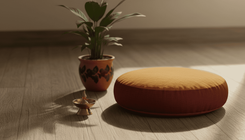
When you sit down to meditate for the first time, the goal is not to empty your mind or achieve some perfect state. The goal is to sit, to observe what arises, and to return your attention gently when it wanders. This is how to meditate as a beginner: with patience, a simple method, and realistic expectations. The practice of dhyana, or meditation, is both simpler and harder than most people expect. It is simple because anyone can do it anywhere with no equipment. It is hard because the mind resists stillness, and that is completely normal.



Choose a Posture for Stillness
Meditation works best when your body is still but alert. You do not need to sit cross-legged on the floor—many beginners find this uncomfortable. Sit in any way that lets you stay upright and awake for ten to twenty minutes without fidgeting. A chair with your feet flat on the floor is perfectly fine. If you do sit on the floor, a simple cross-legged position or kneeling pose is enough. Place a cushion under your sitting bones so your hips are slightly higher than your knees; this takes strain off your lower back. Rest your hands on your thighs, palms down or up. Keep your spine naturally straight, not rigid. Your shoulders should be relaxed, not hunched. Your chin should be level, not tilted up or down. This posture is called asana in yogic tradition, and its purpose is to be comfortable enough that you forget about your body and focus on your breath and mind.
Find a Quiet Space and a Regular Time
Where you meditate matters less than meditating at the same time each day. If possible, choose a clean, quiet corner of your home where you will not be interrupted. It can be as small as a shelf in your bedroom. Some people light a lamp or keep a plant nearby. This creates a subtle signal to your mind that this is a space for practice. The time of day is more important than the place. Early morning, before the household wakes, is traditional and often easiest because your mind is less cluttered. But choose whatever time you will actually stick to—even five minutes at the same hour each day builds the habit faster than sporadic longer sessions. Let family members know you need quiet time so they do not disturb you.
Begin with the Breath
The breath is the anchor for a beginner's meditation. It is always with you, always natural, and it connects body and mind. Sit in your chosen posture and simply notice the breath. You do not need to change it or control it—just observe. Feel the cool air entering your nostrils and the warm air leaving. Notice the rise and fall of your chest or belly. If your mind wanders—and it will—gently bring your attention back to the breath. Do not scold yourself or become frustrated. Mind-wandering is not failure; it is the practice. You are training attention like training a muscle. Each time you notice the wandering and return, you are strengthening focus. Start with five or ten minutes. As the mind settles, you can gradually extend to fifteen or twenty minutes.
Use Mantra If Breath Alone Feels Empty
Some beginners find that focusing only on the breath leaves the mind too loose and it wanders constantly. If this happens to you, add a mantra—a simple word or phrase repeated silently. The mantra "Om" is traditional and accessible. So is "So Hum," which means "I am that." Inhale while saying the first part silently—"So"—and exhale while saying the second—"Hum." Or choose a phrase that holds meaning for you: "Peace" or "I am here" work just as well. The sound anchors your mind more firmly than the breath alone. Repeat the mantra in rhythm with your breathing, naturally and without strain. This is called mantra meditation, and it is one of the most reliable methods for beginners because the repetition gives the restless mind something definite to hold.
Know What to Expect When You Begin
Your first few sessions will feel awkward. Your legs will itch. You will think of things you forgot to do. Your mind will chatter constantly. This is not a sign that meditation is not working for you—it is simply what happens when you first sit. The mind is like a snow globe that has been shaken. You are not making the thoughts; you are seeing them clearly for perhaps the first time. They will settle with practice, not immediately, but week by week. Some people notice a shift after three weeks of daily practice. Others take longer. There is no rush. Consistency matters far more than length. Ten minutes every day will transform your mind faster than an hour once a week. If you miss a day, simply resume the next day without guilt. The practice is not about perfection; it is about showing up.
Deepen Your Practice Slowly
Once you feel stable with five or ten minutes, you may gradually extend your time. Increase by five minutes at a time, perhaps every few weeks. You might notice that some days the mind settles easily and other days it remains busy. Both are fine. Some days your body aches or restlessness peaks. This is normal. Honour what your body and mind need on that day. If sitting still becomes uncomfortable, you can practice walking meditation instead: move slowly in a straight line, feeling each step, one foot in front of the other. If sitting feels too much effort, lie down in a supported pose called yoga nidra, or guided relaxation. The form of the practice can change; the thread of attention remains. As you continue, you may notice that the gap between thoughts grows, or that you feel calmer in daily life. These are signs that dhyana is working. The real measure of practice is not what happens on your meditation cushion but how you move through the world afterward.
Common questions
How long should a beginner meditate each day?
Start with five to ten minutes and meditate at the same time each day. Consistency matters more than length. You can gradually extend to fifteen or twenty minutes as your practice settles, but daily ten-minute sessions will transform your mind faster than longer irregular sessions.
Is it normal for my mind to wander during meditation?
Yes, completely. Mind-wandering is not failure—it is the practice itself. Each time you notice your attention has drifted and gently return it to the breath or mantra, you are training focus. The untrained mind wanders constantly; this is what you are learning to observe and change.
Do I need to sit in a special way to meditate?
No. You can sit in a chair with feet flat on the floor, which is comfortable for many beginners. If you sit on the floor, a cushion under your hips helps. The key is a posture you can hold without fidgeting for ten to twenty minutes, with your spine upright and shoulders relaxed.

Related Articles


