
How the Pandavas Escaped the Lac Palace
Fire, Family and the Night They Fled

Aditya Pandey
06 Nov 2026 • 6min
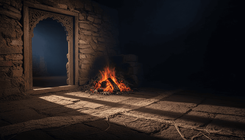
The Pandavas' escape from the Lac Palace—the Lakshagriha—stands as one of the most pivotal moments in the Mahabharata. After losing their kingdom in a game of dice to their cousins the Kauravas, the five brothers and their wife Draupadi were exiled to the city of Varanasth. There they were housed in what appeared to be a magnificent dwelling made of lac, a resinous material that burns with terrible speed and intensity. Unknown to the Pandavas, this house was a carefully laid trap: the Kauravas and their uncle Shakuni had planned to set it alight during the night, killing the entire family and solving their rival problem once and for all. Yet the Pandavas not only survived; their escape became the seed of events that would eventually lead to the great war described in the Mahabharata.



The House of Lac and the Hidden Conspiracy
The Pandavas arrived at Varanasth believing they were being treated with dignity. The palace built for them was extraordinary—decorated, comfortable, and made entirely of lac. To ordinary eyes, it was a gift. But Shakuni, an advisor to the Kauravas and the architect of their schemes, had ordered its construction specifically because lac is highly flammable. The plan was simple and merciless: on an appointed night, the guards would set the palace ablaze while the family slept, and the Pandavas would perish in the flames. No witnesses, no questions asked. The Kauravas could claim it was an accident, and the succession would be theirs unchallenged.
What the conspirators did not anticipate was that word of the plot would reach the Pandavas through Vidura, a righteous minister in the Kaurava court who was devoted to the family's welfare. Vidura disguised his warning in riddling language, speaking of subterranean passages and safe routes, but the message was unmistakable: danger was coming, and escape was possible. The Pandavas heard him and understood. They knew they were marked for death, and they began to prepare.
Bhima's Role and the Preparation for Flight
Bhima, the second Pandava and renowned for his strength and resourcefulness, became the architect of the family's survival. Rather than panic or despair, the brothers set about preparing the way out methodically. They discovered an underground passage beneath the palace, a tunnel that had been built as a secret exit. Over the days and nights before the attack, Bhima worked to clear and widen this passage, ensuring it was passable when the moment came. He also made arrangements for disguises and provisions for the journey that lay ahead.
The brothers let no sign of their knowledge show. They continued to live in the palace as though unaware of any danger, careful not to alert their enemies. This restraint and discipline would prove as vital as Bhima's physical strength. On the night chosen for the murder, the family was ready. When the palace was set ablaze—guards poured oil and set fire to the wooden structure below the main residence while the Pandavas slept—the flames spread with the speed that lac promises. But the family was no longer there.
The Night of the Fire
The fire that consumed the Lac Palace was meant to be the Pandavas' funeral pyre, but instead it became their liberation. As the palace burned with terrifying intensity, the Pandavas made their way through the underground tunnel that Bhima had prepared. They moved quietly and quickly, Bhima protecting them from behind, ensuring no one was left and no pursuer could follow. The passage led them out beyond the palace walls, to safety in the darkness of the night.
The escape was not without its perils. According to accounts from the Mahabharata, the journey through the hidden passage was harrowing. Draupadi, their wife, was particularly vulnerable, and the brothers moved slowly to ensure she could navigate the darkness and danger. But they emerged on the other side, alive and together, while behind them the house of lac collapsed into embers and ash.
Flight to the Forest and the Road Ahead
Once free of the palace, the Pandavas could not simply remain in the city or seek shelter openly. The Kauravas would soon discover that their prey had escaped, and pursuit would follow. Instead, the family fled into the forest, moving swiftly and carefully to put distance between themselves and the court. Draupadi's mother, Kunti, led the group with the authority of her age and wisdom. Bhima, always the fiercest of the brothers, stayed alert for any sign of pursuit.
The escape from the Lac Palace marked a turning point in the Pandavas' struggle with the Kauravas. It was not an ending to their troubles—indeed, it was only the beginning of greater trials to come. But it established something fundamental: the Pandavas were not passive victims of circumstance. They possessed wisdom through Vidura's warning, courage, strategic thinking, and the strength and loyalty of Bhima. They could survive what was meant to destroy them. This resilience would define them throughout the long years of exile and the conflicts that followed.
Why the Story Endures
The tale of the Lakshagriha resonates across generations because it speaks to universal human experiences: the plot of enemies seeking to harm us, the importance of faithful allies who warn us of danger, the power of family unity in the face of threats, and the triumph of the just over the schemes of the wicked. The Pandavas' escape was not a matter of luck alone. It required warning from Vidura, careful preparation, physical courage and strength, and the discipline to remain outwardly calm while preparing their escape.
The story also illustrates a principle central to the Mahabharata: that events unfold as they must, yet human action and virtue matter profoundly. The Kauravas' plot was born of greed and malice, and it failed. The Pandavas' preparation was born of wisdom and unity, and it succeeded. This lesson—that righteousness and wisdom can turn even the darkest circumstances toward survival and eventual justice—remains why this ancient story continues to grip the imagination of those who encounter it.
Common questions
Was Draupadi with the Pandavas when they escaped the Lac Palace?
Yes. Draupadi escaped with her five husbands through the underground passage that Bhima had prepared. The brothers ensured she could navigate the darkness safely, moving slowly to protect her during the flight.
How did the Pandavas find out about the plot to burn the palace?
Vidura, a minister loyal to the Pandavas' welfare despite serving at the Kaurava court, warned them. He disguised his message in riddling language to avoid raising suspicion, but the Pandavas understood the danger and began to prepare their escape.
What happened to the Kauravas after the Pandavas escaped?
The Kauravas believed the entire Pandava family had perished in the fire. When they later discovered the escape, it intensified the conflict between the cousins and set in motion the events leading toward the great war described in the Mahabharata.

Related Articles


