
How Shaiva and Vaishnava Festivals Differ
One spirit, many paths to devotion

Aditya Pandey
20 Nov 2026 • 6min
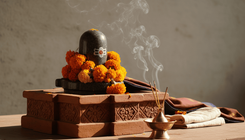
Sanatan Dharma holds room for different paths of worship, and nowhere is this clearer than in the festivals observed by Shaivas and Vaishnavas. Though both groups are part of the same living tradition, they honour different deities as supreme and celebrate the calendar accordingly. Understanding these differences shows how a single religious landscape can hold multiple centres of devotion, each with its own rhythm, its own stories, and its own way of drawing closer to the divine.
The simplest division is theological. Shaivas place Shiva at the centre of their practice and understanding of the divine. Vaishnavas consider Vishnu (and his avatars, especially Krishna and Rama) as the supreme reality. This is not a matter of rank—one tradition does not think the other's deity is unimportant—but of which aspect of godhead they emphasise in their worship, philosophy and calendar. A Shaiva and a Vaishnava may live next door to each other, marry into each other's families, and follow many of the same practices. But when festival season comes, they often move in different directions.



The Major Shaiva Festivals
Shaivas structure their calendar around events sacred to Shiva. Maha Shivaratri—the great night of Shiva—is the year's most important festival for Shaivas, celebrated on the new moon night of the Hindu month Falgun (typically February or March). The entire night is given to vigil and worship, with devotees staying awake to meditate, chant and make offerings. The symbolism runs deep: staying awake through the night mirrors the consciousness of Shiva himself, and the fasting, repetition of his name, and meditation are ways of aligning oneself with his absolute awareness.
Nag Panchami, observed in the month of Shravan (typically July or August), is another significant Shaiva observance, though it is also observed more widely across India. In Shaiva practice, the serpent represents kundalini energy—the subtle life force that spiritual practice seeks to awaken and direct upward through the body's energy channels. Worshipping on Nag Panchami is a way of honouring this energy and seeking its awakening.
Kartik Purnima, falling in the month of Kartik (typically October or November), also holds importance for Shaivas. Many Shaivas mark this day with meditation on Shiva or with ritual baths in sacred rivers, particularly the Ganges, which is considered Shiva's river. The full moon of Kartik is seen as a time when the divine presence is unusually accessible to the devoted.
The Major Vaishnava Festivals
Vaishnavas centre their year on Krishna and Rama. Janmashtami, the birthday of Krishna, is the paramount Vaishnava festival. Born on the eighth day of the dark moon in the month of Bhadrapada (typically August or September), Krishna's birth is celebrated with songs, plays re-enacting scenes from his life, fasting and breaking fast with sweets and milk products. For Vaishnavas, Krishna embodies divine play—leela—and his life story forms the emotional core of their devotion.
Rama Navami, the birth of Rama, falls on the ninth day of the bright moon in Chaitra (typically March or April). Like Janmashtami, it is a day of fasting, reading of the Ramayana, and celebration of the deity's birth. Many Vaishnavas see Rama as the ideal king and the perfect expression of dharma (righteous living), and his festival carries that weight of moral and spiritual significance.
Holi, the festival of colour and new beginnings, is observed across all traditions in India, but it holds special meaning for Vaishnavas. The festival commemorates Krishna's divine play and victory over the demoness Holika. Vaishnavas celebrate Holi with particular fervour because the legend of Krishna—his mischief with the cowherd girls, his pranks and play—sits at the heart of the festival's joy. Radha Krishna worship reaches its height around Holi among many Vaishnava communities.
How Practice Differs
Beyond the calendar itself, the way Shaivas and Vaishnavas approach their rituals and daily practice shows their different emphases. Shaivas tend to emphasise meditation on the formless, abstract aspects of Shiva—Shiva as pure consciousness, as the absolute, as the eternal witness. Chanting the mantra "Om Namah Shivaya" is central to many Shaiva practices. Even when Shaivas engage with the iconic form of Shiva—in temples or at home shrines—there is often an undercurrent of looking past the form to the formless reality it represents.
Vaishnavas, by contrast, often lean into the personal, relational dimension of devotion. Their worship tends to be more emotionally engaged: they sing devotional songs, act out scenes from Krishna's or Rama's lives, and cultivate a relationship with the deity as a friend, beloved, or child. The bhakti (devotional) tradition finds some of its most intense expression among Vaishnavas. Chanting the names of Krishna or Rama, and recounting their deeds, form the backbone of Vaishnava spiritual life.
These are tendencies, not absolutes. Many Shaivas practice deep devotion and emotion; many Vaishnavas pursue the abstract non-dual knowledge that the Shaiva philosopher Advaita Vedanta is known for. But the different emphasis shapes the feel of each tradition, and its festivals bear that stamp.
Overlap and Shared Ground
It is important to remember that Shaivas and Vaishnavas live in the same world and follow the same larger calendar. Both observe Diwali, though they understand it differently—Shaivas may emphasise it as a victory of light over darkness in an abstract sense, while Vaishnavas celebrate Rama's return to Ayodhya. Both observe Navratri, the nine nights devoted to the divine mother. Both respect the Vedas and Puranas, though they may read certain texts as carrying more authority.
In South India, in particular, major temples often serve devotees of multiple traditions. A temple dedicated to Shiva will be visited by Vaishnavas, and a Vaishnava temple will be honoured by Shaivas. The philosophical debates between these traditions are ancient and rigorous, but the everyday coexistence is usually peaceful and interwoven.
The variation in how Shaiva and Vaishnava festivals are celebrated is not a fracture in the tradition but a richness within it. Each path offers its own door into spiritual life, and the calendar of India reflects all of them turning on their hinges at different times of year.
Common questions
What is the main difference between Shaiva and Vaishnava worship?
Shaivas place Shiva at the centre of their practice and understanding of the divine, while Vaishnavas consider Vishnu and his avatars Krishna and Rama as supreme. This theological difference shapes which festivals each tradition observes and how they approach their spiritual practice.
Can someone observe both Shaiva and Vaishnava festivals?
Yes, many people in India observe festivals from both traditions. Both groups share Diwali, Navratri and other celebrations, though they may understand them differently. In major temples, especially in South India, devotees of multiple traditions often worship together.
Why do Shaiva and Vaishnava festivals fall on different dates each year?
Both traditions follow the lunar Hindu calendar, which means their festivals are determined by the moon's phases rather than fixed dates. Maha Shivaratri, for example, always falls on a new moon, and Janmashtami on a specific phase of the dark moon, but these dates vary in the Gregorian calendar from year to year.

Related Articles


