
How Ganesha Got His Elephant Head: The Birth Story Across the Puranas
One god, many tellings of creation

Aditya Pandey
12 Nov 2026 • 5min
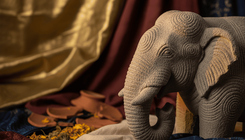
Ganesha's elephant head is one of the most recognisable symbols in Sanatana Dharma, but the story of how he came to have it is told differently across the Puranas. There is not a single official version. Instead, the scriptures offer several accounts, each preserved in different texts and honoured by different traditions. Understanding these versions helps us see how Puranic storytelling works: not as rigid fact, but as layers of meaning that develop over time and across regions.



The Shaivite Account: Created by Parvati
One of the most widespread versions comes from Shaivite texts, particularly found in the Shiva Purana. In this telling, Parvati creates Ganesha herself, without Shiva's involvement. She shapes a figure from earth or turmeric paste and brings it to life. Some versions add that she did this while bathing, needing a guard to keep people away from her private space.
When Shiva returns and finds this child standing at the door to their private chamber, he does not recognise him as his own son. A conflict erupts. In some tellings, they fight; in others, Shiva becomes angry and cuts off the child's head in a moment of rage or divine test. Parvati is devastated at the loss of her creation.
To restore her son and ease her sorrow, Shiva promises to replace the head with that of the first living creature the servants find. They bring an elephant, and Shiva attaches its head to the boy's body. Parvati names him Ganesha, and Shiva grants him blessings and authority. This version emphasises Parvati's role as creator and Ganesha as her beloved son, even before Shiva acknowledges him.
The Vaishnava Alternative: Born from Vishnu's Energy
In texts influenced by Vaishnava traditions, the story shifts significantly. Ganesha is sometimes described as having emerged from Vishnu's forehead, or as having been created by Brahma at Vishnu's request. In this account, the elephant head is present from the beginning—it is not a replacement, but Ganesha's original form.
These versions exist in parts of the Brahma Purana and are especially honoured in regions where Vaishnavism is strong. They do not describe a violent separation or attachment, but rather describe Ganesha as one among many divine beings brought into existence for the proper functioning of the cosmos. The emphasis is less on a family drama and more on divine order and creation.
The Mudgala Purana: A Different Cutting
The Mudgala Purana, a text dedicated entirely to Ganesha, offers yet another telling. Here, it is not Shiva who cuts off the head, but a demon or rival power. Ganesha loses his head in battle or through trickery, and the elephant head is a sign of his victory and transformation, not a punishment. This version reframes the elephant head as a mark of strength and triumph rather than loss or replacement.
In this narrative, Ganesha's form with the elephant head represents his conquest over obstacles and ignorance. The story becomes one of overcoming challenge rather than being shaped by parental conflict. Different commentaries on the Mudgala Purana elaborate these details in ways that give Ganesha even greater status among the deities.
Why the Stories Differ
These variations are not errors or corruptions of a single "true" story. The Puranas were composed over centuries by different communities, in different regions, and with different theological emphases. A text composed in Kashmir might emphasise Shaivite teachings, while one from South India might reflect local Vaishnava or regional devotional practices.
Each version also serves different spiritual purposes. The Shaivite account teaches about the relationship between Parvati and Shiva, and about how a mother's love and a father's power work together. The Vaishnava versions emphasise Vishnu's cosmic role and the harmony of divine forces. The Mudgala Purana's battle narrative teaches that obstacles can become sources of wisdom and strength.
The elephant head itself carries consistent meaning across all versions: intelligence, strength, discernment, the ability to remove obstacles. The story of how Ganesha came to have it matters less than what the form means to devotees. When you see an image of Ganesha with his elephant head, all these stories are present in his image at once.
How These Stories Are Used in Worship
Different communities emphasise different versions depending on their sampradaya, or lineage of practice. In temples devoted primarily to Shiva, the Shaivite version might be recited during Ganesh Chaturthi, the autumn festival honouring Ganesha. In regions with strong Vaishnava traditions, worshippers might know the Vaishnava variants better.
Yet in most households and temples, these distinctions do not matter for daily devotion. Ganesha is worshipped as the remover of obstacles and the lord of new beginnings, and his story—whichever version is known—serves as a way of honouring that role. You might light a lamp before Ganesha and ask for his blessing without ever knowing which Purana your family's version of his story comes from.
What matters is that Ganesha's birth story, in all its forms, points to something true: that obstacles and difficulties can become sources of power and wisdom, and that what seems broken or wrong can be transformed into something sacred and beloved.
Common questions
Which Puranic version is the correct one?
All are correct within their own traditions. The Puranas were composed over centuries in different regions with different theological emphases. Different samprayas, or lineages of practice, emphasise different versions. What matters is that all versions convey Ganesha's role as the remover of obstacles and the granter of wisdom.
How many versions of Ganesha's birth story exist?
At least three major versions appear in the principal Puranas: the Shaivite account in the Shiva Purana, the Vaishnava variants in the Brahma Purana, and the Mudgala Purana's battle narrative. Regional and sectarian texts elaborate further variations.
What does the elephant head symbolise in all the stories?
Across all versions, the elephant head represents intelligence, strength, wisdom and the power to remove obstacles. Whether present from the beginning or attached later, it always signifies Ganesha's role as a remover of difficulties and a bestower of auspicious beginnings.

Related Articles


