
How Diwali Traditions Differ Between North and South India
Light, oil and celebration, expressed through regional rhythms

Aditya Pandey
04 Nov 2026 • 7min
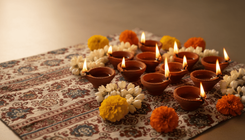
Diwali, the festival of lights, is celebrated across India in ways that honour the same spiritual meaning but look strikingly different depending on where you are. The Diwali traditions of North and South India reflect not just climate and agriculture, but different devotional histories and stories that have shaped each region for centuries. If you travel from Delhi to Chennai during Diwali week, you will notice that the lights are the same, but what people do with them, what they worship, and how they mark the occasion shifts in ways both subtle and unmissable.



The Story Behind the Festival
In North India, Diwali chiefly celebrates the return of Rama from fourteen years of exile, as told in the Ramayana. The festival marks the victory of good over evil, and the lighting of diyas (oil lamps) traces back to the people of Ayodhya lighting the way home for their prince. This narrative is central to how the festival is experienced and understood.
In South India, Diwali is often celebrated with a different emphasis. Many regions observe it as Deepavali, meaning the "row of lights", but the stories vary. In Tamil Nadu and surrounding areas, Diwali commemorates the victory of Krishna over the demon Narakasura, an event celebrated by lighting lamps and exchanging sweets. In other parts of South India, particularly among certain communities, the festival holds still different meanings. This regional plurality is not a contradiction—it reflects how the same festival can be woven into different local histories and devotional practices.
Worship and Deities
Northern Diwali celebrations centre on the worship of Rama and Sita, often alongside Lakshmi, the goddess of prosperity. Homes are cleaned and prepared for Lakshmi Puja, and many families set up altars or prayer corners where they make offerings of flowers, incense, and sweets. The focus is often on welcoming abundance into the home through ritual respect and cleanliness.
South Indian Diwali worship shows more variety. Lakshmi remains central—her blessing is sought in Tamil Nadu, Karnataka, and Andhra Pradesh much as it is in the North. However, in some regions the celebration is equally concerned with local deities, or with the divine power that Krishna represents. In Kerala and parts of South India, while Diwali is observed, it may be secondary to other major festivals like Onam or Pongal, which mark the harvest and new year according to local calendars. Temple celebrations in the South are often grander and more elaborate than domestic ones, with communities gathering for shared worship and feasting.
The Festival Calendar and Timing
Both North and South celebrate Diwali according to the lunar calendar, which means the date shifts each year by the solar calendar used in the West. However, the way Diwali falls in relation to other festivals and the agricultural year differs between regions, affecting how the festival is experienced.
In North India, Diwali arrives in autumn, as the harvest is winding down and farmers have prepared their granaries. The festival has historically aligned with this moment of security and plenty. Families invest in new clothes, jewellery, and household goods, and the spending and celebration are generous.
In South India, Diwali often arrives during a different part of the agricultural and festival calendar. Some southern regions observe a harvest festival near the same time (such as Pongal in January), which means Diwali, though celebrated, is not always the most significant point in the annual cycle. In Kerala, for instance, Onam in September carries more weight in the cultural calendar than Diwali does. These calendar differences mean that Diwali feels like the apex of celebration in much of North India, while in the South it may be one bright moment among several major festivals in the year.
Rituals, Food and Family Customs
Northern Diwali is marked by specific rituals that centre on the home and family. The lighting of diyas, the bursting of firecrackers, the exchange of gifts and sweets, and the purchase of new things all feature. Rangoli—the coloured powder floor patterns—is common but often simpler. The focus is often inward: family gathered, home prepared, prosperity invited.
Southern Diwali carries different customs. In many parts of the South, the ritual bathing before dawn on Diwali morning is especially significant, believed to wash away negativity. The lighting of lamps is practised, but often with special significance in temples. Fireworks are less central to the celebration in many southern communities. Rangoli is made, but the styles vary—in South India, rangoli often incorporates rice flour or turmeric, and the designs can be more geometric and precise. The sweets differ too: in the North, barfi and kheer are standard fare; in the South, payasam (a rice or lentil pudding with jaggery) and specific regional sweets are preferred.
Food itself tells the story of regional difference. Northern Diwali sweets tend toward milk-based confections and nuts. Southern Diwali sweets more often use rice flour, lentils, coconut, and jaggery. These are not slight variations—they reflect the crops that grow locally, the ingredients available, and generations of culinary tradition.
Celebration in Community and Temple
In North India, Diwali celebrations often focus on the individual household or extended family. Homes are lit, prayers are said at home altars, and families and neighbours exchange sweets. While temples are visited, the primary frame is the home.
In South India, especially in Tamil Nadu and Andhra Pradesh, temples play a more central role in Diwali observance. Communities gather at temples for puja and celebration, and the festival often has a more visibly collective character. Temple bells ring, processions may be held, and thousands sometimes gather to witness the temple's Diwali celebrations. This reflects a different emphasis in South Indian practice—the temple as the spiritual centre of community life is often more pronounced than it is in the North.
The differences between North and South Indian Diwali traditions remind us that festivals in the Indian tradition are not monolithic celebrations imposed from above, but living customs that grow from local soil. Whether you light a diya in Delhi or Chennai, the light carries the same meaning—the triumph of truth, the welcoming of good, the refusal of darkness. The form changes to fit the shape of each region's story, agriculture, and heart.
Common questions
Is the date of Diwali different in North and South India?
No, Diwali is celebrated on the same lunar calendar date across India, so it falls on the same day each year. However, because the lunar calendar shifts against the solar year, the date in Western terms changes annually. The festival's place in the local calendar and agricultural cycle differs by region, which affects how central it feels to the year.
Why do South Indian Diwali celebrations focus more on temples than North Indian ones?
Temple life has historically been more central to spiritual practice in many South Indian communities, so Diwali celebrations often draw large crowds to temples for collective worship and feasting. North Indian Diwali, while including temple visits, tends to centre more on family home rituals and private altars. Both approaches are valid expressions of the same festival.
Are the sweets made for Diwali the same across India?
No. Northern Diwali sweets often feature milk, nuts, and butter—such as barfi and kheer—while South Indian Diwali sweets commonly use rice flour, lentils, coconut, and jaggery to make payasam and region-specific confections. These differences reflect local crops, ingredients, and centuries of culinary tradition in each region.

Related Articles


