
Hindu Festivals for Children: Stories, Activities and Why They Matter
Festivals that grow with your child

Aditya Pandey
21 Nov 2026 • 7min
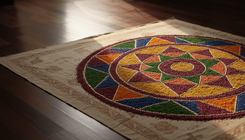
When you want to share Hindu festivals with your children, the best place to start is with the story. Children naturally think in stories. Before you explain the calendar or the ritual rules, tell them what happens and why. A festival becomes real to a child when they know who the characters are, what they care about, and how the story ends.



Why Stories Matter in Learning About Festivals
Stories work because they give a festival shape and meaning. When a child hears that Diwali celebrates the return of Ram after his exile, they have a frame for everything else: the lights, the sweets, the new clothes. When they know Krishna's story—the mischief, the flute, the playfulness—they understand why Holi is about colour and joy rather than just rules about dates.
The stories also carry values that no rule ever could. A child who hears about Arjun's courage and doubt in the Bhagavad Gita is learning something about facing difficulty that a ritual rule alone would never teach. Stories let children see themselves in the tradition. They recognize uncertainty, loyalty, kindness and courage as things that matter to their family and to the wider world they belong to.
The best stories are the ones your child hears repeatedly. You do not need to wait for the festival to arrive. Tell the story of Krishna and the butter when there is nothing special happening. Tell the story of Sita and Lakshman in summer. When the festival comes, your child already knows the story inside them, and the celebration makes sudden sense.
Starting with What Children Can Do
Even young children can take part in Hindu festivals. You do not need to wait until they understand the theology. A two-year-old does not need to understand the planetary cycles to light a diya. A four-year-old does not need theology to enjoy making rangoli with coloured rice. A six-year-old can learn to offer flowers or ring a bell in the puja.
Simple actions give children a real place in the celebration. When a child colours a rangoli or helps press sweets, they are not just watching adults do something else. They are part of the family practice. They have a role. This matters more than getting the rules perfectly right.
Choose actions that fit your child's age and your family's practice. Some families go to temple; some do puja at home. Some families fast; others mark the festival through story and food. All of these are real ways to celebrate. What matters is that your child sees you value the festival enough to do something together.
Cooking is one of the easiest activities. Making khichdi before Ekadashi (the eleventh-day fast), preparing sweets for Diwali, or rolling rotli together gives children a sensory experience of the festival. They taste what the day is about. They learn that festivals involve the people around them and the food they share.
Adapting Festivals as Children Grow
As your child grows, the same festivals offer new layers of meaning and new ways to participate. A three-year-old learns Diwali through colour and light. A seven-year-old can begin to understand the story of good overcoming evil. A teenager can ask harder questions about what the story means, why their grandparents follow the rules they do, and how the tradition fits with what they see around them.
This is natural and healthy. A festival does not have to look the same across a lifetime. Your job is not to enforce a fixed form of celebration, but to keep the tradition alive as it grows with your child.
Some families mark the transition explicitly. In some traditions, a child takes on new roles in the puja as they get older. In others, a teenager is invited to help prepare the family altar or lead certain parts of the ritual. Some families sit down with an older child and explain the meaning of the fast or the symbolism of the ritual in a way that respects both their growing mind and the seriousness of the tradition.
Do not worry about consistency. A child who does not fast at eight may choose to fast at fourteen. A child who loved making rangoli at five might find other ways to celebrate at fifteen. What stays consistent is that they see the tradition as something their family values and something they belong to.
Festivals Across Different Living Situations
Your family's living situation shapes how you celebrate. If you live near a temple community, you might gather for celebrations together. If you are far from other families who share your tradition, you might create celebrations at home. Single parents, grandparents raising children, families of mixed backgrounds—all of these find ways to mark festivals that feel true to their situation.
There is no single right way to do this. Some families attend large celebrations and feel part of a bigger community. Others prefer smaller home rituals that feel intimate. Some families blend traditions. What matters is that your child learns that their family sees these festivals as part of who they are.
If you have one child or many, if you live in a city with temples and Sanskrit classes or in a place where you are the only family celebrating, you are still passing on something real. A child who hears one story from their parent about their grandparent's festival practice, who helps light one diya, who tastes one festival sweet that their mother made for the same reason her mother made it—that child is learning that they belong to a tradition.
Practical Starting Points
Start small and build. You do not need to do everything at once. Choose one or two festivals your family already loosely marks—perhaps Diwali or Holi—and tell the story better. Make one food together. Light a lamp. Keep it simple enough that it feels natural, not like a project you are forcing.
As your child grows and shows interest, add more. Some families create a small home altar where a child can light a lamp or leave flowers. Some families keep a calendar that marks the lunar months and festivals so a child sees them coming. Some families listen to recordings of mantras or bhajans, or watch simplified retellings of the Ramayana or Krishna stories.
Books exist in many languages and for many ages. Stories from the Mahabharata, the Ramayana and the Bhagavata Purana are told in children's versions. These are real tools that real families use.
What matters most is that you show your child that these festivals are not obligations you tolerate, but traditions you value. Children are watching. They see what their parents make time for, what they talk about with warmth, what they connect to their own family history. When you tell a story about how your parent celebrated, or you take care preparing a certain food, or you stop to light a diya with presence and not hurry, your child learns that Hindu festivals are not something distant or dusty. They are alive. They belong to people they love. They matter.
Common questions
At what age should I start teaching my child about Hindu festivals?
You can start from infancy through simple sensory experiences like lighting a diya together or tasting festival sweets. The ritual meaning grows gradually as the child develops. There is no single right age—follow your child's curiosity and your family's comfort.
What do I do if my family has different festival practices than my partner or parents?
Let your child know that different families celebrate differently, just as they eat different foods or speak different languages. You can follow your own family's practice while respecting others. A child benefits from seeing that there are many genuine ways to honour the same tradition.
Can I celebrate Hindu festivals if I live far from a temple or community?
Yes. Many families celebrate at home through stories, cooking, simple rituals and marking the festival together. A child who hears stories, helps prepare food, or lights a lamp with a parent is learning just as much as one in a temple setting. Consistency and warmth matter more than the scale of the celebration.

Related Articles


