
Guruvayupura Ekadashi: The Story Behind Ekadashi Vilakku
Ritual Light, Sacred Vow, Divine Love

Aditya Pandey
26 Oct 2026 • 6min
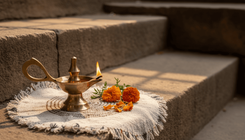
Guruvayupura Ekadashi is the Ekadashi—a fasting day falling on the eleventh day of the lunar fortnight—most sacred to Guruvayur temple in Kerala, one of the oldest Vishnu temples in South India. The ritual at its heart is Ekadashi Vilakku, the lighting of the Ekadashi lamp, a practice that connects the devotee's fast to the divine presence worshipped within the sanctum. Understanding why this lamp is lit, and how it fits into the larger rhythm of Ekadashi observance, shows how ritual creates a bridge between inner discipline and outer reverence.



The Sanctuary and the Season
Guruvayur is a pilgrimage temple of such antiquity that its founding is woven into legend rather than dated to a year. Located near Thrissur in Kerala, it holds a unique position among Vishnu temples: it is said to have been installed by Guru (Jupiter) and Vayu (Wind), the deities from whom its name is derived. For centuries, the temple has been a centre of Ekadashi practice, drawing devotees from across Kerala and beyond.
Ekadashi itself is observed twice a month across the Hindu calendar—once during each lunar fortnight. Some of these Ekadashis carry special significance: Krishna Janmashtami falls near one Ekadashi, Diwali near another. But Guruvayupura Ekadashi holds particular standing because it falls within the month of Mrigashirsha or Margarshirsha (roughly November or December), a time of year when the deity at Guruvayur receives special worship and when pilgrimage to the temple traditionally intensifies.
Why the Lamp Is Lit
The Ekadashi Vilakku—vilakku meaning lamp in Malayalam—is not a flame lit by accident or mere decoration. It is an act of worship, a physical offering that corresponds to the inner offering made by the faster. When you observe Ekadashi, you abstain from food or eat only simple fare, dedicating the lightness and clarity of body to a higher purpose. The lamp you light mirrors this commitment: a flame that consumes its fuel in service, burning without appetite, without complaint.
In temple worship, the lamp holds several meanings at once. It is a welcome to the divine presence—in many traditions, a deity is said to arrive where light gathers. It is also a symbol of knowledge burning away ignorance, a thread that connects the physical act of fasting to spiritual purification. When devotees at Guruvayur light the Ekadashi Vilakku on the day itself, they are extending their personal fast into the temple's public worship, making their individual discipline part of the collective reverence offered to Vishnu.
Regional Practice and Variations
The observance of Ekadashi Vilakku at Guruvayur has particular resonance in Kerala, where temple ritual and domestic practice are closely interwoven. Many Keralite households, especially those with a traditional bent, will fast on Guruvayupura Ekadashi and light a lamp at their home shrine in synchrony with the temple's greater ritual. Some families maintain this practice across generations, treating it as a pillar of their annual rhythm.
Beyond Kerala, Ekadashi is observed everywhere in the Hindu tradition, but the specific focus on the lamp at Guruvayur reflects the temple's influence in South India and its prominence in the lineage of Vishnu worship. Other temples and households may observe Ekadashi without lighting a vilakku as a formal ritual element, or may incorporate the lamp into worship differently. What matters across all variants is the alignment of fasting with devotion, of body discipline with mental clarity, of individual practice with the cosmic order the calendar celebrates.
How to Observe Guruvayupura Ekadashi at Home
If you wish to observe Guruvayupura Ekadashi, the practice follows the wider Ekadashi discipline with a local depth. Begin your fast the evening before, after eating your regular dinner. Many people eat a light meal or fast completely from that point forward; others eat only fruit, milk, or simple grains like barley until sunset on Ekadashi day itself. The point is not hunger but intention: the body's lightness creates space for prayer and reflection.
On the Ekadashi day itself, wake early if you can and bathe. Set up a small lamp—a diya or simple oil lamp—in your prayer space, using sesame oil or clarified butter if possible, and light it while offering a simple prayer to Vishnu or Krishna, whichever form you feel closest to. Some people recite the Ekadashi Mahatmya, a scriptural passage that celebrates the day's holiness, but this is not essential; sincere intention matters more than elaborate ritual.
If you are fasting fully, continue until sunset on Ekadashi, then eat a simple meal—often rice, lentils, and vegetables prepared without onion or garlic, which are considered heavier and more stimulating. Some people make an offering of this first meal to a temple or to a person in need before eating themselves. This shapes the fast as an act not just of restraint but of generosity.
Ekadashi as a Threshold
The beauty of observing Ekadashi through ritual, lamp-lighting and fasting is that it makes you conscious of thresholds: the boundary between day and night, between ordinary time and sacred time, between appetite and intention. When you light the Ekadashi Vilakku at Guruvayur or in your own home, you are marking that boundary with fire. The flame stands for the clarity you seek, the discipline you undertake, and the connection between your small act and the vast cosmic order that moves through temples and homes and hearts.
Guruvayupura Ekadashi is a day to remember that you are part of that order—that your fasting, your lamp, and your devotion ripple outward. The practice asks nothing you cannot give, and it returns you to yourself lighter, clearer, and more conscious of what matters.
Common questions
When is Guruvayupura Ekadashi in 2026?
Guruvayupura Ekadashi falls on the eleventh day of the lunar fortnight in the month of Mrigashirsha or Margarshirsha, roughly November or December. The exact date varies each year because it follows the lunar calendar, so check a Hindu calendar or your local temple's schedule for the specific date in 2026.
Can I light the Ekadashi lamp without fasting?
Yes. While fasting and lamp-lighting are traditionally paired as complementary acts of devotion, lighting the lamp is itself a complete ritual offering. If fasting is not possible for health reasons or other circumstances, the lamp alone is a valid act of worship.
Is Ekadashi Vilakku observed only at Guruvayur temple?
No. Ekadashi Vilakku and other forms of Ekadashi worship are observed in many temples and homes across India, particularly in the South. However, the specific ritual emphasis on the lamp at Guruvayur reflects that temple's particular tradition and influence in Vishnu worship.

Related Articles


