
Griha Pravesh: Welcoming Your New Home with Ritual
Blessing a home, honoring the threshold.

Kushal K
15 Nov 2026 • 8min
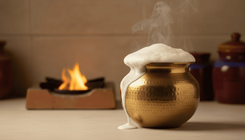
A griha pravesh ceremony is the ritual that marks your formal entry into a new home. It invokes blessings on the house, the people who will live there, and the threshold itself—a sacred boundary in Hindu thought. You can perform griha pravesh whether your home is new-built or newly bought, rented or owned. The ritual need not be elaborate or depend on hiring a priest, though many people do invite one. What matters is the intention: to acknowledge the significance of crossing the threshold for the first time, and to invite auspiciousness into the space.



When to perform griha pravesh
The timing of griha pravesh is guided by your panchanga, the Hindu calendar. Many families consult an astrologer to choose an auspicious day and muhurat, a time window reckoned in minutes and hours that is thought favorable for beginning something new. This is optional; you can perform the ceremony on any day that suits your household, though it is traditionally done soon after moving in rather than weeks or months later.
Some families choose a day aligned with the lunar calendar—often during a waxing moon phase or on an auspicious tithi (lunar day)—but this is a preference, not a requirement. If circumstances do not allow you to consult the panchanga, or if you simply wish to perform the ritual on a practical date, you may do so. The ceremony's value lies in the conscious act of blessing the home, not in the precision of the calendar alone.
What you will need
The core items for griha pravesh are straightforward and usually already in the home. You will need milk, preferably whole milk kept aside for the ritual. You will also need water—often collected from a well, river or water source, though tap water is perfectly acceptable in modern homes. A few flowers, leaves or flower garlands from your local market work well. Some households prefer to gather flowers specific to their region or what grows nearby.
You may light a lamp, though again this is not essential. Many families bring incense or dhoop (sticks of aromatic resin) into the new home and light them during the ceremony. You may also wish to have an idol or image of a deity you worship—commonly Ganesha, Lakshmi or the family's chosen deity—placed in a puja space or simply held during the prayers. Some households perform griha pravesh with these items; others keep it even simpler and proceed with milk and water alone.
The act of boiling milk
Boiling milk in the new home is the most recognizable moment of a griha pravesh ceremony, and for many families it is the heart of the ritual. You fill a pot or vessel with milk and place it on the stove, bringing it to a boil. As it boils, the milk rises and may overflow—traditionally, allowing the milk to rise and spill over the rim is considered auspicious, a sign of abundance and prosperity flowing into the home. Some families catch the overflowing milk with a cloth so it does not waste.
As the milk boils, it is customary to chant mantras or prayers, or simply to hold the intention of blessing the home. The act of boiling milk is ancient in Hindu ritual and carries its own meaning: milk represents purity and nourishment, and the transformation by heat mirrors the transformation of the home from empty space to a dwelling place.
After the boiling, the milk is usually offered to household members or guests, or used to prepare a simple sweet dish. Some families pour a little milk at the threshold of each room. The key is to use the boiled milk with reverence and share it, rather than discard it.
Purifying the home and the threshold
Before or alongside the boiling of milk, many families purify the new home by sprinkling water throughout the rooms and at the main entrance. You may walk through each room with water in a vessel, or use a sprinkler or cloth dipped in water. This act of sprinkling is understood to cleanse the space energetically.
The threshold itself—the boundary where you pass from outside to inside—receives special attention in griha pravesh. It is customary to place flowers or flower garlands at the doorway, or to mark the threshold with auspicious symbols. Some families draw a rangoli, a pattern made with colored powders or rice, at the entrance. Others place fresh leaves or flowers on the threshold before crossing it for the first time in the ritual.
The threshold holds particular significance in Hindu domestic life: it is the boundary between the outside world and the inner sanctum of the home, and treating it with care and respect is understood to bring protection and blessing to all who enter.
Prayers and offerings
As you move through the home during griha pravesh, it is common to offer flowers to the deity or deities you worship, whisper prayers for the wellbeing of everyone who will live in the space, and ask for the home to be a place of health, harmony and prosperity. Some families chant the Shanti Mantra, a prayer for peace, three times. Others may chant the Gayatri Mantra or any other prayer they feel drawn to.
The form of prayer is entirely personal. You might offer flowers to an idol you have placed in a corner, sprinkle water and flowers throughout the rooms while speaking blessings aloud, or simply sit quietly in the center of the home and hold the intention of gratitude and welcome. If you have invited a priest, they will guide the sequence of offerings and chants. If you are performing the ritual yourself with your family, you have complete freedom to adapt the ceremony to your beliefs and what feels right.
After the ceremony: keeping the space sacred
Griha pravesh is not a single moment but the beginning of your relationship with the home. After the ritual, many families establish small daily practices that maintain the sense of sacredness: lighting a lamp or incense each morning, keeping the kitchen clean and orderly, or placing fresh flowers in a puja corner. Some households make an offering of the first meal cooked in the new kitchen to their chosen deity.
These practices are not separate from griha pravesh; they are a continuation of the intention set during the ceremony. You are not expected to maintain elaborate rituals indefinitely, but the simple, consistent acts of care and reverence toward the home—keeping it clean, speaking kindly within it, and acknowledging its significance—keep the blessing alive.
Remember that griha pravesh is flexible and personal. The ritual exists to help you mark a transition and set an intention. Whether you perform an elaborate ceremony with a priest and many offerings, or simply boil milk and sprinkle water through the rooms with your family, the meaning is the same: you are welcoming yourself into a new home and inviting auspiciousness to dwell there with you.
How to Perform Griha Pravesh
- Prepare the space Gather milk, water, flowers and any icons or images of deities you wish to use. Ensure the home is clean and accessible, with the main entrance ready to receive the ritual.
- Light the lamp If you wish, light a lamp or incense at the main entrance or in a central puja space. This marks the beginning of the ceremony.
- Boil the milk Fill a pot with milk and place it on the stove. Bring the milk to a boil, chanting mantras or holding the intention of blessing the home as it heats. Allow it to rise and overflow gently if it does.
- Sprinkle water and place flowers Walk through each room of the home, sprinkling water and placing flowers or flower garlands as you move. Pay special attention to the threshold of the main entrance and the corners of important rooms.
- Make offerings and pray If you have an idol, offer flowers to it. Chant a prayer for peace, prosperity and wellbeing—the Shanti Mantra, Gayatri Mantra or any prayer meaningful to you—or speak your blessings aloud.
- Share the boiled milk Offer the boiled milk to family members, guests or friends. You may also pour a little at the threshold of each room or use it to prepare a simple sweet dish.
- Ground yourself in the home Sit quietly in the center of the home or the main living space. Take a moment to consciously acknowledge that you now dwell in this place and to set your intention for the home.
Common questions
Can I perform griha pravesh without a priest?
Yes. Griha pravesh is a home ritual that you and your family can perform yourselves by boiling milk, sprinkling water, placing flowers at the threshold, and offering prayers to your chosen deity or simply holding the intention of blessing the home. Hiring a priest is a choice, not a requirement.
What if the milk doesn't overflow when boiling?
Overflow is traditionally seen as auspicious, but it is not essential to the ritual. If the milk comes to a gentle boil without overflowing, the ceremony is complete and equally valid. The intention and the act of boiling the milk in your new home is what matters.
Is there a specific date I must choose for griha pravesh?
There is no single mandatory date. While many families consult a panchanga or astrologer to choose an auspicious muhurat, you can perform griha pravesh on any day that suits your household. Performing it soon after moving in, rather than much later, is the main guidance.

Related Articles


