
Gangaur: Rajasthan's Festival of Shiva and Gauri
Spring devotion to the divine couple

Abhilash Ramakrishna
12 Nov 2026 • 6min
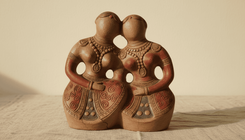
Gangaur is a festival celebrated primarily in Rajasthan that honours the divine couple Shiva and his consort Gauri, whose name means the golden or fair one. Observed during the month of Chaitra, typically in March or April, the festival lasts for 18 days and culminates in the Gangaur Teej celebration. It is one of Rajasthan's most vibrant festivals, particularly cherished by women, who perform rituals, dress in traditional attire, and gather in public spaces to celebrate the enduring union of Shiva and Gauri.



The Story of Shiva and Gauri
The festival draws its significance from the ancient mythology of Shiva and Parvati, another name for Gauri. According to Hindu tradition, Parvati performed intense tapasya, or spiritual practice, to win Shiva's heart and become his consort. Moved by her devotion, Shiva agreed to marry her, and their union became a symbol of divine love and cosmic balance. In Rajasthani culture, this story resonates deeply with women, who see in Parvati's dedication an ideal of steadfast devotion. The festival celebrates not just the marriage itself, but the feminine power—or Shakti—that Parvati represents. Gangaur thus becomes an occasion to honour both the spiritual strength of women and the ideal of a harmonious partnership rooted in mutual respect and spiritual practice.
The Rituals of Gangaur
The core ritual of Gangaur centres on the worship of clay or wooden idols of Shiva and Gauri, often called Isar and Gauri in the local language. Women create or acquire these figures and worship them in their homes or in communal spaces. The worship typically includes offerings of flowers, turmeric, vermillion, and sweets. Many women observe a fast during the festival period, breaking it only after performing the puja, or worship ritual. Songs called geet are sung during the celebrations, which tell stories of Shiva and Gauri's love and carry blessings for good fortune and happy marriages. The idols are paraded through streets in processions, creating an atmosphere of collective devotion. This public expression of worship strengthens community bonds and allows women to gather in shared celebration of their own agency and spiritual practice.
Regional Variations Across Rajasthan
While Gangaur is celebrated across Rajasthan, the customs vary by region and community. In some areas, the festival begins on the first day of Chaitra and continues for the full lunar month, while in others it centres on the final three days leading to Teej. The types of songs sung, the materials used for the idols, and the specific offerings differ between cities and villages. In Jaipur and other urban centres, the festival has a more structured public celebration with processions and fairs. In rural areas, the celebration remains more intimate and family-focused, though no less significant. Some communities hold competitions for the most beautifully decorated idols, while others emphasise the communal feast shared after the puja. These variations reflect how local traditions have shaped the festival over centuries, each region adding its own cultural character while maintaining the core reverence for the divine couple.
Gangaur Beyond Rajasthan
Though Gangaur is most strongly associated with Rajasthan, similar festivals honouring Shiva and Gauri are observed in neighbouring regions and among diaspora communities. The festival has travelling with Rajasthani migrants to other parts of India and abroad, where communities recreate the celebration to maintain cultural ties. In some areas, the celebration merges with other spring festivals or takes on local names and customs. However, the Rajasthani version remains the most elaborate and widely known, and it continues to draw visitors who wish to witness the colourful processions and experience the devotion of the community. The festival's resilience and adaptation show how traditions remain alive when they remain meaningful to the people who practise them.
Why Women Lead the Celebration
Gangaur is distinctly a festival led and centred on women, which reflects its purpose as a space for feminine spiritual expression. Historically, women used the festival as an opportunity to gather, sing, dance, and assert their own agency within the social structure. The wearing of traditional ghagra-choli, the application of henna, and the adorning of jewellery become acts of celebration and self-care. Through songs and stories, women pass down knowledge about relationships, resilience, and spiritual practice to younger generations. The festival honours Parvati not as a passive consort but as an embodiment of Shakti—the divine feminine power that creates and sustains the universe. In this framing, the festival becomes both a celebration of partnership and a recognition of the strength that women themselves carry.
Preparing for Gangaur
If you wish to participate in or observe Gangaur, understanding the basic customs will enrich the experience. The festival is primarily celebrated in Rajasthan, though communities elsewhere may have local celebrations. If you are in Rajasthan during Chaitra, you will find public processions, fairs, and cultural events in towns and villages. You can participate respectfully by attending public celebrations, purchasing clay idols if you wish to worship them at home, or learning the traditional songs and stories associated with the festival. Visitors are welcome at community gatherings, though it is important to dress modestly and behave respectfully during worship. For those living outside the region, connecting with Rajasthani cultural organisations or online communities offers ways to learn about and celebrate the festival's significance.
Common questions
When is Gangaur celebrated each year?
Gangaur is observed during the month of Chaitra, which typically falls in March or April, and the exact dates follow the lunar calendar and vary each year. The festival lasts 18 days and culminates in Gangaur Teej, but the duration and starting point may differ by region within Rajasthan.
Why is Gangaur celebrated mainly by women?
Gangaur celebrates Parvati's devotion and spiritual strength, and women lead the festival as a space to express their own agency and spirituality. The festival honours feminine power—or Shakti—through worship, song, and community gathering, making it a distinctly women-centred celebration.
Can visitors participate in Gangaur celebrations?
Yes, visitors are welcome at public celebrations, processions, and fairs held during Gangaur in Rajasthan. It is important to dress modestly and behave respectfully during worship, and to approach the celebration with genuine interest in the tradition rather than as spectacle.

Related Articles


