
Ganga Aarti at Varanasi and Haridwar: What Pilgrims Witness
Fire and water, devotion made visible

Aditya Pandey
11 Nov 2026 • 7min
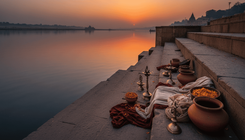
The ganga aarti is a ritual of fire and reverence offered to the Ganges river, performed each evening at ghats across India where the river flows. At Varanasi and Haridwar, the two most sacred sites along the Ganges, thousands gather on the water's edge to witness this ceremony—rows of lamps held high, chanting that fills the air, and the river itself transformed into a space of collective prayer. If you search for what a pilgrimage to the Ganges feels like, this is often it.
The ganga aarti is rooted in the ancient practice of worshipping natural forces and sacred waters. The Ganges is understood in Hindu tradition not simply as a river, but as a goddess—Ganga—who descended from heaven to earth to purify humanity and the world. The aarti (a ritual of waving lamps before a deity) is the evening offering, a moment when priests and pilgrims acknowledge her presence and ask for her blessings. This ritual has been performed for centuries, and while its exact origins are difficult to date, it reflects beliefs recorded in texts like the Mahabharata and the Puranas, which describe the Ganges as the most sacred of rivers.



What Happens During Ganga Aarti
The ceremony follows a structure common to all aartis, but the scale and the river setting give it a distinctive power. As dusk falls, priests gather at the ghat—a stepped platform leading down to the water. Each priest holds a brass lamp stand, usually with five or seven wicks, though at some temples the lamps are much larger. The lamps burn ghee or oil, and as the priests move them in synchronized patterns, they create a flow of light that mirrors the river's movement.
Chanting accompanies the lamps. The most common mantra is a salutation to the Ganges, often beginning with "Om Gange..." or invoking her names and forms. Bells ring throughout the ceremony. Sometimes drums join in. The air fills with the scent of ghee and sandalwood. At certain moments, the priest might offer flowers or flower petals to the river, or pour water back into the Ganges as a gesture of return and gratitude.
The ceremony usually lasts between 30 minutes and an hour. Pilgrims and visitors stand in silence or join the chanting, many with their hands pressed together in reverence. Some offer their own small prayers or coins to the river. Others wade into the water to bathe, believing that bathing in the Ganges at the time of aarti multiplies the spiritual benefit. When the aarti concludes, pilgrims sometimes receive prasad—blessed food—or water from the Ganges to drink or carry home.
Ganga Aarti at Varanasi
Varanasi is the holiest city in Hindu tradition, and the ganga aarti here is the most famous in India. The ceremony takes place at Dashashwamedh Ghat, one of the oldest and most central ghats in the city. Each evening, five or more priests perform the aarti together, moving their lamps in elaborate patterns that seem choreographed. The scale is immense: hundreds or even thousands of pilgrims gather on the steps and in boats on the water to watch.
Dashashwamedh Ghat pulses with energy during the aarti. The narrow steps are crowded. Vendors move through the crowd selling marigolds and small oil lamps that pilgrims float on the river as offerings. The sound is overwhelming—bells, chanting, the murmur of thousands of voices. The priests perform with deep focus, their movements precise and reverent despite the noise and press of bodies. Boats full of observers drift on the water, offering a different vantage. The whole scene—the lights, the river, the ancient city rising behind—creates an atmosphere many describe as transcendent, though the word feels inadequate.
The Varanasi aarti happens twice each day: in the early morning and in the evening. The evening ceremony is the larger and more well-known, usually beginning around dusk. The specific timing shifts with the seasons. Many pilgrims arrive early to secure a spot on the steps, especially during festivals or full moons, when the crowds are larger still.
Ganga Aarti at Haridwar
Haridwar, meaning "gateway to god," lies further upriver in Uttarakhand. The ganga aarti here is performed at Har-ki-Pauri (also called Harkeswar Ghat), a ghat said to mark the spot where Vishnu's footprint is imprinted on the earth. The ceremony is simpler and more intimate than Varanasi's, though no less reverent.
At Har-ki-Pauri, a smaller group of priests perform the aarti, their movements less elaborate than at Dashashwamedh but equally focused. The ghat is smaller than Varanasi's, so the ceremony feels more contained, easier to witness fully. Many pilgrims here are ritual bathers, come to immerse themselves in the waters, and the aarti is one part of their larger visit. The chanting and bells are the same, but the tone is quieter, more meditative.
Haridwar is a major pilgrimage site throughout the year, but it draws especially dense crowds during Ganga Dussehra, the festival celebrating the descent of the Ganges to earth, and during Kumbh Mela, the vast gathering that occurs once every 12 years. At these times, the aarti becomes even more crowded and significant.
Why Pilgrims Come to Witness the Aarti
For many Hindus, witnessing the ganga aarti is a key part of pilgrimage to these cities. The ritual embodies several layers of meaning at once. On one level, it is an act of devotion—offering to a goddess who is understood as divine. On another, it is a practice of gratitude for the river's gifts to human life: water for drinking and farming, a corridor for trade and travel, and in Hindu understanding, a medium of spiritual cleansing.
For some pilgrims, the aarti itself is a form of meditation, a focal point for prayer. For others, it is simply a moment of being in the presence of something sacred, in a place that feels held apart from everyday life. The combination of sound, light, scent and movement creates a sensory experience that many describe as moving beyond thought.
Attending the ganga aarti does not require ritual preparation or special knowledge. A visitor simply arrives at the ghat before the ceremony begins and stands or sits respectfully. Many people remove their shoes as a mark of respect. Photography is usually permitted, though some prefer not to photograph, treating the moment as time for presence rather than documentation. The pilgrims around you will be absorbed in their own experience—some chanting, some silent, some simply observing.
The ganga aarti remains one of the most accessible rituals for those new to Hindu practice, because it requires nothing but presence and respect. No initiation, no special status, no prior knowledge is necessary. You arrive, you watch, you feel what arises. This simplicity, combined with the extraordinary setting and the depth of belief the ceremony carries, is partly why the aarti has drawn pilgrims—and now visitors from across the world—for so long.
Common questions
What time does the ganga aarti happen?
At Varanasi, the aarti occurs twice daily—early morning and at dusk. At Haridwar, the ceremony also takes place in evening hours. The exact timing shifts with the seasons and sunrise and sunset times. Most visitors come for the evening ceremony, which is larger and more accessible.
Can I participate if I'm not Hindu?
Yes. The ganga aarti requires no initiation, registration or prior knowledge to attend. Visitors of any faith can stand respectfully at the ghat to watch. Remove your shoes as a mark of respect, and be mindful of the space and those around you who are in deep prayer.
Is there a fee to watch the ganga aarti?
No fee is charged to watch the ceremony itself. However, many pilgrims offer small donations to the temple or ghat, and vendors sell flowers and small lamps to float on the river as offerings. These are optional.

Related Articles


