Ganesha and the Paradox of Perfection: The Broken Tusk
Embrace the Beauty in Imperfection: Ganesha’s Broken Tusk and the Power of Resilience

Meghana C
07 Sep 2024 • 4min
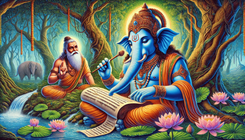
When we picture Ganesha, the elephant-headed god, most of us think of his kind eyes, large ears, and his iconic tusks. But if you look closely, one of Ganesha’s tusks is broken. The story behind this broken tusk carries a profound lesson.
As the legend goes, Ganesha was tasked with writing down the Mahabharata as it was dictated by Sage Vyasa. The Mahabharata is not just a revered Indian text, but also one of the longest epics in the world—nearly ten times the length of Homer’s Iliad and Odyssey combined. As Vyasa dictated at incredible speed, Ganesha’s pen broke. Rather than interrupting the flow of this monumental task, Ganesha broke off his own tusk and continued writing. In this moment, he chose sacrifice for a higher purpose.
The broken tusk, then, is not a symbol of flaw or failure. It represents adaptability and the strength to act in the face of imperfection. Ganesha didn’t hold back to preserve his own form; instead, he prioritised the mission over the ideal of being unblemished. This invites us to reflect on the wisdom in embracing imperfections rather than chasing unrealistic ideals of perfection.
This idea of finding beauty and value in imperfection has parallels in many cultures. For instance, in Japan, there is a traditional art form known as kintsugi—the practice of repairing broken pottery with gold. The cracks, rather than being hidden, are highlighted, making the object more beautiful and meaningful because of its flaws. Like kintsugi, Ganesha’s broken tusk teaches us that imperfection can be a source of strength and wisdom, not something to be concealed or ashamed of.
In our modern world, perfection is often viewed as the pinnacle of success, whether in our personal or professional lives. But Ganesha’s broken tusk challenges this notion. Perfection, in its rigid form, can make us inflexible, afraid to make mistakes or adapt to changing circumstances. True wisdom lies in embracing the cracks and using them to propel us forward, just as Ganesha did.
Life’s obstacles, setbacks, and imperfections are inevitable. Like Ganesha, we all carry our own versions of broken tusks—scars from battles fought, challenges faced, and sacrifices made. But it is precisely these imperfections that tell our story, make us unique, and fuel our progress. Ganesha reminds us that wisdom and success are not about achieving flawlessness, but about moving forward with resilience and purpose, despite our broken pieces.
This Ganesh Chaturthi, as we seek Ganesha’s blessings to remove obstacles, let’s also reflect on the lesson of his broken tusk. It’s a reminder that our imperfections are not limitations but opportunities for growth. True wisdom comes not from being flawless, but from continuing with purpose, despite the challenges life throws our way. Like the golden cracks of kintsugi, our imperfections can make us stronger, more beautiful, and more whole.
This Ganesh Chaturthi, deepen your devotion using the Dharmayana app’s Prarthana for Ganesha. With lyrics and meanings available in all Indian languages, the app helps you connect to the prayers more fully and understand their significance. Experience the divine presence of Ganesha with ease and meaning.

Related Articles
Try a fuller and better experience on the
Dharmayana App