
Ganesh Jayanti in Magha: How It Differs from Ganesh Chaturthi
Two birthdays, two seasons, one beloved god

Aditya Pandey
16 Nov 2026 • 7min
Ganesh has two birthdays in the Hindu calendar, and Ganesh Jayanti in Magha is the less widely known of the two. While Ganesh Chaturthi in Bhadrapada is celebrated across India with grand processions and public festivals, Ganesh Jayanti in Magha is a quieter observance, marked more often in homes and temples in certain regions. Both honour the same remover of obstacles, but they fall in different seasons, carry different stories, and involve different practices.



Why Ganesh Has Two Birthdays
The two celebrations reflect different scriptural traditions and regional customs. Ganesh Chaturthi, also called Bhadrapada Chaturthi, follows the narrative most widely known: Parvati created Ganesh from turmeric paste and sandalwood to stand guard while she bathed, and when Shiva arrived, he cut off the child's head. After Parvati's grief, Shiva promised Ganesh would be worshipped before all other gods and given the status of a full deity.
Ganesh Jayanti in Magha, celebrated on the fourth day of the lunar month of Magha, refers to a different account of Ganesh's birth. This version, prevalent in parts of South India and in certain traditions, honours Ganesh's emergence or manifestation during this month. Some texts place his origin in Magha, making it an equally valid occasion for celebration. In regions that follow the Magha tradition, this is considered the true jayanti, or birth anniversary.
The two celebrations do not compete. A devotee might observe both, or follow the one most rooted in their family's sampradaya or regional practice. Both are legitimate expressions of devotion to Ganesha.
When Ganesh Jayanti in Magha Falls
Ganesh Jayanti in Magha always falls on the Chaturthi tithi, the fourth lunar day, of the Magha month. Unlike a fixed calendar date, the exact date in January or February shifts each year because it follows the lunar calendar. In years when Magha Chaturthi aligns with Magha Shukla Chaturthi (the fourth day of the waxing moon in Magha), this is when the festival is observed.
The Panchanga, the Hindu calendar, determines the precise date each year. To know the exact date for any given year, check a current Panchanga or consult a local temple. The observance typically falls sometime between mid-January and mid-February, but the lunar calendar means there is no single fixed date.
Some years, Magha Chaturthi may not fall within Magha month at all, or there may be variations depending on which lunar calendar system a region follows. For this reason, regional temples and communities publish their own dates each year. In southern India, where this celebration is more established, temple notices and local calendars make the timing clear.
How the Two Celebrations Differ in Practice
Ganesh Chaturthi in Bhadrapada is a ten-day festival with elaborate rituals: a clay idol is made, worshipped with offerings, and then immersed in water. It is marked by the making of modak, a sweet dumpling, and the singing of devotional songs. Large processions, called rath yatra, happen in cities and towns. It is a festival as much of community as of worship.
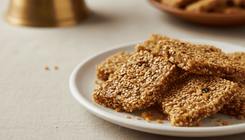
Ganesh Jayanti in Magha is typically observed at home or in temples without the ten-day structure. Devotees offer prayers, perform puja, and make offerings of fruits, flowers, and sweets. Modak and tilkut, a brittle made with sesame and jaggery, are commonly offered. The mood is contemplative rather than celebratory. There are no processions or mass gatherings in most places.
In regions where Ganesh Jayanti in Magha is the main Ganesh celebration, the observance carries more weight and visibility. In Maharashtra and other parts of India where Ganesh Chaturthi dominates, Ganesh Jayanti in Magha may pass with little public notice. Families who follow a specific tradition or sampradaya are more likely to mark it carefully.
Offerings and Rituals for Ganesh Jayanti in Magha
The puja for Ganesh Jayanti in Magha follows the same basic principles as any Ganesh worship: offerings of flowers, incense, water, and food are made to an image or murti of Ganesh. The specific offerings vary by household and region, but certain items are traditional.
Fruits such as bananas and coconuts are offered. Rice and sesame, which are associated with the Magha month and winter harvest, feature in offerings. Tilkut, made from sesame seeds and jaggery, is particularly associated with Ganesh Jayanti in Magha because sesame holds significance in the month of Magha itself. Some households prepare khichdi, a simple rice and lentil dish, as a home offering.
Recitation of the Ganesh Mantra and the Ganesh Chalisa, a 40-verse devotional poem, forms the core of the puja. Many devotees read or recite passages from the Ganesha Upanishad or other texts that explore Ganesh's role in Hindu philosophy. A period of fasting, full or partial, is observed by some, though it is less central to Ganesh Jayanti in Magha than to other festivals.
Regional Variations
In Tamil Nadu and parts of Karnataka, Ganesh Jayanti in Magha is observed with considerable attention. Temples dedicated to Ganesh mark it with special pujas and abhisheka, ritual bathing of the deity. Some families prepare traditional South Indian sweets and offer them at home altars.
In Gujarat and Rajasthan, where Ganesh Chaturthi is the primary celebration, Ganesh Jayanti in Magha is marked by families who have maintained it as part of their practice, but it does not carry the public prominence of the monsoon festival.
In Maharashtra, the home of Ganesh Chaturthi, Ganesh Jayanti in Magha is observed in homes and temples but remains less visible than its autumn counterpart. Families often celebrate both, seeing them as complementary rather than competitive.
Understanding these regional patterns helps explain why two Ganesh celebrations exist and persist. One is not "right" and the other "wrong"—they reflect the diversity of Hindu tradition and the many ways communities relate to their deities across the year.
Which Celebration Should You Observe?
If you are new to these observances, follow what is rooted in your family tradition, your region, or your chosen sampradaya. If both celebrations are part of your inheritance, you can honour both. If you are drawn to Ganesh and want to observe his jayanti, either occasion provides a valid entry point.
Ganesh Chaturthi in Bhadrapada is more widely observed and easier to find detailed information about. But Ganesh Jayanti in Magha, quieter and more intimate, offers its own depth for those who seek it. The key is intention: Ganesh is said to remove obstacles for those who approach him with sincerity, regardless of which month the celebration falls in.
Common questions
What is the exact date of Ganesh Jayanti in Magha this year?
Ganesh Jayanti in Magha falls on the Chaturthi tithi of Magha, but the corresponding calendar date shifts each year because it follows the lunar calendar. Check a current Panchanga, a local temple's annual calendar, or a reliable Hindu calendar source for the specific date in your year.
Can I celebrate both Ganesh Jayanti in Magha and Ganesh Chaturthi?
Yes. Both are valid celebrations of Ganesh, and many devotees honour both. They reflect different scriptural traditions and carry equal weight in Hinduism. Following both shows a fuller engagement with Ganesh worship across the year.
Is Ganesh Jayanti in Magha observed everywhere in India?
No. It is more prominent in South India, particularly in Tamil Nadu and Karnataka. In Maharashtra, Gujarat and other northern regions, Ganesh Chaturthi in Bhadrapada dominates public observance, though families may still mark Ganesh Jayanti in Magha at home.

Related Articles


