
Flowers and Leaves Offered to Deities: A Guide to Puja Offerings
Sacred blooms for sacred hands

Abhilash Ramakrishna
11 Nov 2026 • 6min
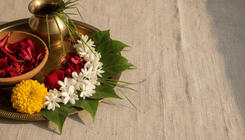
Different flowers and leaves carry different meanings in Hindu puja, and knowing which offerings suit which deity helps you show respect and reverence in worship. While many flowers can be offered to any god, certain plants have long been associated with specific deities because of their qualities, their appearance, or stories told about them. Understanding these connections deepens your practice.



Flowers for Shiva
Shiva is offered flowers that are simple, fragrant, or connected to him through mythology. White flowers especially please him: jasmine, chameli, and white marigolds are all suitable. The lotus, symbol of purity emerging from mud, is offered to Shiva at many temples. He is also offered ixora and hibiscus.
But Shiva has a particular relationship with the bilva leaf. The three-lobed bilva leaf, also called bel patra, represents Shiva's three eyes, and offering it during puja is considered especially auspicious. You can offer bilva leaves alone, or place them on the linga. Many people keep a bilva plant at home for this reason. The leaf is so connected to Shiva that some texts suggest it is more valuable than elaborate flower garlands.
Flowers for Ganesha and Ganapati
Ganesha, the remover of obstacles, is offered flowers of all colours, but red flowers hold special significance. Hibiscus, particularly red hibiscus, is a favourite. Marigolds, whether yellow or red, are also deeply connected to his worship.
Durva grass, which is a type of grass with narrow green blades, has a unique place in Ganesha puja. Durva is offered in clusters of four or an odd number, and it is considered powerful enough to remove obstacles and bring good fortune. Many people offer durva before asking Ganesha for help with a particular challenge. The grass is also used in other rituals and in some Ayurvedic preparations.
Flowers for Lakshmi
Lakshmi, the goddess of wealth and prosperity, is offered lotus flowers above all others. The lotus is her seat, and red or pink lotus carries special power in her worship. Marigolds, particularly yellow marigolds, are offered abundantly during Diwali and other times when Lakshmi is worshipped. Chrysanthemums and other auspicious flowers can also be offered.
Flowers used in Lakshmi puja are often arranged in garlands or placed around her image. The fragrance and beauty of the flowers are thought to please her and draw her blessings toward your home. Many families make it a practice to offer fresh flowers to Lakshmi every morning or on auspicious days.
Flowers for Durga and Kali
Durga, the warrior goddess who defeats evil, is offered red flowers above all. Red hibiscus is especially connected to her worship, as is red oleander where it grows. Marigolds in deep orange or red shades suit her fierce and protective energy. Some regions offer white flowers as well, particularly jasmine.
Kali, Durga's darker aspect, is also offered red flowers. Red hibiscus and red oleander are common choices. Unlike flowers offered to gentler deities, flowers for Kali may sometimes be offered without their stalks or presented in ways that reflect her fierce nature. However, regional practices vary widely, and you should follow the customs of your own temple or family tradition.
Flowers for Krishna and Vishnu
Krishna is offered flowers of all kinds, and his altars are often beautifully garlanded. Yellow flowers like marigolds suit him well, as do jasmine, hibiscus, and lotus. White flowers are also offered. The choice of flower matters less than the devotion with which you offer it.
Vishnu, Krishna's divine form, is similarly offered a wide range of flowers. Lotus holds deep meaning in his worship, as he is often shown resting on the cosmic ocean with lotuses blooming from his navel. Marigolds, jasmine, and tulsi leaves (sacred basil) are common offerings. Tulsi is particularly important, as the plant itself is considered a manifestation of devotion to Vishnu.
How to Make an Offering
When offering flowers, place them with your right hand if possible, or both hands held together. Bow or touch your forehead to show respect. The flowers do not need to be expensive or perfect: a single flower offered with genuine devotion is more meaningful than a grand but careless offering. Many people offer flowers early in the morning, when the dew is still on them, and when the mind is fresh for worship.
If fresh flowers are not available, silk flowers or leaves alone can be offered. The custom changes by region and by temple; if you are at a temple, follow the priest's guidance or the practice of other worshippers there. At home, simply offer what you have with a sincere heart.
Seasonal and Regional Differences
Different parts of India and different seasons bring different flowers into bloom. A temple in a tropical region may offer flowers year-round that would not be available elsewhere. Some communities have long-standing preferences: certain flowers appear in certain families' pujas because that is how it has always been done.
Tulsi, the holy basil, deserves special mention. It is offered to Vishnu and Krishna especially, but also appears in many households' daily worship across India. The plant is grown for worship, and offering even a single leaf is considered powerful. In some homes, tulsi is planted in a special pot, called a tulsi vrindavan, and worshipped as a living form of devotion.
The flowers you can actually obtain where you live are the flowers meant for your puja. There is no value in struggling to source rare blooms when local flowers bloom abundantly and can be offered with full attention and care.
Common questions
Can I offer any flower to any deity?
Most flowers can be offered to any god, but certain flowers deepen your worship: bilva leaves specifically for Shiva, durva grass for Ganesha, lotus for Lakshmi, and red flowers for Durga and Kali. If you are unsure, follow your temple's practice or offer what your heart guides you to offer.
What if I cannot find the specific flower recommended?
Offer flowers that grow where you live and are fresh and clean. A single marigold or a few tulsi leaves offered with genuine intention is more valuable than a distant flower offered without thought. The devotion matters more than the flower itself.
Is there a right time to offer flowers in puja?
Early morning is traditionally preferred, when flowers are fresh and the mind is clear for worship. However, you can offer flowers at any time. Place them with your right hand or both hands held together, and bow to show respect.

Related Articles


