Eka Pada Hastasana
The Asymmetrical Art of Bowing Inward
Shanti Arunkumar
27 Jul 2025 • 6min
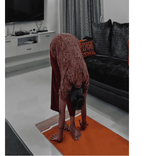
In the world of yoga, even the smallest shift in alignment can awaken new levels of awareness. Eka Pada Hastasana, or Hands to One Foot Pose, is a perfect example of how a subtle variation—stepping one foot slightly ahead of the other—can completely transform a familiar asana into a more mindful and enriching experience.
This pose, a variation of Hastapadasana (Standing Forward Bend), appears deceptively simple. But the moment one foot steps ahead, the foundation changes, balance shifts, and the practitioner must adapt. It is no longer just about folding forward; it becomes about recalibrating—finding harmony within asymmetry, stillness within subtle instability.
Eka means one, Pada means foot, and Hasta means hand. In this pose, the hands reach toward the front foot, guiding the spine into length and the mind into reflection. As the weight distributes unevenly between the legs, each side of the body experiences a slightly different stretch. This difference sharpens attention, enhances proprioception, and deepens the pose’s physical and internal impact.
Beyond its physical benefits, Eka Pada Hastasana invites us into a symbolic bow—honoring the imperfection, imbalance, and asymmetry that are part of everyday life. Through this humble forward bend, we cultivate patience, precision, and peace.
How to Practice Eka Pada Hastasana
Recommended as part of a warm-up or standing sequence, especially after postures that open the hamstrings and hips.
Step-by-Step Instructions:
Begin in Tadasana (Mountain Pose)
Stand with feet together, spine tall, and arms relaxed by your side.
Step One Foot Forward
Bring your right foot slightly ahead of the left—around 6 to 12 inches (not a full stride). Keep both legs straight and hips aligned.
Inhale, Lift the Arms (Optional)
Stretch the arms overhead to prepare for a lengthened forward fold.
Exhale, Fold Forward
Hinge at the hips (not the waist) and fold forward over the front leg. Allow the hands to reach toward or rest on the floor, ankle, or shin—wherever comfortable.
Relax the Neck
Let the head hang freely. Keep the spine long and avoid rounding the back excessively.
Hold the Pose
Breathe deeply for 5 to 7 breaths, feeling the hamstrings, calves, and back awaken.
Inhale to Rise
Engage the core and come up slowly, returning to Tadasana.
Repeat on the Other Side
Step the left foot forward and perform the same sequence.
Benefits of Eka Pada Hastasana
Deepens Hamstring Flexibility
Targeted stretch to the hamstring of the front leg, aiding flexibility and reducing stiffness.
Enhances Balance and Body Awareness
The uneven stance activates core muscles and sharpens proprioception.
Improves Spinal Elongation and Posture
Encourages spinal traction and alignment, relieving minor back tension.
Calms the Nervous System
Like other forward bends, this pose is grounding and introspective, promoting a quiet, meditative state.
Tones Legs and Activates Lower Body
Both legs remain engaged—strengthening the thighs, calves, and ankles.
Contraindications and Precautions
Avoid or modify the pose if you:
- Have acute lower back pain or sciatica
- Experience vertigo or high blood pressure
- Suffer from hamstring injuries—bend the knees slightly
Modifications:
- Place blocks under the hands if you cannot comfortably reach the floor.
- Keep a micro-bend in both knees to protect joints.
- Use a wall or chair for support if balance feels compromised.
Practice Tips for Alignment and Depth
Keep both feet facing forward and hips squared.
Do not lock the knees—engage the quadriceps to protect them.
Focus on lengthening the spine before deepening the fold.
Visualize the breath moving into the back body as you fold.
Meeting Asymmetry with Awareness
Eka Pada Hastasana may appear as a quiet, unassuming pose—but within its asymmetry lies a world of nuance. The subtle forward step nudges us out of our habitual patterns, reminding us that balance is not always found in symmetry. It is found in adaptation, awareness, and attentiveness.
This posture teaches us to pay attention to the small differences—the uneven stretches, the shifting sensations, the delicate recalibrations our body makes to maintain alignment. These are the same qualities we need off the mat as well—to walk through life’s uneven terrain with grace, to bow inward without collapsing, and to hold steady even when things seem slightly off-center.
In practicing Eka Pada Hastasana, we honour the truth that harmony does not come from perfection. It comes from the courage to pause, to fold, and to find peace in imbalance. One foot ahead of the other—not just in the pose, but in life.

Related Articles