
Dussehra Significance: Victory, Ritual and the Stories Behind the Festival
Triumph over darkness, told through ritual and fire

Kushal K
10 Nov 2026 • 6min
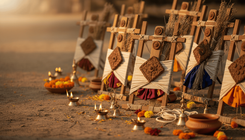
Dussehra is the name most North Indians use for a festival that marks a turning point: victory over struggle, and the triumph of dharma—right action and order—over adharma, or chaos. In South India, the same festival is called Vijayadashami, meaning the tenth day of victory. In some regions it sits at one end of a celebrated narrative; in others, two separate stories shape the ten days. The confusion is not a problem. Dussehra is one festival shaped by many local traditions, each valid, each rooted in the same spiritual ground.



The Ten Days and What They Honour
The word dussehra itself comes from dasa (ten) and hara (destroy): the destruction of the ten. Most commonly, this means ten-headed Ravana, the demon king of the Ramayana, whose defeat is remembered. But the festival's structure speaks more deeply. The ten days leading up to the climax are linked to the story of Durga, the goddess in her warrior form, who battled the buffalo demon Mahishasura. Each day honours a different aspect of her power—her ferocity, her compassion, her intellect—until on the tenth day, victory is complete.
In North India, particularly in the heartland of Hindi-speaking states, the drama of these ten days unfolds through ramlila: open-air performances of scenes from the Ramayana. In some places these are short evening plays; in others, like Varanasi and parts of Uttar Pradesh, ramlila can continue over the full ten days, with the entire epic unfolding through September and October. The ramlila is not a secondary devotion attached to the festival. For many communities, it is what Dussehra is: the retelling that sanctifies the ground and the time, that invites the divine story into the present moment.
Ravana Dahan and the Ritual of Fire
The climax of Dussehra in North India is ravana dahan: the burning of Ravana, or more precisely, of enormous effigies of Ravana and his brothers Kumbhakaran and Meghnath. These figures, often ten or twenty metres tall, are stuffed with crackers and combustible materials, and set alight in public grounds and temples. The moment is sometimes misunderstood from the outside as a celebration of violence. It is not. The fire is a ritual cleansing, a purification. What burns is not a person but a symbol of the impulses within us that turn away from dharma: greed, arrogance, lust, the refusal to listen to wisdom.
The burning is accompanied by recitation and prayer. In many places, bhang (cannabis paste) and traditional sweets are distributed afterward. The fire and its aftermath mark a threshold. Winter begins in the weeks that follow; the agricultural year turns. The ritual says: let go of what has held you back. The ash carries the old year with it.
The effigies themselves are often crafted by skilled makers who take months to design and build them. In Delhi, Ayodhya, and across the Hindi-speaking regions, this is a living craft, one that defines the festival's character in each neighbourhood and town.
Vijayadashami: The Southern Remembrance
In South India, Karnataka and beyond, the same ten days are called Vijayadashami or Dussehra, but the emphasis is different. Here, the focus is more strongly on Durga and the Mahabharata. The ten days commemorate Durga's victory over Mahishasura, the buffalo demon whose might could not be conquered by the male gods alone. On the ninth day, Navami, her fiercest and final battle is honoured. On the tenth day, Vijayadashami, victory is complete.
The festival is also linked in South Indian practice to the story of the Mahabharata. According to tradition, the Pandavas used the ten days to worship their weapons and seek blessing before their great battle. The word Dussehra can therefore also mean the ten days on which the enemy (dus) was destroyed, in the context of that war. In Tamil Nadu, Karnataka and Andhra Pradesh, the festival includes Golu or Gollu: the ritual display of clay or wooden dolls arranged in a pyramid, where friends and family visit each other's homes to pay respects and receive blessings.
The rituals are different from the North, but the underlying purpose is the same: the recognition that victory over the inner demons—ignorance, ego, hatred—is the truest victory, and that the divine feminine principle is the power through which that victory comes.
Regional Practices and How They Connect
Across India, the festival takes shapes that reflect local belief and history. In Gujarat, the Garba dance circles and the Dandiya Raas are performed during the nine-day festival of Navratri, which culminates in Dussehra. In West Bengal and Odisha, Durga Puja is the dominant festival, with elaborate temporary structures erected to house the goddess's image, and the public worship of Durga continues at a scale of extraordinary community involvement. In Maharashtra, the festival is observed but Navratri and the worship of Durga are central. In parts of South India, the temple rituals are minimal but the domestic celebration through Golu is deep and widespread.
What ties these together is not uniformity but alignment. The theme of dharma prevailing over adharma, the ritual marking of a turning point in the year, the worship of the feminine principle of power, and the burning or completing of the old cycle: these run through all the regional expressions. To know Dussehra is to understand that it is not one event but one story told through many registers—drama, fire, dance, domestic ritual, public worship.
What the Festival Asks of You
Dussehra is not only something to watch or attend. Many people observe fasting during parts of the festival, not as an austerity but as a way of turning inward. Some light lamps in their homes each evening. Others visit temples to pray and receive prasad, blessed food. In many households, new clothes are worn on the final day, and sweets are shared. The invitation is simple: mark the turning, acknowledge what must be released, and choose what to turn toward.
If you observe Dussehra, you might do one of these things, or all of them, or something of your own design. The festival holds space for different kinds of devotion.
Common questions
What is the difference between dussehra and vijayadashami?
Dussehra and Vijayadashami are the same festival with different regional names. In North India, dussehra emphasizes the story of Ravana's defeat and is marked by ramlila performances and burning effigies. In South India, vijayadashami emphasizes Durga's victory over Mahishasura and includes rituals like Golu, the display of dolls in homes.
Why do people burn Ravana effigies at dussehra?
The burning is a ritual purification, not a celebration of violence. The effigies represent the inner demons—greed, ego, anger—that turn us away from dharma. The fire symbolizes releasing these tendencies and the old cycle, allowing for renewal.
When is dussehra celebrated each year?
Dussehra falls on the tenth day of the waxing lunar fortnight in the month of Ashwin, which usually falls in September or October. The exact date shifts each year because it follows the lunar calendar, so check a Hindu panchanga (calendar) for the date in your year.

Related Articles


