Diwali lucky colours by Rashi: choosing your colours for 2026
Align with your sign to shine brightest this Diwali

Abhilash Ramakrishna
17 Oct 2026 • 7min
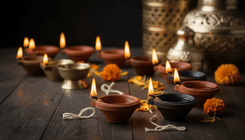
Your Rashi, or lunar zodiac sign, guides you through the Hindu calendar's festivals and rituals. During Diwali—the festival of light celebrated across India—choosing colours aligned with your Rashi is believed to amplify the festival's blessings for you personally. Jyotisha, the Vedic science of light and time, connects each Rashi to colours through its ruling planet. Wearing, decorating with, or lighting lamps in these colours during Diwali is traditionally believed to bring you closer to prosperity, health, and spiritual growth.
In Jyotisha, each of the nine planets (Navagraha) is associated with particular colours, and these associations also guide the traditional choice of gemstones and charitable offerings. The Sun is linked with red, orange and copper; the Moon with white and silver; Mars with red; Mercury with green; Jupiter with yellow and gold; Venus with white and bright, light shades; and Saturn with dark blue and black. Your Rashi's colours come from the planet that rules it. During Diwali, when we light diyas and decorate our homes, choosing these colours is a way of bringing the festival's devotion into harmony with this traditional understanding of your birth sign.



Fire signs: Aries, Leo and Sagittarius
Aries, Leo and Sagittarius are the three fire signs in the zodiac, ruled by Mars, the Sun and Jupiter respectively. Though they share the fire element, each draws its colours from its own ruling planet. Aries, ruled by Mars, aligns with red, the colour of courage and energy. Leo, ruled by the Sun, aligns with red, orange and saffron, the colours of radiance and leadership. Sagittarius, ruled by Jupiter, aligns with yellow and gold, the colours of wisdom, generosity and expansion.
During Diwali, Aries natives can choose red cloth for their altar or wear red jewellery and clothing. Leos can surround themselves with saffron—the deep orange that connects to Lord Hanuman and the sacred fire of ritual—or with warm oranges and reds that mirror the flames of the Diwali diyas. Sagittarians can wear yellow or gold, use yellow marigolds in their puja, and place their diyas on yellow cloth. Wearing or being surrounded by these colours during the festival helps channel each sign's natural brightness toward family wellbeing and prosperity.
Red also symbolises strength and the feminine power of Shakti, which is why many Diwali celebrations feature red decorations and red rangoli. For Aries and Leo especially, this connection deepens their engagement with the festival's spiritual dimensions.
Earth signs: Taurus, Virgo and Capricorn
Taurus, Virgo and Capricorn are the earth signs, ruled by Venus, Mercury and Saturn. Taurus, ruled by Venus, aligns with white, cream and light, bright shades, the colours of beauty, refinement and comfort. Virgo, ruled by Mercury, aligns with green, the colour of intellect, growth and clear communication. Capricorn, ruled by Saturn, aligns with dark blue, the colour of discipline, patience and endurance.
During Diwali, Taurus natives thrive with white flowers such as jasmine in their home puja, white or cream cloth on their altar, or light-coloured clothing with a touch of sparkle. Virgos can bring green into their celebrations through fresh leaves, green cloth, or green in their rangoli—mango leaf torans at the doorway are a natural choice. For Capricorns, deep blue and navy are ideal; while black is also Saturn's colour, many families avoid wearing black during festivals and pujas, so dark blue is the usual festive choice.
Many traditional Diwali celebrations use white flowers like jasmine and green mango leaves alongside the expected reds and golds, so earth signs can easily weave their colours into familiar decorations. These colours help earth signs approach Diwali with a clear and steady heart, ready to receive the festival's abundance.
Air signs: Gemini, Libra and Aquarius
Gemini, Libra and Aquarius are air signs, ruled by Mercury, Venus and Saturn respectively. Gemini, ruled by Mercury, aligns with green, the colour of quick thinking, curiosity and connection. Libra, ruled by Venus, aligns with white and light, bright shades, the colours of harmony, balance and beauty. Aquarius, ruled by Saturn, aligns with blue, the colour of depth, vision and service.
For air signs, these colours can shape both dress and decoration. Geminis can choose green clothing, green cloth on the altar, or green accents in their rangoli. Librans can wear white, cream or soft pastel shades and decorate with white flowers, which suit their natural sense of balance and grace. Aquarians can bring in blue through their clothing, altar cloth or rangoli colours.
During Diwali, air signs often feel the pull to connect with others, to share light and knowledge. Surrounding themselves with their Rashi colours can be a gentle reminder to slow down enough to truly absorb Diwali's joy rather than rushing through the celebrations.
Water signs: Cancer, Scorpio and Pisces
Cancer, Scorpio and Pisces are the water signs, ruled by the Moon, Mars and Jupiter. Cancer, ruled by the Moon, aligns with white and silver, the colours of calm, nurturing and emotional depth. Scorpio, ruled by Mars, aligns with red and deep maroon, the colours of intensity, courage and transformation. Pisces, ruled by Jupiter, aligns with yellow and gold, the colours of wisdom, devotion and compassion.
During Diwali, water signs are deeply emotional and intuitive, and their colours can support this inward journey. Cancerians can wear white or silver, use silver lamps or silver jewellery, and decorate with white flowers, reflecting the gentle, lunar light of their ruling planet. Scorpios can wear red or maroon and use red flowers in their puja, channelling their intensity into devotion and renewal. Pisceans can wear gold jewellery, use yellow cloth on their altar, and offer yellow marigolds, which are traditional in Diwali celebrations.
Red and gold are also the colours most closely associated with Lakshmi, the goddess of wealth, prosperity and good fortune, so Scorpios and Pisceans in particular will find their colours woven naturally into Lakshmi Puja. Many Indian families have long traditions of wearing gold and silver during Diwali, a practice that complements the colours of all three water signs.
How to use your Rashi colour during Diwali
Using your Rashi colour during Diwali is simple and flexible. You do not need to do everything at once; choose whichever feels right for you. Wearing clothing or jewellery in your colour, placing your diya on a cloth of that shade, using flowers in that colour, or including it in your rangoli all carry intention and meaning.
Many people create a small altar space at home during Diwali and place a diya or image there on a cloth in their Rashi colour. Others wear a coloured thread or bangle throughout the festival. Some families coordinate their clothes or home decoration with family members' Rashis, creating a beautiful patchwork of colours. There is also no rule that says you must choose only your Rashi colour; many households use multiple colours to honour all family members.
The most important element is your awareness and choice. When you consciously select colours that align with your Rashi, you bring an added layer of intention to your Diwali. Jyotisha teaches that the universe moves in patterns, and for those who follow this tradition, choosing colours in harmony with those patterns is a meaningful way to align their actions with the festival's blessings.
Common questions
Can I use more than one colour if my family has different Rashis?
Yes, many families use multiple colours during Diwali to honour each member's Rashi. You can wear different colours, use mixed rangoli colours, or decorate different areas of your home with different shades. There is no restriction—variety actually reflects Diwali's celebration of multiplicity and light.
What if I do not know my Rashi?
Your Rashi is determined by the sign the Moon occupied at the time of your birth, which usually differs from your sun sign in Western astrology. Jyotisha also uses the sidereal zodiac, so signs are calculated differently from the Western system. You will need your birth date, time and location to calculate it. Many free online Jyotisha calculators can help, or you can consult a Jyotishi. Once you know your Rashi, you can choose your Diwali colours accordingly.
Are these colours only for wearing, or can I use them in decoration and rituals too?
Use your Rashi colour however feels natural to you—wearing it, decorating your altar, placing your diyas on a cloth in that shade, offering flowers in that colour, or colouring your rangoli. There is no single prescribed method. The intention is to surround yourself with the colour during Diwali, so any form of use carries meaning.

Related Articles