
Divine birds in Hindu scriptures: Garuda, Jatayu and sacred flight
Wings that carry cosmos and courage

Sunil Chaurasia
18 Oct 2026 • 7min
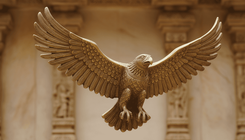
Divine birds hold a distinct and powerful place in Hindu scriptures. Garuda, Jatayu, and other legendary sacred birds embody virtues—strength, loyalty, sacrifice—and carry gods across the sky. They are not mere beasts of burden, but beings with their own dharma, their own sacred purpose. These divine birds appear throughout the Vedas, the great epics the Mahabharata and Ramayana, and the Puranas, where their stories teach as much about right action as about cosmology.



Garuda, the golden eagle and king of birds
Garuda holds the highest rank among divine birds in Hindu tradition. He is the vahana, the mount or carrier, of Vishnu; you often see him depicted bearing the god on his shoulders. His name is often explained as "devourer," and the epics describe him with an eagle's head, vast golden wings, and the upper body of a man, though representations vary. In South India, he is often identified with the Brahminy kite.
The story of Garuda's origins appears in the Mahabharata and the Puranas. He is the son of the sage Kashyapa and Vinata, a daughter of Daksha. Before Garuda was born, his mother lost a wager to her sister and co-wife Kadru over the colour of the tail of the divine horse Uchchaihshravas—a wager Kadru's serpent sons helped her win by deceit—and as a result Vinata was bound to serve Kadru as a slave. To free his mother, Garuda undertook a seemingly impossible task demanded by the serpents: to steal the nectar of immortality, the amrita, from the heavens and bring it to them. The journey required him to cross cosmic boundaries and overcome the guardians of the amrita, including the gods themselves. Yet although he carried the nectar, Garuda did not drink a single drop. Impressed by his strength and his selflessness, Lord Vishnu granted him immortality without his ever tasting the amrita, and Garuda became Vishnu's vahana. Indra, after their encounter, became Garuda's friend and granted him the boon that serpents would be his food. Garuda placed the amrita before the serpents and won his mother's freedom, but Indra carried the nectar back to heaven before the serpents could drink it.
What makes Garuda compelling is not merely his power, but his willingness to sacrifice and serve. He earned his place through duty and devotion. The Rigveda speaks of a divine Suparna, meaning "beautiful-winged," and of Garutman, "the winged one"—names later associated with Garuda and seen as symbols of spiritual ascent. In many temple traditions, Garuda is honoured as a guardian. Many Vaishnava temples, especially in South India, have a small Garuda shrine directly facing the sanctum, and some temples also have a Garuda Stambha, a pillar crowned with an image of Garuda, standing sentinel before the deity. His image reminds devotees that strength and humility walk together.
Jatayu, the vulture king and protector
Jatayu appears most vividly in the Ramayana, where his brief arc of the story carries immense spiritual weight. He is a vulture of royal lineage, an old friend of Rama's father, King Dasharatha, and so treated Rama with the affection of an elder. His father was Aruna, the charioteer of Surya the sun god and the brother of Garuda—making Jatayu Garuda's nephew. Though Jatayu is a vulture rather than an eagle, he occupies a place of equal honour in the tradition of divine birds.
When the rakshasa king Ravana abducts Rama's wife Sita, carrying her through the sky toward Lanka, Jatayu spots the abduction. Without hesitation, he attacks Ravana to rescue her, fighting him alone despite his old age. The battle is unequal. Ravana is vastly more powerful, and he cuts off Jatayu's wings with his sword, leaving the great bird mortally wounded on the ground. Jatayu clings to life until Rama and Lakshmana, searching for Sita, find him. With his last breaths, he tells them that Ravana has carried Sita away to the south—the first crucial clue in Rama's search. He then dies in Rama's arms, having given his life to uphold justice and loyalty.
The Ramayana dwells on this death. Rama grieves for Jatayu with the tenderness he shows for his closest companions, performing the funeral rites with his own hands as he would for his own father. In doing so, Rama grants Jatayu liberation, moksha. The episode teaches that one's station—animal or human, king or servant—does not determine one's access to grace and final release. Jatayu is no secondary figure; he is a hero in his own right, remembered and revered in temples and home altars alongside Rama himself.
Hamsa, the divine swan and symbol of soul
The hamsa, or swan, appears throughout Hindu and Buddhist philosophy as a symbol of spiritual wisdom and discrimination. Unlike Garuda and Jatayu, the hamsa is more often a principle than a central character in narrative: the hamsa represents the higher self, the atman, moving through the ocean of creation.
In the Upanishads, the hamsa carries layered meaning. One well-known verse describes the hamsa dwelling in the bright sky, in the space between worlds and everywhere else—present everywhere, invisible yet essential. Some texts use hamsa as a mantra for meditation, a sound that awakens inner awareness. The hamsa is also the vahana of Brahma, the creator, and of Saraswati, the goddess of learning and the arts. According to legend, the hamsa has the ability to separate milk from water—a quality known as neer-ksheer viveka and a metaphor for the mind's capacity to discern the essential from the trivial.
The hamsa does appear in the epics too, though not as centrally as Garuda and Jatayu. In the Mahabharata, a golden swan carries messages between Nala and Damayanti, helping bring the two together, and in the Hamsa Gita, Brahma takes the form of a swan to teach spiritual wisdom to the sages. Yet the hamsa's presence is felt most deeply in spiritual practice. When seekers chant "So-ham"—the syllables of "hamsa" reversed, sometimes interpreted as the hamsa's call—they are meditating on the self, on breath, on the cosmic rhythm that sustains all life.
Shyena, Sampati and other sacred birds
Beyond the well-known divine birds, the scriptures name others. Shyena, often translated as hawk or falcon, appears in the Rigveda, where the falcon is celebrated for stealing Soma, the sacred drink of the gods, from heaven and bringing it to Indra and to humankind. Because of this daring flight to carry the divine drink, later tradition often links the shyena with Garuda, whose theft of the amrita echoes the same story. Shyena's name carries the sense of swift action and piercing vision, acting as a bridge between the worlds of gods and humans.
Sampati, Jatayu's elder brother, also plays a vital role in the Ramayana. Having lost his wings long before—according to legend, while shielding his younger brother from the scorching heat of the sun—he lived grounded on a mountain by the sea. When Hanuman, Angada and the other vanaras reached him in their search for Sita, Sampati used his extraordinary eyesight to see Sita held captive in Lanka across the ocean, guiding the search to its goal.
Other birds also serve as vahanas of the gods: the peacock carries Kartikeya, the owl is associated with Goddess Lakshmi, and the crow is linked with Shani. In the Ramcharitmanas, the wise crow Kakbhushundi narrates the story of Rama, showing that even the humblest of birds can be a vessel of devotion and wisdom. Eagles, hawks and other birds throughout the scriptures are depicted as messengers and carriers of divine will, their ability to soar above the earth making them natural symbols of transcendence and perspective.
These birds reflect a shared theme in Hindu cosmology: non-human beings can embody dharma as fully as humans, and can attain liberation through right action, devotion and sacrifice. The divine birds show that spirituality is not the exclusive domain of human consciousness.
Why sacred birds matter in daily practice
For many Hindus, the divine birds are not distant myths but living presences. To see a bird soaring might recall Garuda's strength or Jatayu's courage. Temples include bird imagery in their design; the flight of a bird can prompt reflection during meditation. The stories of these sacred beings teach both children and adults about duty, sacrifice and the reach of compassion beyond the boundaries of kind.
In South Indian temple tradition, the annual festival processions often include the Garuda vahana, on which the deity is carried in procession, and the Garuda Seva is one of the most anticipated events of many temple festivals. The sight grounds devotion in visible form. Many Vaishnava temples, particularly in South India, have a Garuda shrine or Garuda pillar facing the sanctum, a place to pause and remember Vishnu and his eternal mount, and one of the oldest surviving examples of a Garuda pillar, the ancient Heliodorus Pillar, stands in Vidisha in Central India. Even casual recall of Jatayu's sacrifice can reorient someone facing their own moral choice.
Common questions
What is the difference between Garuda and Jatayu?
Garuda is an immortal divine being, king of all birds and eternal carrier of Vishnu, born to the sage Kashyapa and Vinata. Jatayu is a mortal vulture of royal lineage, a friend of Rama's father Dasharatha and the nephew of Garuda, who died defending Sita. Both are revered, but Garuda represents cosmic order and divine strength, while Jatayu exemplifies sacrifice and loyalty.
Does the hamsa appear in the Ramayana or Mahabharata stories?
Yes, though not as centrally as Garuda or Jatayu. In the Mahabharata, a golden swan carries messages between Nala and Damayanti, and in the Hamsa Gita, Brahma appears as a swan to teach the sages. The hamsa is better known, however, as a philosophical symbol of the soul and inner wisdom in the Upanishads and devotional texts, and as the vahana of Brahma and Saraswati.
Can I see images of divine birds in temples today?
Yes. Many Vaishnava temples, especially in South India, have a Garuda shrine facing the sanctum or a Garuda pillar before it. South Indian temples often carry the deity on a Garuda vahana during festival processions. Temple architecture, sculpture and ritual vessels frequently feature divine birds as guardians and symbols of the divine realm.

Related Articles


