
Devi Mahatmya: The Seven Hundred Verses to the Goddess
Sacred Stories of the Goddess's Power

Kushal K
16 Nov 2026 • 6min
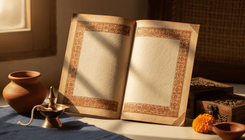
The Devi Mahatmya is a sacred Sanskrit text of 700 verses that tells the stories of the Goddess's triumph over demons. It is recited and read during puja, fasting and worship across India, especially during Navaratri when devotees invoke the nine forms of the Goddess. The text is also known as the Durga Saptashati, or "Durga's seven hundred verses", and as the Chandi Path—the recitation of Chandi, another name for Devi. For anyone seeking to understand how the Goddess is honoured in ritual and devotion, or to begin reading this text yourself, the Devi Mahatmya opens a clear window into both.



What the Devi Mahatmya contains
The Devi Mahatmya tells three stories. In each, the Goddess—taking a different form—battles a demon or group of demons who have grown too powerful for the male gods to defeat. The first story recounts her defeat of the demon Madhu and Kaitabha. In the second, she battles Mahishasura, the buffalo demon, and this battle is the longest and most detailed of the three. The third describes her victory over Shumbha and Nishumbha and the demons in their army. Each story shows the Goddess as the supreme power of the cosmos, beyond the individual gods and ultimately above them all. Between and within the stories are verses of praise, philosophical reflection, and teachings about her nature. The text does not simply narrate; it also elevates the reader into contemplation of the Goddess's absolute power.
Structure and the three chapters
The Devi Mahatmya is traditionally divided into 13 chapters across three sections. The first section covers the story of Madhu and Kaitabha, the second the battle with Mahishasura, and the third the defeat of Shumbha and Nishumbha. Chapter 1 serves as a frame story: a man and his wife have lost everything, and when they ask a sage why they suffer, they receive an answer—that the Goddess alone grants or withholds all fortune in the world—and the sage goes on to recount the stories that follow. This frame reminds the listener that the Devi Mahatmya is not merely a myth to be entertained by, but a teaching meant to shift how one understands power, suffering and grace. The chapters build from the establishment of the Goddess's power in the first story, through the longest and most vivid battle with Mahishasura, to her final manifestation as the supreme consciousness in the third.
How the text is used in worship
The Devi Mahatmya is most commonly recited during Navaratri, the nine-day festival honouring the Goddess in her nine forms. Many devotees complete one full reading during these nine days, or recite specific chapters on particular days. It is also read during personal puja, on days of fasting, and during times when a devotee seeks the Goddess's protection or blessing. Some temples hold continuous readings where different people take turns reciting chapters aloud. The recitation is not passive listening; the verses are considered to invoke the Goddess's presence and power. Many devotees believe that hearing or reading the Devi Mahatmya removes obstacles, grants courage, and strengthens the bond between the devotee and the Divine Mother. The text thus functions as both scripture and ritual, both teaching and invocation.
The Goddess's forms within the text
The Goddess takes different forms at different moments in the Devi Mahatmya. She appears as Kali, fierce and wild, with dark skin and a garland of skulls. She manifests as Durga, seated on a lion, eight or ten armed, carrying weapons given to her by the male gods. She is Lakshmi, the giver of wealth and fortune. She is Saraswati, the holder of knowledge and speech. She is also described as Brahmacharini, the ascetic who meditates; as Chandika, the fierce destroyer; and as Mahalakshmi, the supreme mother. These forms are not separate goddesses but one Goddess expressing herself in different ways, each suited to the need of the moment and the nature of the battle she fights. Understanding these forms is central to understanding the Devi Mahatmya: the point is not to worship multiple goddesses, but to grasp that the one supreme Shakti—the primordial feminine power—is infinite in her manifestations.
Why Mahishasura's battle takes centre stage
Of the three demon stories, the battle with Mahishasura occupies the most space and carries the most symbolic weight. Mahishasura, a buffalo demon who can also take human form, represents the ego and ignorance that obscure the truth of the Goddess's power. His name itself means "buffalo-lord". The battle is prolonged and elaborate because his defeat must be total; he cannot simply be overcome, but must be killed in a way that seals the victory. When the Goddess finally slays him, it is a turning point not just in the narrative but in the spiritual understanding of the text: the reader grasps at this moment that the Goddess's power is invincible. Mahishasura's defeat is celebrated each year during Dussehra, the tenth day of Navaratri, when devotees mark the Goddess's victory. This has made the Mahishasura section the most widely known and recited part of the Devi Mahatmya.
Reading and reciting the Devi Mahatmya
Many devotees read the entire Devi Mahatmya in Sanskrit, while others use translations in their own language. Hindi, Bengali, Tamil, Kannada and English translations are widely available. Some readers follow a structured practice: completing the entire 700 verses in nine days of Navaratri, reading roughly 78 verses each day. Others read it more slowly, absorbing each chapter over time. There is no single correct way; the text is considered sacred whether read swiftly as part of a vow, or studied carefully verse by verse. For those new to the text, starting with a translation that includes commentary can clarify both the narrative and the philosophical teachings. Over time, many readers find that returning to the same verses again and again reveals new layers of meaning. The Devi Mahatmya rewards repeated encounter.
Common questions
How many chapters are in the Devi Mahatmya?
The Devi Mahatmya is traditionally divided into 13 chapters across three sections: the first section covers Madhu and Kaitabha, the second covers Mahishasura, and the third covers Shumbha and Nishumbha. Different temple traditions may organize or number the chapters slightly differently, but 13 is the standard division.
Can I read the Devi Mahatmya in translation or does it have to be in Sanskrit?
You can read the Devi Mahatmya in translation. Hindi, Bengali, Tamil, Kannada and English translations are widely available and are all considered valid ways to encounter the text. Many translations include commentary that helps clarify the stories and their spiritual meaning.
What is the best time to read or recite the Devi Mahatmya?
The Devi Mahatmya is most commonly read during Navaratri, when many devotees complete a full reading over the nine days. However, it can be read at any time for personal worship, during fasting, or when seeking protection and blessings. Some people also recite it on Auspicious days marked in the lunar calendar.

Related Articles


