Dev Uthani Ekadashi 2026: When Lord Vishnu Awakens from Sleep
The festival that marks the Lord's stirring and the end of Chaturmas
Sunil Chaurasia
21 Oct 2026 • 6min
What is Dev Uthani Ekadashi?
Dev Uthani Ekadashi, also called Prabodhini Ekadashi or Devutthan Ekadashi, marks the day when Lord Vishnu awakens from his cosmic sleep. According to Sanatan Dharma, Vishnu rests during the four-month period known as Chaturmas, which begins when he lies down on Ashadha Shukla Ekadashi (the eleventh day of the waxing moon in the month of Ashadha). When Kartik Shukla Ekadashi arrives—the eleventh day of the waxing moon in the month of Kartik—Vishnu opens his eyes and returns to the world's affairs. This awakening is celebrated across India as a joyful festival that signals the end of the monsoon season and the beginning of an auspicious new phase.
The festival is observed with temple ceremonies, special pujas, and the ringing of bells to welcome the Lord's return. Many devotees fast on this day and offer prayers at dawn. It is a moment of renewal for the spiritual calendar: activities like weddings, new business ventures, and important ceremonies that are avoided during Chaturmas can now resume.



The Four-Month Sleep: Understanding Chaturmas
Chaturmas is the four-month period when Vishnu is believed to sleep, and it is a time of spiritual restraint in Hindu practice. During these months, many devotees avoid certain activities—major life events are postponed, new ventures are delayed, and some observances like Tulsi Puja are modified. The period is traditionally seen as introspective and inward-turning, mirroring the natural world's own quietness during and after the monsoon rains.
Different regions and sampradayas have varying practices during Chaturmas. In some places, devotees undertake special fasts or vows that last the entire four months. In others, Mondays or specific days are marked with additional prayer. Temples often reduce certain ceremonies or keep their doors closed to the public—though this practice varies by location and temple tradition. The underlying idea is that the world itself is resting, and human activity should echo that pause.
This is not a time of sorrow or hardship, but rather a season viewed as precious for spiritual deepening. It is during Chaturmas that many people undertake meditation practices, study scriptures more closely, or increase their mantra repetition. The monsoon's gentle rhythms are thought to be naturally conducive to such inward work.
The Awakening: What Happens on Dev Uthani Ekadashi
When Dev Uthani Ekadashi arrives, the atmosphere shifts. In homes and temples, there is activity and celebration. Oil lamps are lit, bells are rung, and conch shells are sounded to signal that Vishnu is waking. It is customary to bathe before dawn and to visit a temple for darshan or private prayer. Many people prepare special foods to offer in thanksgiving—milk-based sweets are common, and some regions have specific seasonal dishes prepared on this day.
The fast on Dev Uthani Ekadashi follows the pattern of other Ekadashi observances: no grains are eaten, and many devotees take only fruit, milk, or a single meal of light foods like potatoes or roots. The fast is believed to please Vishnu and to purify the mind and body. Some people break the fast after midnight with light foods; others wait until after prayer the following morning.
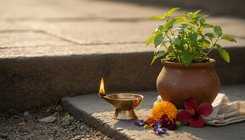
A significant ritual observed during this festival is the turning over of Tulsi plants. During Chaturmas, the sacred Tulsi (holy basil) plant is not circled for worship—a practice called pradakshinam. On Dev Uthani Ekadashi, this ritual resumes, and many households turn their Tulsi pots around and water them with special care. This symbolic act represents the plant's return to active spiritual importance in the home.
Regional Variations and Sampradaya Practices
Dev Uthani Ekadashi is celebrated across India, but the emphasis and particular practices shift by region. In Maharashtra, the festival is known as Devutthan and is observed with particular flair—temples hold special processions, and the day is marked with festive gatherings. In South India, the observance follows Vaishnava traditions closely, with emphasis on temple rituals and the recitation of texts like the Bhagavad Gita.
In Gujarat and Rajasthan, the end of Chaturmas is a signal for marriages and major ceremonies to resume. Wedding season traditionally begins shortly after Dev Uthani Ekadashi, and families begin planning events that were held in abeyance. In Bengal, some communities observe the day with particular puja sequences dedicated to Radha and Krishna, reflecting the sampradaya's focus on their divine play.
Different Vaishnava traditions—Shrivaishnava, Brahma Sampradaya, Rudra Sampradaya and others—each have their own detailed observances tied to Dev Uthani Ekadashi, with variations in mantra, prayer focus, and the timing of rituals. What unites all these practices is the central understanding: this is the day when the Lord's cosmic cycle turns outward again, and the world is invited to move with it.
Preparing for Dev Uthani Ekadashi 2026
To prepare for Dev Uthani Ekadashi, plan your day around the fasting hours and your temple schedule. If you intend to fast, arrange your meals the day before so that you have food available to break the fast after the observance. Some families purchase new clothes or flowers to wear to the temple, as it is a joyful occasion. If you have a Tulsi plant at home, prepare to water it and turn its pot on the morning of the festival.
Check with your local temple for their Dev Uthani Ekadashi schedule—pujas often begin at dawn, and joining the early morning prayers is considered especially auspicious. If you cannot reach a temple, home worship is equally valid: light a lamp, offer water or milk to an image of Vishnu, and spend time in quiet prayer or meditation.
This is also a good time to reflect on how you spent Chaturmas. Did you deepen a meditation practice? Did you read scripture or listen to spiritual talks? As Vishnu awakens and the world stirs again, you too can carry the quietness and inner work of the past four months into whatever comes next.
Common questions
Can I eat during a Dev Uthani Ekadashi fast?
During an Ekadashi fast, grains are avoided completely. You may eat fruit, milk products, nuts, potatoes, and other root vegetables. Many devotees eat one meal of these allowed foods in the evening, or fast completely until the next morning after prayers. Some choose to drink only milk or water.
What do I do if I have a Tulsi plant at home?
On the morning of Dev Uthani Ekadashi, water your Tulsi plant and turn its pot gently, marking the end of Chaturmas. You can then resume the daily practice of circling the plant with your hand in prayer (pradakshinam). If you do not have a Tulsi plant, some households use this day to plant one as a new spiritual practice.
Why is wedding season avoided during Chaturmas?
Chaturmas is seen as a spiritually inward time when Vishnu is in cosmic sleep and the world is in a receptive rather than active state. Major ceremonies and new ventures are traditionally postponed until after Dev Uthani Ekadashi, when Vishnu awakens and auspicious activity can resume. This is a belief held across most Vaishnava sampradayas, though some families may make exceptions based on personal circumstances.

Related Articles