
Darshan in Hinduism: The Meaning of Seeing and Being Seen by the Deity
Sacred gaze, reciprocal blessing

Kushal K
10 Nov 2026 • 7min
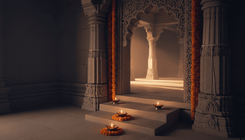
Darshan means to see, and more than that: to be in the presence of, and to be seen by, the deity. It is not a one-way look. When you stand before a murti or image of a god in a temple, the practice holds that the god looks back at you with the same attention. That exchange of gaze—the moment when subject and object dissolve—is darshan. It is among the most direct forms of worship in Hinduism, open to anyone who enters the temple, and it costs nothing.
In the West, we are taught to look at art; the object receives the gaze. In darshan, you and the deity meet in it. Your eyes are vehicles for something deeper than sight. The Sanskrit root "drish" means both to see and to perceive, but also to be revealed to. When you take darshan, you are not only looking; you are being looked at, known, and blessed. That is why devotees often close their eyes after the first glimpse, or cover their faces with their hands. The intensity of the moment is not visual only.



What Darshan Actually Is
Darshan is not an image you collect or a photograph you take home. It is an encounter that lives in your mind and body after you leave the temple. Some devotees describe it as a sudden warmth in the chest, or a feeling of being held. Others speak of clarity—of seeing their own life more clearly in that moment. These are not poetic touches; they are what people report, and the texts take them seriously.
The Bhagavad Gita uses the word "darshan" when Krishna reveals his divine form to Arjuna. Arjuna looks and trembles, overwhelmed by what he sees—not just light and form, but the totality of existence. That revelation changes him. Smaller darshans, in a temple, carry the same principle, compressed into a few seconds or minutes. You come as you are. The god sees you.
Darshan is sometimes called the "gift of the deity". Unlike puja (a ritual you perform), darshan happens to you. You do not have to sing, pray, or make an offering, though many people do. You simply show up, and the god grants you their presence. In some temples, especially those with highly revered deities, people wait in line for hours for a few seconds of darshan. The wait itself is part of the practice. It strips away your hurry and makes you present.
How Darshan Differs in Different Settings
In a major temple, darshan is usually brief. You walk forward in a queue, the priest or volunteer may mark your forehead with tilaka (sandalwood paste), you look at the deity for perhaps ten to twenty seconds, and you move on. The brevity does not diminish it. A moment of true attention to something sacred can alter the whole day.
Some temples offer special darshan times—morning darshan, when the deity is considered newly awake and most receptive; evening aarti darshan, when the temple is lit with lamps and the air is thick with incense; or darshan after a particular ritual. The timing you choose shapes the experience. A quiet morning temple feels different from the press and energy of afternoon.
In a home shrine, darshan is yours alone. You can sit as long as you wish. Some people take darshan every morning as part of their practice, speaking to the murti, singing, or simply sitting in silence. This kind of sustained darshan builds a relationship with the deity over time. It is slower, more intimate, less about the moment and more about a continuous thread of attention.
Regional traditions have their own customs around darshan. In South Indian temples, the deity often receives several darshans a day, dressed and bathed in ritual sequence. In North India, practices vary widely between sampraday (schools of thought). What matters is that you come with respect and genuine attention.
The Etiquette of Darshan
Darshan etiquette exists not to exclude but to protect the space where the sacred happens. The basic principles are simple: cover yourself modestly, remove your shoes at the temple entrance, silence your phone. Do not turn your back to the murti. Do not point or gesture. Do not take photographs if the temple has asked you not to—many temples ask this specifically because cameras can interrupt the state of receptive silence that darshan requires.
If the priest or volunteer offers you tilaka, prasad (blessed food) or flowers, accept these with your right hand or both hands together. If there is a line, move at a reasonable pace so others can take darshan too. If you are unfamiliar with a particular temple's customs, watch others and follow their lead.
Some temples ask women not to enter during menstruation, not as a rejection but as a choice historically rooted in ideas about ritual purity. These rules remain in some places; many temples have moved away from them. If a temple requests this and you are uncertain whether to enter, ask the priest directly. The decision is yours.
If you have strong feelings during darshan—tears, trembling, a sense of overwhelming presence—this is normal. You do not need to suppress it or explain it. Step to the side if you need to collect yourself.
What Darshan Requires
Darshan asks for very little except one thing: attention. You do not have to believe in a particular theology. You do not have to be Hindu. You do not have to have fasted or prepared yourself in any special way. You show up, and you look.
What changes darshan is your willingness to be vulnerable to it. When you stand before the deity with an open mind, without demanding anything in return, without performing devotion for others to see, something can happen. Not every time. The divine does not operate on human schedules. But the more you return to that openness, the more available you become to it.
Some people take darshan once in their lives. Others go weekly or daily. Some go only during festivals, when the whole community gathers and the energy is collective and powerful. All of these are valid. Darshan is not a merit system where frequent visits score higher. Each encounter stands on its own.
The Upanishads describe the self (atman) as the witness of all things—the eye behind your eyes. When you take darshan, you are bringing that witness into contact with the divine witness present in the murti. For a moment, the boundary between seer and seen dissolves. That is the gift. That is what the god sees when they look back at you.
Common questions
Can I take darshan if I am not Hindu?
Yes. Darshan is open to anyone who enters the temple with respect. You do not need to follow any particular belief system to be in the presence of the deity and receive their blessing.
What should I do if I feel overwhelmed during darshan?
This is a normal response and nothing to suppress or be embarrassed about. Step to the side if you need space, take some time to compose yourself, and know that tears, trembling or a rush of emotion are all signs that the encounter is genuine.
Why do some temples ask women not to enter during menstruation?
This rule reflects traditional ideas about ritual purity rooted in historical practice. Some temples maintain it; many have moved away from it. The rule exists in specific temples, not universally across Hinduism, and whether to follow it is your own choice.

Related Articles


