
Dahi Handi: Krishna's Butter Theft and the Pyramids of Joy
Makhan chor's mischief becomes a joyous human tower

Aditya Pandey
13 Nov 2026 • 7min
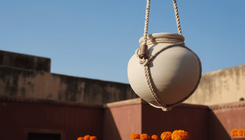
Dahi handi is a festival tradition in which young people form human pyramids to break open pots of butter and yoghurt hung from above, celebrating Krishna the butter thief. The practice is most visible during Janmashtami, the festival marking Krishna's birth, though dahi handi celebrations also happen at other times during the year. What began as a domestic play between Krishna and his mother Yashoda has become a public spectacle of teamwork, courage and playful devotion—with roots in a beloved story from Krishna's childhood.



Krishna the Makhan Chor
Krishna earned the title makhan chor, the butter thief, long before he became the cosmic ruler of the Bhagavad Gita. In his childhood years in Gokul and Mathura, Krishna was famous for sneaking into homes to steal butter and yoghurt. The story tells that he would entice other cowherd children to join him in raids on village homes, especially targeting the houses of the gopis, the wives and daughters of the cowherds. He would steal butter and share it with his friends, or eat it himself, delighting in the mischief as much as in the butter itself.
His mother Yashoda knew of his thievery and loved him for it. In one well-known incident, she hung pots of butter high from the ceiling to keep them away from him. Krishna found a stone, broke the pots, and still ate his fill. The lila, or divine play, in these stories presents Krishna as a child full of charm, mischief and an irresistible appetite for butter—qualities that made him beloved by the people of his village and have made him beloved to millions ever since.
The Festival Custom Takes Shape
Over time, this beloved story inspired a festival tradition. Instead of Krishna raiding a single home, the community gathered to recreate the play on a larger, more public scale. Groups of young men and boys began hanging pots of butter, yoghurt and other treats from high points—doorways, rooftops, trees—and other groups would attempt to break them. What was once a household drama became a neighbourhood event, then a citywide celebration.
The tradition spread most widely through western India, particularly in Maharashtra and Gujarat, where it remains a major feature of Janmashtami celebrations. Dahi handi is still observed in other states as well, though the scale and style vary. In some places the pots remain fixed and vertical; in others they sway on ropes. Some communities use clay pots; others have adapted the tradition to use modern materials. The thread connecting every version is the same: the recreating of Krishna's theft, the challenge to the young, and the community gathering to watch.
The Human Pyramid and the Govinda Pathak
The most visible form of dahi handi today is the govinda pathak—the human pyramid formed by young men linking their bodies into a tower tall enough to reach the hanging pots. One person stands on the ground as a base; another stands on their shoulders; and so on, climbing higher until someone at the top can reach high enough to break the pot with a stick or their hands. The pots usually contain butter, yoghurt, jaggery or dried fruits, and when broken, the contents rain down for the crowd to catch and share.
The name govinda pathak comes from Govinda, another name for Krishna. The pathak is the path or way towards him—a path formed by human bodies working together. It is a custom that demands trust: the person at the base must be strong enough to support the weight above; each person must hold their position steady; the climbers must have courage. A fall from a high pathak can cause real injury, and safety has become an increasingly serious concern as the pyramids have grown taller and the celebration more competitive.
A Practice of Community and Daring
What makes dahi handi remarkable is not simply the breaking of pots, but the cooperation it requires and the daring it celebrates. Young people form close bonds through the training and the performance. Neighborhoods and towns compete with pride. Crowds gather to watch the attempt and cheer the climber, sharing the excitement and the sense of occasion. When the pot breaks and the contents spill, people scramble to catch them and share them with others—a small echo of Krishna sharing stolen butter with his friends.
The lila also carries an implicit challenge to authority and rules. Krishna stole butter despite prohibition; he climbed walls and broke into homes; he broke the pots his mother tried to use to keep him out. In the govinda pathak, young men are permitted—even encouraged—to take risks and to seek high achievement through cooperation. For a brief time, the normal order is inverted: the young take the central role, and the community gathers to watch their daring.
Regional Variations and Modern Concerns
Dahi handi takes different forms in different places. In Maharashtra, especially in Mumbai and Pune, it has become a major competitive event with prizes and sponsorships, drawing crowds in the thousands. In Gujarat, the celebration is often smaller and more family-focused. In some temples and homes across India, the tradition is observed more quietly, with pots hung low enough for children to reach, or the practice kept to a household ritual.
In recent years, the tradition has faced scrutiny from safety officials and child welfare advocates. The competitive drive to build higher pyramids has led to serious injuries and occasional deaths. Many municipalities now impose height restrictions or regulations on dahi handi celebrations in public spaces. At the same time, many communities have embraced better safety measures—helmets, mattresses, trained spotters—to preserve the tradition while reducing harm.
Why the Tradition Endures
Dahi handi endures because it does more than commemorate a story. It allows a community to embody Krishna's qualities—his courage, his playfulness, his refusal to accept limits—in a shared physical act. The butter and yoghurt that rain down are not merely treats; they are prasad, the blessed food shared by Krishna with his friends, now shared among the crowd. The young people in the pyramid risk their bodies in a way that echoes Krishna's own risk and mischief. And the watching crowd becomes part of the lila, the divine play, by witnessing and celebrating it.
The tradition also reflects something deeper about how Krishna is worshipped in Hindu devotion. He is not approached as a distant or forbidding god, but as a friend, a beloved, a playful companion. Dahi handi brings that intimacy into the public square. It is a festival that asks: what would it take to steal butter from the gods? Courage, teamwork, trust—and a willingness to fall.
Common questions
When does dahi handi happen?
Dahi handi celebrations are most visible during Janmashtami, which marks Krishna's birth and falls in August or September depending on the lunar calendar. The tradition is also observed at other times during the year in some communities, but Janmashtami remains the main occasion.
What is inside the dahi handi pots?
The pots typically contain butter, yoghurt, jaggery (unrefined cane sugar), dried fruits, or a mix of these. The contents are meant to be scattered and shared among the crowd when the pot breaks, serving as prasad.
How high do govinda pathak pyramids get?
Pyramid heights vary widely, from low structures for children to reach, to pyramids reaching 6 metres or more in competitive urban celebrations in Maharashtra. Many municipalities now restrict heights in public spaces due to safety concerns.

Related Articles


