
Creating a Meditation Space at Home in the Traditional Way
Anchor your practice with intention and place

Kushal K
12 Nov 2026 • 7min
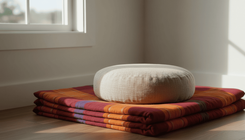
A meditation space at home does not need to be large or elaborate. It needs to be a place you return to, where your mind learns to settle. In the traditional approach, the space itself becomes part of your practice: it holds intention, protects your focus, and gradually deepens the stillness you find there.



Choose Your Location
The best meditation space is one you will actually use. If you have a spare room, that is ideal. If you do not, a corner of a bedroom or living room works just as well. The key is consistency: sitting in the same place every day trains both your body and mind to recognise what that location means.
Avoid spaces that are noisy or heavily trafficked. Early morning, when the house is still and others are sleeping, is often the best time to sit. If that is not possible, choose whatever hour you can protect from interruption. North or east-facing spots are traditionally preferred, as they are believed to support clarity and spiritual practice, though what matters most is that you will use it.
Keep the space separate from where you rest or work. Even a corner screened off with a curtain or cloth marks the shift in your mind. If space is very tight, a meditation cushion that you roll out each morning and put away after practice creates this boundary—the ritual of preparing and then clearing the space becomes part of the practice itself.
Prepare the Ground
The surface you sit on matters. Traditionally, a meditation seat is placed on a natural material: woven jute, cotton, or wool. These materials insulate you from the earth while keeping you connected to it. A yoga mat, a folded blanket, or a traditional asana made from natural fibres all serve this purpose.
The seat itself should be firm enough to keep your spine upright without effort. Many practitioners use a cushion—a zafu or a simple firm pillow—placed under the sitting bones. This tilt angles your pelvis forward slightly, allowing your spine to lengthen naturally. If sitting on a cushion feels unstable, sit on a low bench or stool instead. The goal is not to be uncomfortable; discomfort in your knees, hips or back will steal your attention from meditation itself.
Sitting cross-legged is the classical posture, but it is not the only one. Some people sit on a bench with their feet on the ground, or kneel with a cushion between their calves and thighs. Others sit in a chair. What matters is that your spine is upright, your shoulders are relaxed, and you can sit still for the length of your practice without strain. Your meditation posture should feel sustainable.
Establish a Focal Point
Many practitioners place a simple focus object or image at eye level in their space. This might be a photograph of a deity or a spiritual teacher, a yantra (a geometric meditation diagram), or simply a candle or lamp. Some people work without any object and focus inward instead.
The focal point, if you choose one, should be placed about three feet away and slightly above your natural line of sight. During meditation, your gaze may rest there lightly, or you may close your eyes and hold it in your mind. The object is not worshipped; it is an anchor for attention, a way of directing your awareness inward.
Alternatively, you can use sound as your focal point. Many practitioners sit facing a wall or a window, with their attention on their breath or a mantra rather than on any visual object. The simplicity of the space then becomes its own support.
Create Cleanliness and Calm
The space should be clean and uncluttered. This is not about perfection; it is about removing distractions. Dust the spot where you sit, keep books and objects organised nearby rather than scattered around, and close the door if you can to hold in the stillness you are building.
Some practitioners light incense or use a natural air freshener before they sit. Others prefer the space to be without scent. If you live with others, a small bell or chime can signal that your meditation time has begun and should not be interrupted. These rituals around your space become cues for your nervous system: they say, this is where my mind grows quiet.
Temperature matters too. A space that is too cold pulls your focus to your body; too warm and you may drift into drowsiness. Well-ventilated but not draughty is ideal.
Build Your Practice Routine
Once your space is ready, the next step is to use it. Sit for even ten or fifteen minutes each day, at the same time if possible. Your mind will begin to expect this—to settle faster because it recognises the place and the hour.
You might begin each session with a few moments of gratitude, a simple mantra or prayer, or three deep breaths. The opening ritual, however modest, marks the transition from daily life to practice. At the end, before you rise, pause for a moment. This closing transition is as important as the opening.
Over weeks and months, something shifts in the space itself. Your nervous system learns what happens there. The meditation becomes easier not because you are trying harder, but because the place itself invites stillness. This is why practitioners have kept meditation spaces for centuries—not as decoration, but as a living part of the path.
Setting up your meditation space
- Choose a consistent location Select a quiet corner away from high traffic, preferably in a north or east-facing area if possible. The same place each day helps your mind learn to settle there.
- Prepare the ground with natural materials Place a yoga mat, folded blanket, or natural fibre asana on your chosen spot. Layer a firm cushion (zafu or pillow) under your sitting bones to tilt your pelvis forward.
- Test your sitting posture Sit and check that your spine is upright without strain, your shoulders are relaxed, and you can remain still comfortably. Adjust your cushion or try a different seat (bench, stool, or chair) if needed.
- Add a focal point if desired Place a simple object—a candle, image, or yantra—at eye level about three feet away, or choose to work with internal focus like breath or mantra instead.
- Clear the space of clutter Dust your spot, organize nearby items, and close the door if possible. A clean, calm space reduces distractions.
- Establish a small opening ritual Before you sit, pause for a moment or take three deep breaths. This marks the transition from daily life into practice.
Common questions
What if I live in a very small space with no room for a dedicated corner?
A meditation cushion or mat that you roll out each morning and put away after practice creates the necessary boundary. The ritual of preparing and clearing the space itself becomes part of your practice, signalling to your mind that this time is set apart.
Is sitting cross-legged the only correct way to meditate?
No. Sitting on a bench or stool with feet on the ground, kneeling with a cushion between calves and thighs, or sitting in a chair are all valid. What matters is that your spine is upright, your shoulders relaxed, and you can maintain the posture without strain or distraction.
Do I need a focal point like a candle or image to meditate?
No. Many practitioners sit with their attention on the breath, a mantra, or purely internal focus, with no object in front of them. The focal point is optional and depends on what helps your mind settle most easily.

Related Articles


