
Chaturmas: The Four Months of Vishnu's Rest and Devotee Vows
When heaven rests, earth observes.

Abhilash Ramakrishna
12 Nov 2026 • 7min
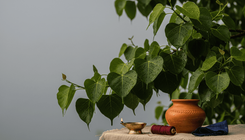
Chaturmas observance is a four-month period of spiritual discipline that begins with Devshayani Ekadashi (the eleventh lunar day marking Vishnu's rest) and ends with Prabodhini Ekadashi (marking his awakening). During these months, devotees adopt vows that range from dietary restrictions to heightened meditation practice. The period corresponds broadly to the monsoon season in many regions of India, a time when spiritual intensity traditionally deepens.
The name itself comes from two Sanskrit words: "chatur" meaning four, and "mas" meaning months. While the literal duration is four months by the lunar calendar, the observance encompasses a spiritual transformation for practitioners. Some traditions observe modified vows, while others undertake strict disciplines. What unites them is the belief that this time is especially auspicious for inner work and that the restrictions undertaken during these months yield greater spiritual results than the same practices would at other times of year.



The Story of Vishnu's Rest
According to Hindu theology, Devshayani Ekadashi marks the day Vishnu enters a state of yogic sleep, resting on the cosmic serpent Ananta Shesha in the ocean of milk. This is not ordinary sleep but a divine meditation, a withdrawal of cosmic energy that mirrors the season of monsoon rains when the earth itself becomes still and inward-turning. Prabodhini Ekadashi, which falls roughly four months later during the month of Kartik, marks Vishnu's awakening and return to active protection of the universe.
This cycle is understood less as myth and more as a pattern: just as Vishnu withdraws his energy during the monsoon, the devotee too withdraws from ordinary worldly engagement to turn inward. The monsoon itself becomes a teacher—heavy rains that prevent travel, cooling temperatures that make the body less restless, and the earth's apparent dormancy that encourages meditation. Different sampradayas (traditions) interpret this cosmology differently, but the principle remains consistent: these four months carry a special quality.
The Two Ekadashi Bookends
Devshayani Ekadashi, observed during the month of Ashadh (roughly June to July), is the official beginning of Chaturmas observance. This is the day when fasting and vow-taking traditionally commence. The fast itself is often undertaken strictly, with many devotees consuming only light food or water and spending the day in prayer and meditation.
Prabodhini Ekadashi, falling in the month of Kartik (roughly October to November), marks the conclusion. After four months of discipline, this day celebrates Vishnu's waking with special pujas and offerings. The end of Chaturmas also signals the resumption of certain suspended activities—marriages that were typically postponed during the period can resume, and the spiritual intensity of the previous months is consolidated into ongoing practice.
These two Ekadashi days are the hinges on which Chaturmas turns. Even if a devotee has not observed every restriction strictly throughout the four months, many still mark these two days with conscious practice and intention.
Common Vows and Restrictions
The specific vows undertaken during Chaturmas vary widely by family, community and individual capacity. Some devotees avoid non-vegetarian food throughout the period. Others restrict garlic and onion, considered too stimulating to the mind during intensive spiritual practice. Many postpone major life events—weddings, new business ventures, long journeys—until after Prabodhini Ekadashi, though this too varies by tradition.
A common practice is to undertake regular japa (recitation of mantra) or meditation during these months, treating them as a spiritual retreat within ordinary life. Some people visit temples more frequently or observe additional Ekadashi fasts beyond the two that bookend the period. In certain regions, the wearing of new clothes is deferred, and donations to temples or to those in need are increased.
It is important to recognize that Chaturmas vows are deeply personal. What matters is not the severity of the restriction but the sincere intention behind it. A person who takes one modest vow seriously—perhaps drinking only water in the evenings, or sitting for twenty minutes of meditation each morning—fulfils the spirit of the observance more truly than someone who attempts rigid disciplines they cannot sustain.
Regional and Sampradaya Variations
Different regions of India observe Chaturmas with distinct emphases. In South India, many Vaishnavite communities observe the period with particular strictness, often including dietary restrictions and increased temple participation. In North India, the observance tends to be less uniform, with some communities following it closely while others have modified the practices to suit contemporary life.
Some sampradayas, particularly Shaivite and Shakta traditions, observe a parallel practice but may place emphasis elsewhere or interpret the cosmology differently. Jain traditions have their own equivalent periods of heightened discipline. What remains across these variations is the principle: these are months when the seeker deliberately withdraws from comfort and distraction to deepen their spiritual practice.
The lunar calendar means Chaturmas does not fall on the same Gregorian dates each year, so practitioners consult the panchanga (Hindu calendar) to determine when the two Ekadashi days occur. This variability itself is meaningful—it keeps the observance connected to the rhythms of the moon and seasons rather than to arbitrary fixed dates.
Chaturmas in Contemporary Practice
For many modern practitioners, Chaturmas observance takes a gentler form than in earlier centuries. A person working in an office might not undertake the strictest fasts but may commit to regular meditation and a shift towards vegetarian eating during the four months. Others use the period to reduce screen time, read scripture more, or deepen their pranayama (breathing) practice.
What remains constant is that Chaturmas asks for intentionality. It is an invitation to examine how you ordinarily move through the world and to choose, for four months, a different relationship to body, mind and spirit. The specific shape of that choice belongs to you.
If you practise within a tradition—a temple community, a guru's lineage, a family custom—you would follow the guidance appropriate to your setting. If you are exploring these practices independently, beginning with a single sustainable commitment often opens a door that a more elaborate set of restrictions would close. Even a commitment to avoid one stimulating food, or to sit quietly for fifteen minutes each morning during these four months, places you genuinely within the observance.
The monsoon months arrive whether we acknowledge them or not. Chaturmas observance is simply the choice to turn that seasonal turning inward into a deliberate spiritual practice.
Common questions
When does chaturmas start and end each year?
Chaturmas begins on Devshayani Ekadashi (in the lunar month of Ashadh, roughly June to July) and ends on Prabodhini Ekadashi (in the lunar month of Kartik, roughly October to November). Because these are determined by the lunar calendar, the exact Gregorian dates shift each year. Consult your local panchanga or temple for the specific dates.
Do I have to be vegetarian during chaturmas?
Vegetarianism during Chaturmas is common but not universal. Many traditions recommend it, but the observance itself is flexible: your vow might be to avoid garlic and onion, to fast on Ekadashi days, or to undertake meditation instead. What matters is that you choose a sincere commitment suited to your capacity and circumstances.
Can I still travel or get married during chaturmas?
Traditions vary. Many communities postpone marriages and major travels until after Prabodhini Ekadashi as part of the observance, but this is not a rule everywhere. Within Vaishnavite communities especially, marriage during Chaturmas is often discouraged. If you belong to a tradition, consult your elders or temple; otherwise, the choice is yours.

Related Articles


