Chandra Grahan
Lunar Eclipse in Indian Vedas, Mythology, and Science

S Raj Abhinay
13 Mar 2025 • 8min
Introduction
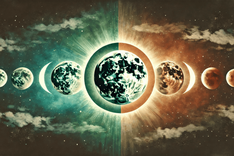
A Chandra Grahan, or lunar eclipse, is a celestial event where the Earth blocks sunlight from reaching the Moon, causing a shadow to fall on the lunar surface. Across different cultures, lunar eclipses have been viewed with awe, mystery, and scientific curiosity.
In Indian Vedic texts and mythology, Chandra Grahan holds deep spiritual and astrological significance. While ancient sages had an insightful understanding of celestial movements, modern science explains the lunar eclipse as a natural astronomical phenomenon.
This blog delves into the mythological, spiritual, and scientific interpretations of Chandra Grahan while discussing its effects on nature and human life.
Chandra Grahan in Indian Mythology and Vedas
The Origin of Chandra Grahan: The Story of Rahu and Ketu
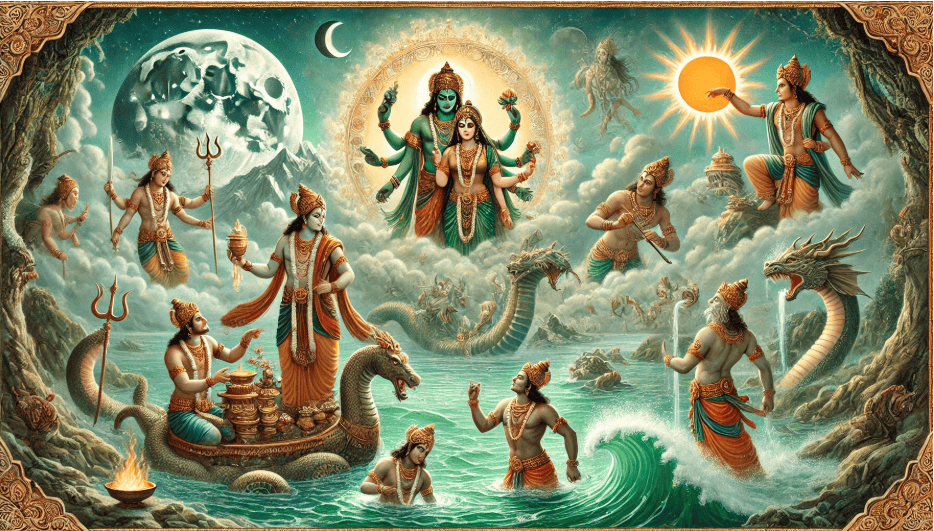
One of the most well-known stories about Chandra Grahan comes from Hindu mythology and is linked to the Samudra Manthan (churning of the ocean). According to legend:
The gods and demons churned the ocean to obtain Amrit (nectar of immortality). Lord Vishnu, in the form of Mohini, distributed Amrit among the gods. A demon named Rahu disguised himself as a god and drank the nectar. Surya (Sun) and Chandra (Moon) recognized Rahu's trickery and alerted Lord Vishnu. Lord Vishnu beheaded Rahu with his Sudarshan Chakra. Since Rahu had already consumed Amrit, his head became immortal. Rahu’s head and Ketu’s body chase the Sun and Moon, and when they catch them, they cause solar and lunar eclipses.
Spiritual Significance in Vedic Astrology
In Vedic astrology, Rahu and Ketu are known as Chhaya Grahas (shadow planets) and are associated with karmic influences. The lunar eclipse is believed to disrupt cosmic energies, bringing temporary instability.
Traditional Beliefs and Rituals
Many people believe that negative energies increase during an eclipse.
Certain rituals and precautions are prescribed to ward off negative effects.
Chanting mantras, taking a ritual bath, and donating after the eclipse are common practices.
Scientific Explanation of Lunar Eclipses
What is a Lunar Eclipse?
A lunar eclipse occurs when the Earth, Sun, and Moon align in a straight line, with the Earth blocking sunlight from reaching the Moon. This alignment is called Synergy.
Types of Lunar Eclipses
Total Lunar Eclipse – The Earth's umbra (darkest shadow) completely covers the Moon, making it appear reddish (Blood Moon).
Partial Lunar Eclipse – Only a portion of the Moon enters the Earth's shadow.
Penumbral Lunar Eclipse – The Moon passes through the Earth's penumbral shadow, causing subtle dimming.
What Happens During a Lunar Eclipse?
The Earth comes between the Sun and the Moon.
The Earth's shadow has two parts:
Umbra – The darkest, central part of the shadow.
Penumbra – The lighter, outer part of the shadow.
During a total lunar eclipse, the Moon turns red due to Rayleigh scattering, the same phenomenon that makes sunsets appear red.
Effects of Chandra Grahan on Nature and Humans
Effects on Nature
Tidal Changes – The gravitational pull during a lunar eclipse can cause higher tides (spring tides).
Animal Behavior – Nocturnal animals may exhibit unusual behavior due to sudden darkness.
Microbial Activity – Some studies suggest that bacterial growth in soil and water temporarily increases.
Effects on Humans
Psychological Impact – The eerie red Moon and sudden darkness can cause anxiety or unease.
Health Concerns – While there is no scientific evidence, many cultures believe pregnant women should take precautions.
Circadian Rhythm – The dimming of the Moon may affect sleep cycles.
Precautions and Remedies During Chandra Grahan
Indian traditions prescribe several precautionary measures during a lunar eclipse:
Precautions
Avoid Eating or Cooking – It is believed that food becomes impure during an eclipse. Scientifically, this may be related to food safety concerns in low light.
Stay Indoors – Pregnant women are advised to stay indoors, possibly to avoid stress or anxiety.
Avoid Sleeping – Sleeping during an eclipse is believed to disturb natural body rhythms.
Remedies
Chanting Mantras – Reciting mantras like Mahamrityunjaya Mantra or Gayatri Mantra is believed to provide spiritual protection.
Taking a Ritual Bath – Bathing after an eclipse is considered purifying.
Donating to the Needy – Offering food, clothes, or money is believed to neutralize negative effects.
Why Are These Practices Followed?
While some beliefs are mythological, many have scientific or practical reasoning:
Hygiene – Avoiding food and taking a bath post-eclipse may have been early hygiene measures.
Mental Well-being – Chanting mantras and meditation help reduce stress and anxiety.
Symbolism – The eclipse is seen as a time of transformation and renewal.
Scientific Validation of Ancient Indian Knowledge
Ancient Indian astronomers had an advanced understanding of celestial mechanics:
The Surya Siddhanta, a 4th-century astronomical text, accurately describes lunar and solar eclipses.
The concept of Rahu and Ketu aligns with the modern understanding of Moon's nodes (the points where the Moon’s orbit crosses the ecliptic plane).
How to Observe a Lunar Eclipse Safely
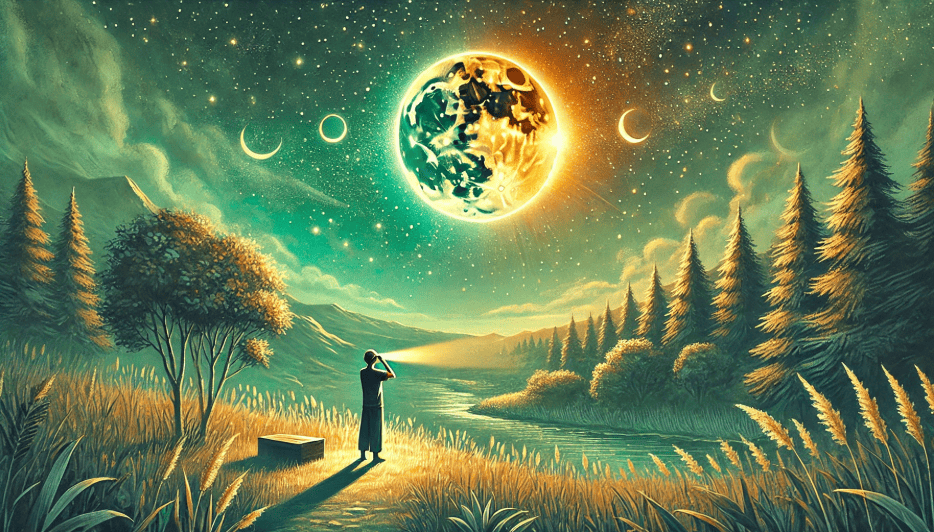
Use Lunar Eclipse Glasses – Unlike a solar eclipse, a lunar eclipse is safe to view with the naked eye. However, using lunar eclipse glasses can enhance the experience.
Best Viewing Conditions – A clear sky away from city lights provides the best view.
Live Streaming – In case of bad weather, many space agencies offer live-streaming of the event.
Conclusion
Chandra Grahan, or lunar eclipse, is a celestial event deeply rooted in Indian mythology and Vedic texts, while also holding significant scientific interest. Understanding both the spiritual and scientific aspects of a lunar eclipse allows us to appreciate the depth of ancient Indian knowledge and its continued relevance today.
To further explore such celestial events and their significance, the Dharmayana app serves as an invaluable resource. This digital companion offers accurate Panchang readings, allowing users to stay informed about auspicious times for pooja and other rituals. Embrace the wisdom of Hindu traditions by downloading the Dharmayana app today and deepen your spiritual journey.

Related Articles