Can you break the Navratri fast after Navami Puja?
Fast-breaking rules for the ninth day of Navratri.

Aditya Pandey
19 Oct 2026 • 6min
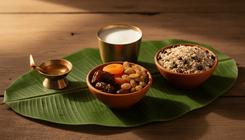
Yes, you can break the Navratri fast after Navami Puja, but the timing and method depend on the tradition you follow. There are two widely accepted approaches. Many families break the fast within the Navami Tithi (the ninth lunar day), usually right after Kanya Puja and the closing havan. Others follow the rule given in the classical text Nirnaya Sindhu, which holds that the fast should be broken on Dashami, the tenth lunar day, only after the Navami Tithi has ended. This article explains the Navratri vrat parana rules, how to work out the right time for your tradition, and what common mistakes to avoid.



When Navami Puja happens and why timing matters
Navami is the ninth and final day of Navratri, dedicated to Maa Siddhidatri, the ninth form of the Goddess. The following day, Dashami, is celebrated as Vijayadashami or Dussehra. The date shifts every year because Navratri follows the lunar calendar, beginning on Pratipada—the first day of the bright fortnight, the day after the new moon—in the month of Chaitra (March or April) or Ashwin (September or October). The Navami Tithi—the lunar day that defines this occasion—has a precise start and end time that you can find in the panchanga (Hindu calendar).
The fast-breaking time depends on which tradition you follow. If your family breaks the fast within Navami, you can do so after the Navami Puja, Kanya Puja or havan, while the Navami Tithi is still in effect. If you follow the Nirnaya Sindhu rule, the deciding factors are when the Navami Tithi ends and whether it ends before or after sunset. If Navami ends before sunset, you break your fast on the same day, once Dashami has begun. If it ends after sunset, the fast is broken the next morning after sunrise, as parana is traditionally done during the daytime rather than at night. This is why knowing your local panchanga is essential: it tells you exactly when Navami ends in your location.
Many people assume there is only one correct time to break the fast, but family custom plays a major role. Puja marks a spiritual milestone; for those following the Nirnaya Sindhu rule, the fast-breaking window is determined by lunar timing rather than by the completion of the ritual.
The meaning of Parana and how to find the right time
Parana is the ritual breaking of a vrat (fast). It is considered the proper completion of the fast—the moment when you release the fast's disciplines with full benefit. For Navratri, the parana time depends on the tradition you follow.
To find the parana time, consult a panchanga or a reliably updated Hindu calendar app. Panchangs that follow the Nirnaya Sindhu rule list the Navami Tithi's start and end times and the time after which parana can be done. For example, if the Navami Tithi ends at 2:00 PM, parana can be done after 2:00 PM that day, once Dashami has begun. If the Navami Tithi ends at 11:30 PM, after sunset, parana is done the following morning after sunrise.
If you cannot access a panchanga and follow the Nirnaya Sindhu rule, a general principle is: wait until you are sure the Navami Tithi has ended, and break the fast during the daytime. If you are uncertain, it is safer to wait. Breaking the fast a few hours later does no harm. If your family tradition is to break the fast within Navami, simply complete your Navami Puja, Kanya Puja or havan while the Navami Tithi is in effect, and then break your fast.
How to break the fast properly
Once your parana time has arrived, you can eat, but the method matters. Offer the food to the deity—whether at a home altar or a temple—before eating yourself. This act of dedication transforms the meal from a mere breaking of hunger into a continuation of the spiritual practice. Many households prepare prasad (blessed food) specifically for this moment, and the family shares it together.
In much of North India, the traditional fast-breaking meal is the prasad of Kanya Puja: halwa, puri and black chana, offered first to the young girls worshipped as forms of the Goddess and then shared by the family. If you have fasted strictly for several days, it is also sensible to include lighter, easily digestible foods such as milk, fruit, yogurt or a simple sweet, and to avoid overeating at once.
Customs vary across regions. In some families, the fast is broken only after Durga Visarjan, the immersion of the Goddess's idol, which takes place on Dashami. In Bengal, the final rituals of Durga Puja continue through Bijoya Dashami. Dussehra itself is a day of celebration and feasting in most of North India. Check with your own sampradaya (spiritual tradition) or family practice.
A common mistake is assuming that every family follows the same rule. Breaking the fast after Navami Puja and Kanya Puja is the established custom in many households, while others wait for Dashami. Neither is wrong; what matters is following your own tradition consistently and, if you follow the Nirnaya Sindhu rule, consulting the panchanga beforehand.
What to do if Navami Tithi ends after sunset
If you follow the Nirnaya Sindhu rule and the Navami Tithi does not end until after sunset, you should continue your fast until the next morning. Your parana time will arrive after sunrise on Dashami.
This situation feels inconvenient, but it is not uncommon: tithi boundaries do not align with calendar days. If this happens to you, the fast remains as valid as ever. You have simply observed it according to the lunar calendar, which is how Navratri itself is determined.
Some people worry whether they can sleep during this extended fast, or whether working or travelling breaks it. Fasting is primarily about abstaining from food and sometimes water; sleeping, working, and moving about do not invalidate it. If you will be fasting through the night, rest when you can and resume normal activity in the morning before breaking the fast.
If the Navami Tithi runs well into the day on Dashami, break your fast only after it has ended. The panchanga will show you this timing exactly.
Common confusion: Navami Puja versus parana time
Navami Puja is a ritual action that honours Devi. Parana is the breaking of the fast, and in the Nirnaya Sindhu tradition it has its own time window. These two things are separate, and conflating them causes most confusion about when to break the fast.
You should perform Navami Puja and the Navami havan while the Navami Tithi is in effect—this is the right time spiritually. If you follow the custom of breaking the fast within Navami, you may do so once your puja, Kanya Puja or havan is complete. If you follow the Nirnaya Sindhu rule, you break the fast only after the Navami Tithi ends, on Dashami, and during the daytime.
In years when the Navami Tithi ends during the day, this feels natural: puja earlier, fast-breaking once Navami ends. In years when the Navami Tithi ends at night, those following the Nirnaya Sindhu rule wait until the next morning. Both approaches honour the tradition.
Consulting the panchanga removes the guesswork. Make this a habit during Navratri, and you will never be uncertain about the timing again.
Navratri Parana 2026
In Sharad Navratri 2026, the Navami Tithi in India runs from about 10:51 AM on Monday, 19 October, to about 12:50 PM on Tuesday, 20 October. Families who break the fast within Navami can do so after their Navami Puja, Kanya Puja or havan during this period. Those following the Nirnaya Sindhu rule can break the fast after the Navami Tithi ends, from about 12:50 PM on Tuesday, 20 October. Vijayadashami is celebrated on Tuesday, 20 October, while in Bengal, Bijoya Dashami and Durga Visarjan fall on Wednesday, 21 October. These timings are approximate and based on Indian Standard Time; please confirm the exact timing for your city in your local panchanga.
Common questions
Can I break the Navratri fast right after Navami Puja finishes?
It depends on your tradition. Many families break the fast within the Navami Tithi, right after Navami Puja, Kanya Puja or the havan. Others follow the Nirnaya Sindhu rule, which holds that the fast should be broken on Dashami, after the Navami Tithi has ended. Follow your family custom, and if you observe the Nirnaya Sindhu rule, check your local panchanga for the exact time.
What happens if Navami Tithi ends after sunset?
If you follow the Nirnaya Sindhu rule, continue fasting until the next morning and break your fast after sunrise on Dashami, as parana is traditionally done during the daytime. This is not uncommon; the lunar calendar does not align with calendar days.
What is the first food to eat when breaking the Navratri fast?
Offer the food to the deity before eating. In much of North India, the fast is traditionally broken with the Kanya Puja prasad of halwa, puri and black chana. If you have fasted strictly, it is also sensible to include lighter foods such as milk, fruit or yogurt and to avoid overeating at once.

Related Articles