
Bhakti Yoga in the Gita: The Path of Devotion
Love as the Highest Knowledge

Kushal K
09 Nov 2026 • 6min
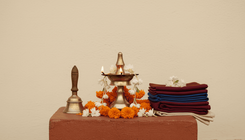
The Bhagavad Gita presents bhakti yoga—the yoga of devotion—as a path to liberation so direct and accessible that even those who cannot master meditation or philosophy can walk it. In Chapter 12, Krishna tells Arjuna that devotion to him is easier and ultimately superior to other spiritual practices. This teaching stands at the heart of Hindu practice, offering a path rooted not in intellectual knowledge or difficult austerities, but in the simple act of loving the divine.



What is Bhakti Yoga?
Bhakti yoga is devotion as a spiritual discipline. It is not sentiment or emotion alone, but a deliberate turning of the heart and mind toward the divine through love, surrender and service. The Sanskrit word bhakti comes from a root meaning "to share" or "to participate", suggesting that devotion is a two-way relationship: the devotee offers love, and in offering receives the grace of the divine.
The Gita does not present bhakti as inferior to other yogas—the yoga of action (karma yoga) or the yoga of knowledge (jnana yoga). Instead, Krishna describes it as the natural culmination of these paths. A person who serves selflessly through karma yoga gradually discovers that all action is an offering to the divine. A person who pursues jnana yoga eventually recognizes that the ultimate knowledge is recognizing oneself as beloved by God. Bhakti yoga brings these insights together in a single, coherent practice.
Krishna's Teaching in Chapter 12
In Chapter 12, Krishna responds to Arjuna's question about which spiritual practice is highest. Krishna says that those who worship him with unwavering devotion, who fix their mind entirely on him, are most integrated in yoga. He adds that this path is easier than those which lead the mind toward the formless absolute, because the human heart naturally reaches toward a form it can love and a name it can speak.
Krishna then describes the qualities of a true devotee: steadiness of mind, freedom from hatred and fear, harmlessness, equanimity, and devotion to learning and practice. A devotee, he teaches, is someone who speaks truth, harbors no resentment, gives generously, and loves all beings. These are not requirements for entry into bhakti yoga; they are the fruit of sincere practice. As devotion deepens, these qualities naturally grow.
Importantly, Krishna makes a promise: anyone who takes refuge in him with their whole being will reach the highest goal. This is not conditional on caste, learning, or virtue accumulated in past lives. The promise is direct and immediate. This democratization of the spiritual path—its availability to all—is central to bhakti yoga's enduring power in Hindu practice.
The Nine Forms of Bhakti
While the Gita does not enumerate them, Hindu tradition recognizes nine principal forms of bhakti, known as navadha bhakti. These are not separate paths but expressions of the same devotion, suited to different temperaments and circumstances.
They are: listening to stories and teachings about the divine (shravanam); singing the divine's names and glories (kirtanam); remembering the divine with focused thought (smaranam); serving the divine's image or presence with attention and care (padasevnam); offering worship through ritual and prayer (archanam); bowing and physical prostration (vandanam); service to the divine or to those loved by the divine (dasyam); offering oneself as a friend to the divine (sakhyam); and complete surrender of body, mind and will (atmanivedanam).
These forms are not ranked in strict order, but atmanivedanam—total self-surrender—is recognized as the highest expression. Yet each form is complete in itself. A devotee may be drawn naturally to one or several, and sincere practice in any of them opens the heart toward the divine.
Devotion and Knowledge in Balance
The Gita teaches that bhakti yoga and jnana yoga, devotion and knowledge, are complementary rather than opposed. Krishna tells Arjuna that those who truly love him come to understand the nature of reality. Through devotion, knowledge arises. Similarly, genuine knowledge—understanding that the divine pervades all existence—naturally generates love and gratitude.
This balance is important. A devotee should not mistake sentiment for practice, nor should a seeker of knowledge imagine that intellectual understanding alone brings liberation. The Gita suggests that both are necessary: the heart must be engaged in love, and the mind must be clarified by understanding. Bhakti yoga provides the warmth and motivation that sustains spiritual practice over a lifetime, while knowledge prevents that practice from becoming blind habit.
Practicing Bhakti Yoga Today
The Gita teaches that bhakti yoga is available to anyone, in any circumstance. You do not need a temple, a teacher, or special knowledge to begin. The practice begins where you are and with what you have.
If you are drawn to a chosen form of the divine—whether as Krishna, Devi, Shiva, or the formless Brahman—you can offer simple practices of remembrance and love. Singing names and stories, sitting in quiet devotion, offering simple worship at home, serving others as an expression of love for the divine: these are all genuine bhakti yoga.
What matters is sincerity. Krishna does not ask for perfection or purity, but for a genuine turning toward the divine with your whole heart. Doubt and distraction will arise; the Gita does not promise their absence. But sincere effort, continued over time, gradually steadies the heart and clarifies the mind. This is the promise and the practice of bhakti yoga.
The path of devotion teaches that love is not separate from knowledge, action is not separate from surrender, and the divine is not distant from the heart that seeks it. This is the gift of bhakti yoga in the Gita: a path that asks only that you love, and promises that love itself is the way home.
Common questions
Is bhakti yoga in the Gita only for Krishnites or all Hindus?
Krishna teaches in Chapter 12 that his promise applies to anyone who takes refuge in him with their whole being, regardless of caste or learning. However, Hindu devotional practice extends the principle of bhakti yoga to worship of all forms of the divine—Devi, Shiva, Brahman, and others—beyond Krishna alone. The path of devotion is universal within the tradition.
Can I practice bhakti yoga without going to a temple?
Yes. The Gita teaches that bhakti yoga is available to anyone in any circumstance. You can practice at home through simple remembrance, singing divine names, quiet devotion, or offering worship at a small shrine. What matters is sincerity of heart rather than the setting or formality of the practice.
How is bhakti yoga different from karma yoga and jnana yoga?
Karma yoga is the yoga of selfless action, and jnana yoga is the yoga of knowledge. The Gita presents bhakti yoga as complementary to both: devotion provides the motivation and warmth that sustain practice, while knowledge prevents practice from becoming blind habit. A sincere devotee comes to understand the nature of reality through love, just as genuine knowledge naturally generates devotion.

Related Articles


