
Balarama Jayanti: The Plough-Bearing Elder Brother of Krishna
Strength in Service, Power in Patience

Kushal K
13 Nov 2026 • 6min
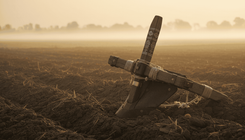
Balarama Jayanti marks the birth of Balarama, the elder brother of Krishna, whose strength and steady presence shaped the stories of early Krishna's life. Across India, this festival is known by different names—Hal Shashthi in some regions, Lalahi Chhath in others—but it celebrates the same figure: a quiet giant whose plough became his emblem and whose loyalty defined devotion. Unlike Krishna's birth, which arrives at midnight with grandeur, Balarama's day comes on the sixth day of the waxing moon in the month of Bhadon (August or September in the solar calendar), and it is observed with a simpler, earthier reverence.



Who Balarama Was
Balarama was born to Vasudeva and Devaki as their first son, long before Krishna arrived. In many tellings of the story, his birth itself was extraordinary: Devaki's unborn child was transferred to Rohini, another wife of Vasudeva, to protect him from the demon king Kansa's violence. This transfer—often described as happening within the womb—made Balarama the only one among his older siblings to survive to adulthood. Where Krishna was taken to safety in Gokul as an infant, Balarama grew up there too, and the two brothers became inseparable.
Balarama's life was one of physical prowess and inner restraint. He wielded the plough, or hal, as his primary weapon, and this humble implement became his identifying symbol. The plough is not a warrior's instrument—it is a farmer's tool, and in choosing it, Balarama embodied a different kind of strength than the sword-bearing heroes of the epics. His plough could uproot mountains and reshape the earth, yet in his hands it served creation, not conquest. He was fair-skinned where Krishna was dark, strong-bodied and sometimes fierce-tempered, but always devoted to his younger brother's welfare.
The Role He Played
In Krishna's stories, Balarama appears as the steady ground beneath the drama. When Krishna played his pranks on the milk-maids of Gokul, it was often Balarama who stood aside, more interested in the serious business of cattle-herding. When Krishna danced at midnight with the gopis, Balarama did not join them—he had his own quiet dignity. Yet when Krishna faced danger, Balarama was present and fierce. He killed demons that threatened the herds. He stood with his brother when their village faced larger enemies.
One of the most famous episodes of Balarama's strength is the lifting of Govardhan mountain. When the demon Indra sent torrential rains to flood Gokul in revenge, Krishna raised the mountain to shelter the people and their cattle. Many texts mention Balarama's role in this feat—some say he supported the mountain from another angle, or that his presence added to Krishna's strength through their deep spiritual connection. The image of the two brothers united against calamity became central to how they were remembered together.
The Festival Across Regions
Balarama Jayanti's observance varies across India, shaped by local custom and history. In parts of northern India, particularly where agricultural traditions remain strong, the day is called Hal Shashthi—literally, "the sixth day of the plough." Farmers make offerings to the plough itself, blessing their tools and praying for good harvests. Some regions abstain from ploughing or working the fields on this day, treating it as sacred rest from the tool that bears Balarama's name.
In Bihar and parts of eastern India, the festival is known as Lalahi Chhath or Lal Chhath. Here too, the emphasis is on agrarian life, though the rituals may emphasize different aspects. Some communities prepare special foods, fast partially or fully, and offer prayers for children's health and strength—qualities associated with Balarama's robustness and vitality.
In the temple traditions of Krishna-worshipping communities, Balarama Jayanti is marked with prayers, readings from texts like the Bhagavata Purana that describe his life, and sometimes processions. In Krishna temples, Balarama's idol is adorned and the day is observed as his festival alongside Krishna's own celebrations. The relationship between the brothers is remembered and honored, emphasizing the virtue of devotion to family and to dharma.
What the Festival Means
Balarama Jayanti speaks to a particular kind of virtue: the strength that serves rather than dominates, the loyalty that asks for no recognition, the presence that enables others to shine. In Krishna-centric Hindu stories, Balarama is sometimes overlooked—the younger brother's mystical nature and romantic exploits tend to draw more attention. Yet his celebration reminds us that the hero who stands beside greatness is himself great.
The plough, his emblem, connects his story to agriculture and fertility, to the sustenance of life itself. When farmers bless their tools on Hal Shashthi, they are honoring the principle Balarama represents: that work, when done with integrity and strength, is sacred. The earth needs the plough; the village needs the steady elder brother who does not seek the spotlight but ensures that all are protected.
The festival also represents a particular understanding of dharma—righteous duty. Balarama fulfilled his role completely: he protected his younger brother, he fought against injustice, he supported his family and community. He asked for nothing in return except to do what was right. In a world that often celebrates the ambitious and the extraordinary, Balarama's quiet strength offers a different model: the power of patience, the dignity of service, the completeness of loyalty.
Common questions
When is Balarama Jayanti celebrated each year?
Balarama Jayanti falls on the sixth day of the waxing moon in the month of Bhadon, which corresponds to August or September in the solar calendar. The exact date shifts each year with the lunar cycle, so it is determined by the Hindu panchanga rather than a fixed date.
What is the difference between Hal Shashthi and Lalahi Chhath?
These are regional names for the same festival. Hal Shashthi is observed in parts of northern India, particularly among farming communities, while Lalahi Chhath is the name used in Bihar and eastern India. Both honor Balarama's birth, though local customs and rituals vary between regions.
What did Balarama use as a weapon?
Balarama's primary weapon was the plough, called hal in Sanskrit. Unlike the swords and bows of other heroes, the plough is a farmer's tool, and this choice reflects Balarama's connection to agriculture, sustenance, and creative rather than purely martial strength.

Related Articles


