
Badabadua Daka: Odisha's Diwali Call to the Ancestors
Calling home the spirits of the departed

Aditya Pandey
21 Nov 2026 • 7min
On Diwali night in Odisha, families perform badabadua daka, a ritual call to the ancestors that exists nowhere else in India's Diwali traditions. The name means "big ancestral call"—badabadua referring to the departed elders, and daka, the call. It takes place after the lamps have been lit and the household gods honoured, as a deliberate moment to acknowledge those who have gone before.
The ritual is grounded in a core Odia belief that Diwali opens a threshold between the living and the dead. While most of India celebrates Diwali as the victory of light over darkness, in Odisha the festival also marks a time when ancestral spirits are believed to return close to their living kin. Badabadua daka honours this proximity. It is performed not out of fear but out of kinship and duty—the recognition that the ancestors remain part of the family circle, and that remembering them properly brings blessing and continuity to the house.



The Spiritual Purpose
Badabadua daka is rooted in the Odia understanding that the departed are not gone from the family, but have changed form. They remain bound to their descendants by love and obligation. Diwali, with its emphasis on light and the boundary between order and chaos, is seen as a natural moment for this connection. The ancestors are called not to scare or appease, but to invite them to witness the household's prosperity and to share in its joy.
The ritual affirms a continuity of life across generations. By calling them by name—often reciting the names of grandparents, great-grandparents, and more distant forebears—families assert that these relationships endure. The ancestors are asked to bless the home, protect its members, and ensure the ongoing welfare of the line. In Odia cosmology, this is not superstition but an essential reciprocal duty: the living remember and call, and the ancestors respond with their benevolence.
How Badabadua Daka Is Performed
The ritual typically unfolds in the home's main room or courtyard after the evening prayers have been completed. A family member, often the eldest male or female, stands facing the direction considered auspicious—usually east or north—and calls out the names of the deceased ancestors in order, starting with the most recent and going back through generations as far as they are remembered. The call is made aloud, in a sustained, deliberate tone, so that the sound carries the message outward and upward.
Some families use a specific phrase or invocation repeated between names. The most common is to address them as "Badabadua, aji a-u," which means "Ancestors, come." After reciting the names, the caller may light an additional lamp or place an offering of rice, sweets, or betel nut on the ground or at a small shrine. Water is sometimes offered as well. The ritual usually takes only a few minutes but carries deep significance—it is both solemn and intimate, a family conversation directed at those beyond sight.
Regional and family variations exist. In some households, all present family members join in the calling, their voices rising together. In others, women lead the ritual while men stand in support. The number of ancestral names recalled varies according to family memory and genealogical knowledge. Families who have lived in one place for generations often carry longer ancestral lists; those displaced by migration or loss may work with the names they have kept.
The Ritual Objects and Materials
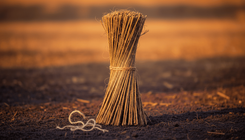
Badabadua daka typically involves minimal material preparation, which is part of its humility and authenticity. The central objects are light and sound: the lamps already lit for Diwali serve as the focal point, and the voice of the caller carries the prayer. Some families incorporate a broom or a small bundle of kauriya kathi—thin jute stalks or straw—which is waved gently as the names are called. This is believed to help clear the path for the ancestors' spirits to approach and also to symbolically sweep away any obstruction or negativity between the worlds.
The kauriya kathi, which is also used in other Odia rituals and domestic practices, connects badabadua daka to the larger cycle of seasonal and spiritual cleaning. During Diwali, when homes are scrubbed and whitewashed to remove the dust and grime of the monsoon months, the jute stalk serves a parallel purpose on the spiritual plane. It is a tool of transition, neither precious nor disposable, marking the threshold between the everyday and the sacred.
Some households place a small mound of rice on a plate or leaf, or arrange betel nuts and leaves in a pattern. These are not elaborate preparations but simple gestures of offering—the kind of thing one would share with a visiting elder. The emphasis is on sincerity rather than spectacle. The ancestors are not distant gods demanding grand ritual but beloved family members invited to share in the household's Diwali night.
Regional Variations and Family Practice
Badabadua daka is primarily a practice of Odisha, and within that state, it is most strongly maintained in rural and small-town communities where longer genealogical memory and traditional knowledge persist. Urban Odia families often simplify or abbreviate the practice, though many continue to call the ancestors' names at Diwali as a shortened version of the full ritual.
In some regions of Odisha, the practice is performed on specific nights—the new moon of Kartik (the lunar month in which Diwali falls), or on the day after Diwali, depending on local custom and calendar interpretation. Some families perform it only once, while others repeat the calling on multiple nights of the Diwali season, especially if a death in the family is recent.
The practice also interlocks with other Odia Diwali customs. Many families set out grain and oil for the ancestors on Diwali night, or prepare special rice dishes that are first offered and then shared. Badabadua daka exists within this larger constellation of ancestral reverence—not separate from it, but as the explicit call that anchors the other gestures.
The Lasting Practice
Badabadua daka remains a living tradition in Odisha, passed from parent to child as an essential part of Diwali observance. It requires no priest, no special permission, and no expense beyond what a household already has. It asks only that people remember, speak aloud, and make an intentional gesture of respect and love toward those who came before.
For Odia families, the practice is a natural extension of the values that shape daily life: the importance of kinship, the belief in reciprocal obligation between generations, and the conviction that the sacred is found not in distant temples alone but in the remembered names and simple rituals of home. On Diwali night, when light fills the house and the boundaries between worlds are thin, badabadua daka calls the ancestors home—not in anger or grief, but in the ordinary, enduring language of family.
Common questions
When exactly is badabadua daka performed during Diwali?
The ritual is performed on Diwali night in Odisha after the evening lamps are lit and household gods are honoured. Some families repeat it on subsequent nights of the Diwali season, especially if a death in the family is recent. The exact timing follows local custom and lunar calendar interpretation.
Do I need to remember many ancestral names to perform badabadua daka?
No. Families call as many ancestral names as they remember, working back through generations according to their genealogical knowledge. If you know only a few names, that is sufficient; the intention and the calling itself matter more than completeness.
Is badabadua daka only practiced in Odisha?
Yes, badabadua daka is a practice specific to Odisha and is most strongly maintained in rural and small-town communities there. While urban Odia families sometimes shorten or simplify the ritual, it remains distinctly rooted in Odia tradition and is not found elsewhere in India's Diwali customs.

Related Articles


